The Americans Who Crave Community the Most — And What America 250 Means to Them
 Posted By Custom Ink Staff —
The Custom Ink Staff is a team of design enthusiasts and promo product experts dedicated to bringing your ideas to life. From screen printing secrets to the latest trends in custom gear, we draw on decades of collective experience to help you create something unforgettable.
SHARE:


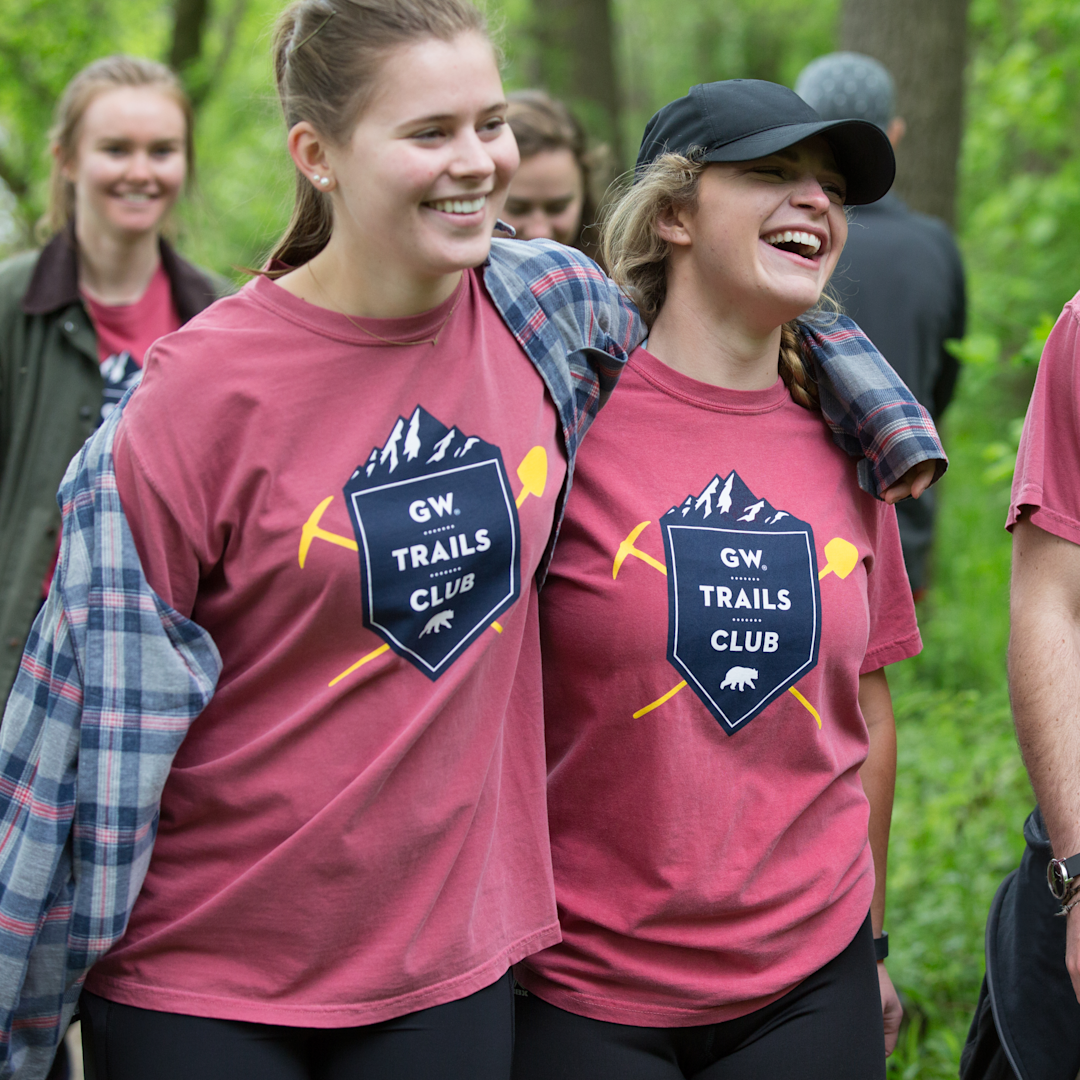
There is a particular kind of loneliness that arrives not from isolation but from proximity. You live near people. You share a neighborhood, a zip code, a street. But you don’t quite belong yet — and you’re not sure how long “yet” lasts.
That feeling turns out to be one of the defining social experiences of American life in 2026. More than half of Americans — 52.8% — told us in our 2026 Community Pride Survey that they feel a stronger need for community connection today than they did a few years ago. And the people who feel it most intensely, it turns out, are not the isolated or the displaced. They are the ones who moved somewhere new and are still waiting to feel like they belong.
In This Article
- The Connection Hunger Finding
- The New Resident Paradox
- What People Say They’re Proud Of — and What They Actually Feel
- America 250 as a Belonging Catalyst
- What Actually Helps
Key Takeaways
- 52.8% of Americans feel a stronger need for community connection today than a few years ago — including 21.5% who say the craving is much stronger than ever. Only 8.8% feel less need than before.
- Connection hunger peaks among new residents, not longtime ones: 63.9% of people who moved to their community less than a year ago feel stronger need, and the rate actually rises to 64.7% among 3-5 year residents before dropping to 43.2% among those who have lived somewhere 10+ years.
- The people who feel this most urgently are also the most motivated to act on America 250: 53.8% of those who crave community “much more than ever” are planning a specific A250 event, compared to 10.7% among those who feel less need than before.
The Connection Hunger Finding
We surveyed 1,690 Americans in May 2026 about their community pride, their sense of belonging, and their plans for America 250. The question was simple: do you feel a stronger, weaker, or about the same need for community connection compared to a few years ago?
The answer was lopsided. 21.5% said their need is “much stronger — I crave community connection more than ever.” Another 31.2% said it is “somewhat stronger.” Together, 52.8% of Americans reported feeling a more acute hunger for community than they did a few years ago. Only 8.8% said they feel less need. The rest, 38.4%, said things feel about the same.
That 52.8% figure is worth pausing on. It is not describing loneliness in the clinical sense. Many of these respondents have jobs, families, and neighbors they know by name. What they are describing is something more specific: the gap between proximity and belonging. They live near people. They are not, yet, part of a community in the way they want to be.
Open-ended responses from the survey make this texture clear. A Vermont respondent wrote that their community has “an actual sense of community in this part of the country — we always support our own over other bigger businesses or outsiders.” That description of a place where belonging is visible and legible is not just pride in a community. It is the articulation of something the respondent values precisely because it is not guaranteed everywhere.
The New Resident Paradox
When we cross-tabulated connection hunger against how long respondents had lived in their current community, a counterintuitive pattern emerged.
New residents — people who had lived somewhere less than a year — reported stronger connection hunger at a rate of 63.9%. That makes intuitive sense. They are new. They haven’t found their people yet. What does not fit the obvious story is what happens next: the 3-5 year group reports even higher connection hunger, at 64.7%. And then the rate begins to fall. Among people who have lived somewhere 10 or more years, it drops to 43.2%.
That 3-5 year peak — higher than the first-year rate, higher than any other tenure group — suggests something specific about that window of residency. Call it the finding-your-people window. The initial novelty of a new place has worn off. The daily familiarity of streets and grocery stores and coworkers has replaced it. But the deeper web of belonging — the neighbor you actually call, the tradition you feel included in, the group you’d describe as yours — hasn’t fully formed yet. Three to five years in, people know where they live. They are still figuring out whether they belong there.
People who have lived somewhere their whole lives show a notably different profile: 53.9% report stronger connection hunger, which is still above the overall average of 52.8%, but meaningfully below the new-resident groups. The lifelong residents who crave more community are craving something different from what the 3-5 year transplant wants. They have roots. What many of them are describing is watching a community change around them — feeling the connective tissue of a place shift or thin over time.
What People Say They’re Proud Of — and What They Actually Feel
When asked what they are most proud of about their local community, respondents chose broadly from across 12 options. The top answer was the people — neighbors and community members — at 42.4%. Natural environment came second at 29.8%, followed by food and restaurant scene (24.6%), community diversity (24.3%), and local landmarks and history (23.5%).
Those are the stated pride anchors. But the open-ended responses reveal something beneath them — not just pride in a place’s attributes, but longing for its social fabric. The two things are related but not identical.
A Massachusetts respondent, asked what they’d want the rest of America to know about their community, offered this: “That our ‘small town’ actually has 40 different languages spoken in its high school, and the best tamales are sold from a cooler in a church parking lot every Saturday morning.” That is community pride articulated through specificity — through the irreproducible texture of a particular place. It is also, unmistakably, a description of what belonging looks like from the inside: a churchwhere strangers become regulars, a parking lot where something delicious and informal happens every week without announcement.
A South Carolina respondent, asked to describe their community’s identity, said: “I’d describe my local community as ‘grounded and growing.’ There’s a strong sense of everyday people just trying to get by and support each other, while at the same time things are slowly improving with new opportunities, ideas, and energy coming in.” That description is not primarily about amenities or history. It is about the quality of the social contract between neighbors — whether people show up for each other in the ordinary daily sense, not just at official events.
Across the open-ended responses, that quality — people reliably showing up for each other — is what respondents describe when they feel they have found community. And its absence, or its incompleteness, is what the 52.8% with stronger connection hunger are trying to close.
America 250 as a Belonging Catalyst
The connection hunger finding connects directly to America 250 in a way that isn’t obvious at first.
Among respondents who said their need for community is “much stronger — I crave it more than ever,” 53.8% are planning a specific America 250 event. Among those who said their need is less strong than before, only 10.7% are planning something. That is a five-to-one difference in planning rates, driven not by how aware or excited someone is about the anniversary, but by how hungry they are for community in the first place.
This is the under-discussed story of America 250 as a cultural moment. For many people, the 250th anniversary of the country is genuinely meaningful. But for a significant portion of the people who are most energized about celebrating it, the underlying motivation is not primarily historical. It is belonging. America 250 is giving people who have been looking for a reason to gather a reason to gather. The anniversary is the occasion; the community connection is what they are actually after.
The 29.5% of survey respondents in the “maybe” category — interested in celebrating but without a plan — skew toward this group. They are not indifferent to America 250. Many of them are in the exact demographic most likely to feel strong connection hunger: newer residents, people in the 3-5 year window, people who know their neighborhood by address but not yet by relationship. What separates them from people who are actively planning is not enthusiasm. It is often just the absence of someone who has already started the work of organizing.
What Actually Helps
The survey data is fairly specific about what makes community events feel like they work for the people who need them most.
36.0% of respondents said they would be more likely to attend a community event if it has a sense that it is truly for the whole community — not a subset of people who already know each other. 34.0% said better advance notice and promotion would help, which maps directly to the finding that 23.4% of respondents miss events simply because they didn’t know they were happening. 27.5% said a clearer theme or purpose would make them more likely to show up.
These are the barriers that a well-organized event can actually address. They are not about the event being bigger or more elaborate. They are about whether it signals, clearly and in advance, that it belongs to everyone — and that someone is accountable for making it happen.
The visible, shared-identity dimension matters here too. When asked what made the best community event they’d ever attended feel special, 36.0% said they felt genuinely welcomed and included — a more specific feeling than “there was great food” or “it was well organized,” and one that depends on the social environment of an event, not just its logistics. 11.5% specifically cited people wearing matching or coordinated gear as part of what made a gathering feel like they were all part of the same thing.
For the person at three years in a new city who still hasn’t found their people — or the longtime resident who watches a familiar neighborhood grow less legible — a community event that announces its own belonging explicitly, visually, and in advance is doing something that most gatherings don’t bother to do. It is saying: this is for you, there are others here like you, and you don’t have to already know everyone to belong.
America 250 arrives in exactly this context. If you are organizing something for your neighborhood, your workplace, or your community group this July, our group order feature lets everyone participate on their own terms, and our America 250 gear collection gives a celebration the visible shared identity that the data says people are genuinely looking for. The full survey is available in our 2026 Community Pride Report.
Set up a group order | Read the full 2026 Community Pride Report

The Custom Ink Staff is a team of design enthusiasts and promo product experts dedicated to bringing your ideas to life. From screen printing secrets to the latest trends in custom gear, we draw on decades of collective experience to help you create something unforgettable.