77% of Americans Are Excited About America 250. Here’s Why Most Haven’t Made a Plan Yet.
 Posted By Custom Ink Staff —
The Custom Ink Staff is a team of design enthusiasts and promo product experts dedicated to bringing your ideas to life. From screen printing secrets to the latest trends in custom gear, we draw on decades of collective experience to help you create something unforgettable.
SHARE:


Most of the country already knows America 250 is coming. According to our 2026 Community Pride Survey of 1,690 Americans, 76.9% are aware that 2026 marks the 250th anniversary of the Declaration of Independence, and 43.7% say they’re highly excited about it. Yet only 28.8% are actively planning something specific. That gap — between wanting to celebrate and actually having a plan — is where most of us are sitting right now. This post is for the 29.5% who told us they’re a “maybe”: interested, even excited, but without a plan yet.
In This Article
- You’re Not Alone — The “Maybe” Problem
- What the People Who ARE Planning Have in Common
- What Makes an America 250 Celebration Feel Different from a Regular July 4th
- How to Actually Start
- Frequently Asked Questions
Key Takeaways
- 43.7% of Americans are highly excited about America 250 — but that excitement doesn’t automatically turn into a plan. The biggest predictor of actually planning isn’t awareness or excitement. It’s whether someone wore community pride gear in the past year.
- People who wore community pride gear in the past year plan at a 5.4x higher rate (50.9% planning vs. 9.5% among non-wearers), suggesting that the habit of showing up visually for a community makes the leap to organizing much smaller.
- The top thing people want from an America 250 celebration is togetherness and community unity — not a bigger fireworks show. A block party with a unified look and a clear purpose gets closer to that goal than a passive spectacle does.
You’re Not Alone — The “Maybe” Problem
Almost a third of Americans — 29.5% in our survey — fall into the “maybe” category for America 250. They’re aware it’s happening. Many are genuinely excited. They just haven’t made a move yet.
If that’s you, you’re in good company. And the reason probably isn’t apathy — it’s that “celebrate the 250th anniversary of the country” is a pretty big concept to turn into something concrete you’d actually put on a calendar. The fireworks are already covered. What you’d actually be organizing is something more intentional than that, and it’s not always obvious where to start.
The data backs this up. When we asked respondents what would make them more likely to attend a community event, the top answers were: food and entertainment (51.3%), knowing more people who are going (41.4%), and a sense that the event is truly for the whole community (36.3%). What trips people up isn’t desire — it’s the feeling that someone needs to take the first step and organize a thing. The “maybe” cohort is waiting for that someone. Often, that someone turns out to be them.
What the People Who ARE Planning Have in Common
Three patterns show up clearly among respondents who are actively planning for America 250.
They’re highly excited — and excitement is the tipping point
Among respondents who described themselves as “highly excited” about America 250, the planning rate doubles: 50.9% of that group is actively planning something. Excitement doesn’t automatically become action, but it makes the barrier a lot lower. The “maybe” group, by contrast, tends to sit in the “somewhat excited” tier — interested, but not yet at the threshold where they’d pick up the phone and call a few neighbors.
They’ve worn community pride gear before
This is the most striking finding from our survey. Among people who had worn or used something to show pride in their local community in the past year, 50.9% are planning an America 250 event. Among those who haven’t, that number drops to 9.5%. That’s a 5.4x difference.
The gear itself probably isn’t the cause — it’s a signal of something deeper. People who show up visually for their community are already in the habit of participating. The leap from “I wore a shirt to the block party last summer” to “let me organize something for this July” is a much smaller one than it might seem from the outside.
They want a clear purpose and a unified look
When we asked what signals thoughtful planning at a community event, 41.4% said coordinated schedule or activities and 40.0% said strong communication beforehand. People wearing coordinated or matching gear ranked as a visible signal of planning for 14.0% of respondents — lower than food and turnout, but consistently present across multiple questions as a marker that an event was organized and intentional. Among people actively planning a company or organizational event, 94.1% said branded gear for their America 250 event is likely or already planned.
What Makes an America 250 Celebration Feel Different from a Regular July 4th
We asked 1,674 respondents what would make their community’s America 250 celebration feel truly memorable and different from a regular July 4th. Three themes showed up more than anything else: community togetherness and unity (17% of responses), local history and heritage, and a sense of being organized and designed rather than spontaneous.
That last part is worth sitting with. People aren’t asking for a bigger event — they’re asking for a more intentional one. A regular July 4th is something that just happens around you. America 250 is something you could actually make, with your neighbors or your team or your street, in a way that reflects your specific community’s story. That framing is what separates the celebrations people remember from the ones they’ve already forgotten.
Our survey also found that 52.8% of respondents feel a stronger need for community connection today than they did a few years ago. America 250 lands at a moment when that need is near the surface for a lot of people. The celebrations that tap into it — the ones built around belonging, not just fireworks — are the ones that end up feeling like they mattered.
And on the visual side: 55.9% of respondents agreed that matching or coordinated gear makes a community event feel more cohesive and meaningful. Among people actively organizing events, that number climbs to 91.4%. A unified look doesn’t just feel good — it’s one of the clearest signals to everyone present that this was put together on purpose.
Design Inspiration for America 250
Browse all 250th anniversary design templates
How to Actually Start
The four steps below are for anyone in the “maybe” camp who wants to turn that interest into something real before July 4, 2026. None of them require a big budget or a lot of lead time.
1. Pick a format that fits your situation
You don’t need to invent a new event type. The formats that already work — block parties, neighborhood cookouts, workplace celebrations, school community events — work exactly as well for America 250. The question is just scale and scope. A neighbor group text that turns into a cookout counts. A workplace event where everyone gets a commemorative shirt counts. Match the format to the relationships you already have, not to an imaginary version of what you think it should look like.
- Block party or neighborhood cookout: Works best for residential streets and HOA communities. Relatively easy to organize, high participation potential, naturally informal.
- Workplace event: If you plan events for an organization, America 250 gives you a natural hook for a summer gathering. 79.8% of event planners in our survey said their company is planning something — confirmed or in discussion.
- School or youth organization event: Great for PTAs, sports leagues, and scout troops. Tie the theme to something local — a town’s founding story, a historic landmark, a connection to the Declaration itself.
- Club or community group gathering: Religious organizations, civic groups, and neighborhood associations already have the built-in relationships. America 250 is a reason to make this year’s gathering feel different.
2. Give it a look — coordinated gear, unified colors
Our survey found that 55.9% of respondents agree that matching or coordinated gear makes events feel more cohesive and meaningful. This isn’t about a dress code — it’s about giving people something visible that signals “we’re all part of the same thing.” A matching custom t-shirt with your neighborhood name, family name, or a simple patriotic design is enough to shift the energy of any gathering. Our Design Lab has America 250-specific templates you can customize in minutes, and our America 250 collection includes gear ready to go if you need a faster path to a cart.

“We were celebrating the 4th of July plus a 40th birthday for me and my 2 sisters. We are triplets so I made ‘Koyama Family 40×3 birthday weekend’ shirts for the whole family. We wore them proudly on the 4th! These are our second batch of family shirts from CustomInk and had another awesome experience.”
Featured Products from This Story
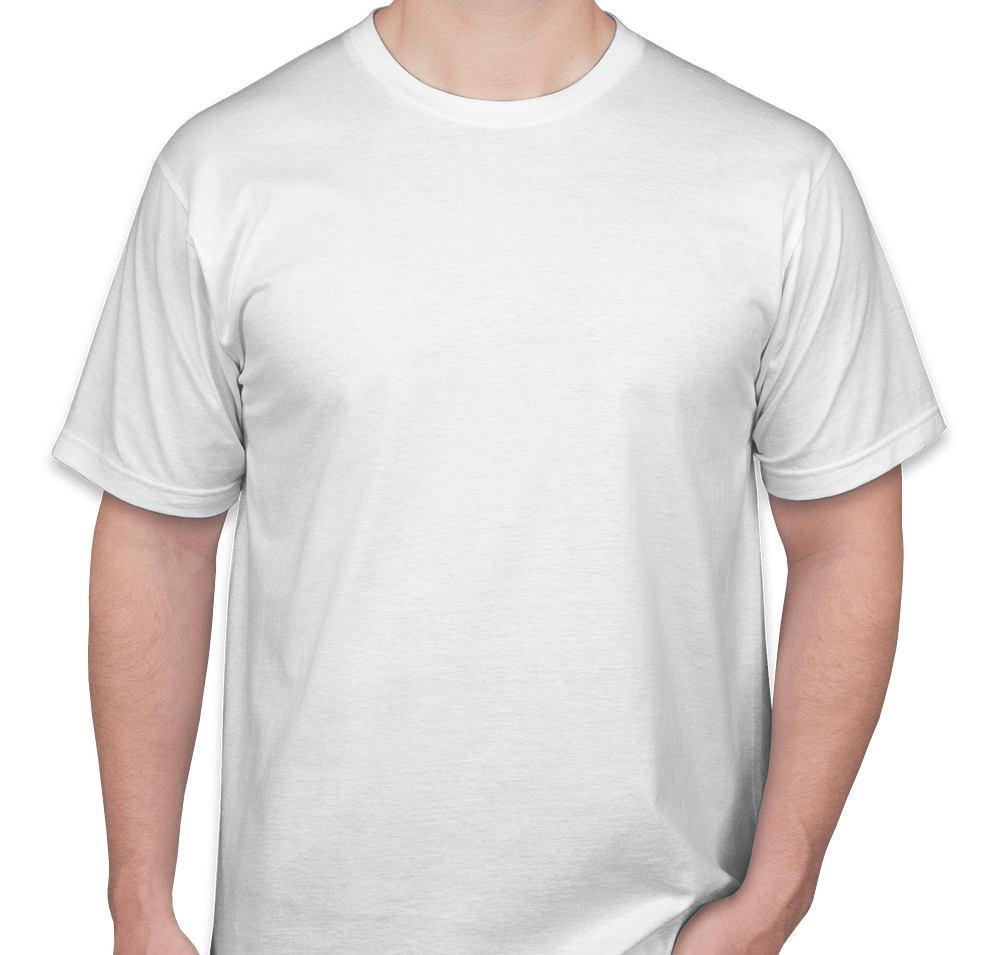
Gildan Lightweight Jersey T-Shirt
- Softer, lighter feel than the Ultra Cotton — ideal for summer outdoor events where you want something comfortable all day
- Ring-spun cotton construction with a semi-fitted silhouette that works across ages and body types
3. Use a group order so everyone can order their own
One of the most common reasons group events stall out: the organizer doesn’t want to front the cost or chase down sizing information from 40 people. Our group order feature solves both problems. You create the order, set a deadline, and share a link. Each person picks their size, pays for their own shirt, and specifies their shipping address if needed. You don’t handle any money. The shirts arrive, and everyone shows up ready to be part of something.
4. Tell people early and give them a reason to come
In our survey, 23.4% of respondents said they miss community events simply because they don’t know about them in advance. The single most effective thing you can do is communicate early and clearly. Tell people what the event is (a block party, a cookout, a neighborhood gathering), when it is, and what’s special about it this year — then remind them again. When people know others are coming, they come. When they don’t, they assume nothing’s happening and make other plans.
Read the full 2026 Community Pride Report

The Custom Ink Staff is a team of design enthusiasts and promo product experts dedicated to bringing your ideas to life. From screen printing secrets to the latest trends in custom gear, we draw on decades of collective experience to help you create something unforgettable.