What Is the Best Printing Method for Custom Hoodies? Screen Printing, Embroidery, DTG, and DTF Compared
 Posted By Custom Ink Staff —
The Custom Ink Staff is a team of design enthusiasts and promo product experts dedicated to bringing your ideas to life. From screen printing secrets to the latest trends in custom gear, we draw on decades of collective experience to help you create something unforgettable.
SHARE:


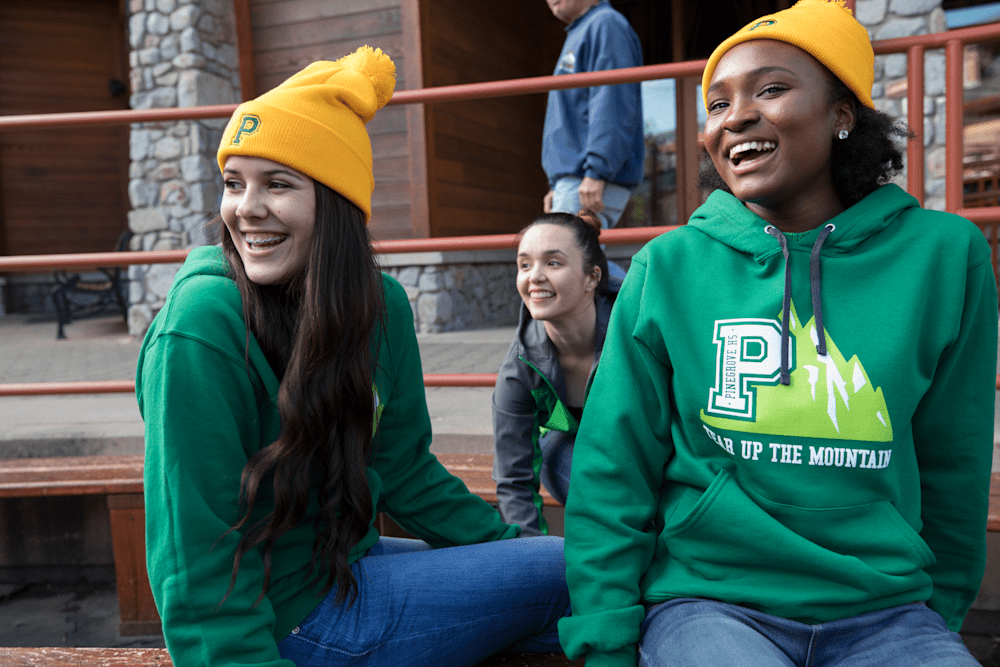
Choosing the right printing method for your custom hoodie can mean the difference between a premium piece of gear and a costly production mistake. While heavy fleece is incredibly comfortable, its texture handles ink and thread differently than a standard t-shirt. Whether you are looking at screen printing, embroidery, direct-to-garment (DTG), or direct-to-film (DTF), each printing technique delivers completely different results depending on your artwork, order quantity, and budget.
At Custom Ink, we select the best decoration or printing method for every order based on your design and product, drawing on 25+ years of experience, so you don’t need to be an expert. However, this guide helps when you want to understand the differences, request a specific technique, and make an informed fabric choice before you start designing in our Design Lab.
In This Article
- The Four Printing Methods at a Glance
- Screen Printing on Hoodies
- Embroidery on Hoodies
- DTG on Hoodies
- DTF on Hoodies
- What Do Hoodie Printing Methods Cost?
- What About DIY Screen Printing or Embroidery?
- Frequently Asked Questions
Key Takeaways
- Embroidery cannot reproduce photographs, gradients, or halftones. It’s built for logos, text, and simple shapes. For a photo or full-color illustration, you need DTG (cotton-face fleece) or DTF (any fleece, including dark colors).
- Screen printing is the most cost-effective method for group orders of 12 or more pieces. Per-piece cost drops sharply with volume. Each ink color adds a screen and setup cost, so simpler designs (1-4 colors) keep prices lowest.
- 53% of swag buyers are “very” or “extremely” interested in premium decoration like embroidery (2026 Custom Ink Swag Trends Survey). For professional and corporate hoodies, embroidery signals quality that printing methods simply can’t replicate.
The Four Printing Methods at a Glance

According to the 2026 ASI Global Ad Impressions Study, 85% of consumers remember the advertiser who gave them a logoed product, with fleece and outerwear generating the highest lifetime impression counts of any promotional category. The decoration method you choose determines how well that impression holds up. The table below compares all four methods across the criteria that matter most for custom hoodies.
| Screen printing | Embroidery | DTG | DTF | |
|---|---|---|---|---|
| Best for | Bold 1-6 color art, large group orders | Logos, text, left-chest professional placement | Full-color/photo art on cotton-face fleece | Full-color art on any fleece, especially dark colors |
| Can it handle photos/gradients? | No | No. Gradients and halftones cannot be done via embroidery. | Yes | Yes |
| Minimum order | ~12-24 pieces | ~12-13 pieces | 1 piece | 1 piece |
| Color limit | 1-6 spot colors; each color = a separate screen | ~15 thread colors; no gradients | Unlimited | Unlimited |
| Max design area | Full front, back, sleeves | Up to 5.5″ on most products; small-to-mid designs work best | Full front or back | Full front, back, sleeves |
| Durability | Highest; holds through repeated washing | Highest; stitches outlast the garment | High; best on 100% cotton face | High; white base layer protects color on dark fleece |
| Best fabric match | All fleece; cotton-face and 50/50 blends | Mid-to-heavyweight fleece (8 oz+) | 100% cotton face fleece (Comfort Colors, Gildan SF500) | All fleece; ideal for dark colors and poly blends |
Screen Printing on Hoodies

Screen printing is our most-used decoration method and handles the large majority of custom hoodie orders. A stencil (the “screen”) is created for each ink color in your design. Ink is pushed through the mesh onto the fleece, one color at a time, then cured. The result is a vibrant, durable print with a slightly raised texture you can feel.
- Where it excels: Full-front graphics, bold team designs, large back prints, multi-color event art. Any area where you want maximum visual impact over a large surface.
- Where it doesn’t: Designs with smooth gradients, photorealistic elements, or more than 6-8 colors aren’t a good fit. Each additional color adds a screen setup cost, so complex full-color designs get expensive fast with screen printing.
- Fabric note: Screen printing performs best on cotton-face fleece. On 50/50 blends or polyester-heavy hoodies, a grey underbase may be needed to prevent dye migration on darker or pigment-dyed styles like the Comfort Colors 1567 hoodie.
- Minimum: Screen-printed products carry a minimum order requirement because of the screen setup involved. Check the product page for the specific minimum on the style you’re considering.

“Competing on a world level is intense…looking the part is extremely important…and thanks to CustomInk that has been made possible.”
Embroidery on Hoodies

Embroidery stitches your design directly into the fleece using thread. The result is a textured, three-dimensional finish that communicates quality in a way no printing method can match. It’s the decoration standard for professional and corporate apparel for a reason: it doesn’t crack, fade, or peel, and it outlasts the garment itself.
According to the 2026 Custom Ink Swag Trends Survey, 53% of buyers are “very” or “extremely” interested in premium decoration methods like embroidery because the tactile quality signals a level of care that affects how recipients feel about the item they’re wearing.
- Where it excels: Logos, text, and simple shapes on left chest or sleeve. Professional and corporate hoodies, uniform programs, onboarding kits, and client gifts where the finished product needs to read as premium.
- Technical limits you need to know: Our embroidery hoop creates designs up to 5.5 inches on most products. Lines must be at least 0.05 inches (3 points) thick for clean stitch results. Neon colors, metallic colors, gradients, and halftones cannot be achieved via embroidery. Our design experts will simplify, enlarge, or redraw your artwork at no charge to ensure it stitches cleanly.
- Where it doesn’t: Large back graphics, full-front designs, anything with a photographic or gradient element, and very small text (under approximately 0.25 inches tall). For those, screen printing or digital methods are the right call.

“The team loves the fleece jackets we ordered with our embroidered VMC logo from CustomInk, and really appreciate the fast and friendly customer service.”
DTG (Direct-to-Garment) on Hoodies

DTG prints your design directly onto the fleece surface using inkjet technology. Ink soaks into the cotton fibers rather than sitting on top, which gives it a very soft hand feel. It’s the right method for full-color artwork, photorealistic illustrations, and personalized items where no two pieces are identical.
- Best fabric: 100% cotton face fleece. The Comfort Colors 1567 hoodie (80% ring-spun cotton/20% poly, 100% cotton face) and Gildan Softstyle SF500 hoodie (80% ring-spun cotton/20% poly, 100% cotton face) are ideal candidates. 50/50 blends and polyester-heavy hoodies produce less vibrant DTG results because ink doesn’t bond as well with synthetic fibers.
- Best for: Small orders, photo-quality art, designs with unlimited colors, and one-off or personalized pieces. No color count surcharges.
- Limitation: On dark hoodies, a white underbase layer is required before the color layer, which adds production time and can slightly affect hand feel. For dark fleece with full-color art, DTF is usually the stronger option.
DTF (Direct-to-Film) on Hoodies

DTF prints your design onto a transfer film with a white adhesive base, then heat-presses it onto the hoodie. Because the white layer is applied first, colors read true and vibrant even on black and navy fleece. It’s fabric-agnostic, meaning it works on cotton, polyester blends, and everything in between.
- Best for: Dark-colored hoodies, polyester-blend fleece, full-color or photographic art on any fabric type, and small orders where screen printing minimums are too high. See our complete guide to digital printing (DTF/DTG) for a full breakdown.
- DTF vs. DTG on dark hoodies: DTG requires a white underbase layer that can dull vibrancy. DTF applies the base as part of the transfer process, so colors are consistently bright. If your hoodie is dark and your art has light or bright elements, DTF produces better results.
- Hand feel: Slightly stiffer than DTG because the transfer sits on top of the fabric rather than soaking in. On heavyweight fleece, the difference is minimal.
“Our Custom Ink sweatshirts kept us warm and turned out just how we wanted them.”
What Do Custom Hoodie Printing Methods Cost?

Our pricing is all-inclusive, meaning the decoration fee is built into the per-piece price rather than broken out separately as setup charges, screen fees, or per-stitch billing. You’ll see the price automatically adjust in the Design Lab. The most important cost driver across all methods is order quantity: more pieces always means a lower per-piece price. The table below explains how the pricing logic works for each method.
| Method | What drives cost up | What brings cost down | Minimum order |
|---|---|---|---|
| Screen printing | More ink colors (each = a separate screen); additional print locations | Larger quantities; simpler designs (1-3 colors) | ~12-24 pieces; varies by style |
| Embroidery | More stitches (larger or denser designs); multiple placements | Simpler logos; left-chest only; larger quantities | ~12-13 pieces |
| DTG | Per-piece production time; dark garments require white underbase | No color surcharge; no setup fee | 1 piece (many no-min styles) |
| DTF | Per-piece production time; design complexity | No color surcharge; works on any fabric without prep variation | 1 piece (many no-min styles) |
For a full breakdown of hoodie styles and price ranges by fabric tier, see our custom hoodies guide. For current pricing on a specific style, select it on the product page and adjust the quantity to see automatic bulk discount tiers.
What About DIY Screen Printing or Embroidery?

Many people searching “how to screen print hoodies” or “what do I need to embroider a hoodie” want to know if doing it themselves is practical. It’s a fair question, and the honest answer is: it depends entirely on volume and patience.
DIY screen printing
A functional home screen printing setup requires a press, exposure unit, flash or conveyor dryer, washout booth, screens (one per ink color), inks, emulsion, and squeegees. A basic starter setup runs $1,000-$3,000 for equipment alone, before consumables or the learning curve for consistent registration and curing. Multi-color designs require significantly more skill. For a one-time group order, professional production consistently delivers better results at a lower total cost once you account for setup time, waste, and equipment.
DIY embroidery
Consumer embroidery machines start around $300-600, but the models capable of producing professional-looking results on thick fleece run $1,500 or more. You also need digitizing software to convert your logo into a stitch file, stabilizers, correct needles for fleece, and significant machine time per piece. A basic left-chest logo takes around 4 minutes per piece on professional equipment. Amateur results on fleece (puckering, poor registration, thread breakage) are common until you’ve built experience with the specific fabric and design combination.
For most groups, the calculation is simple. Our Design Lab turns a design into a professionally decorated hoodie in about two weeks with free standard shipping, no equipment purchase, no setup labor, and a free pre-print review from our design experts before anything prints.
Frequently Asked Questions
Q: Can you embroider a picture or photo on a hoodie?
No. Embroidery uses thread to create defined shapes and text, but it cannot reproduce photographic detail, smooth color gradients, or halftones. If you want a photo or full-color illustration on a hoodie, you need DTG printing (for cotton-face fleece in lighter colors) or DTF printing (for dark hoodies or polyester blends). Our design experts will tell you which method is right for your specific artwork and fabric when reviewing your order.
Q: How much does it cost to screen print a hoodie?
Screen printing costs are built into our all-inclusive per-piece pricing, so there’s no separate screen fee or setup charge listed on your invoice. Per-piece price depends on the hoodie style, the number of ink colors, the number of print locations, and your total order quantity. The most effective way to reduce cost is to increase quantity or simplify your color count. Get an instant quote by selecting a style in our Design Lab and adjusting the quantity.
Q: How much does it cost to get a hoodie embroidered?
Embroidery cost is priced by stitch count in the industry; a standard left-chest logo runs $6-15 for the decoration alone before the hoodie cost. Our embroidery fee is included in the all-inclusive per-piece price. Larger or denser designs cost more because they require more machine time; simpler logos cost less. Our team can also simplify complex artwork to reduce stitch count and cost without sacrificing the look of the finished piece.
Q: Where can I get my hoodie embroidered?
You can order custom embroidered hoodies directly through our Design Lab at customink.com. Select a hoodie style, open the Design Lab, upload your logo, and place your design. Every embroidery order goes through a free review by our design experts, who check stitch-readiness and will adjust your artwork if needed before production. Free standard shipping delivers your order in about two weeks.
Q: Is screen printing or embroidery better for a company logo on a hoodie?
For a small left-chest logo on a professional or corporate hoodie, embroidery is the stronger choice. The stitched finish reads as higher quality, doesn’t crack or fade, and is the standard for uniform and corporate apparel programs. For a large logo, a back graphic, or a design that spans most of the front panel, screen printing works better because embroidery becomes stiff and heavy at large scale. The 2026 Custom Ink Swag Trends Survey found that 53% of buyers are “very” or “extremely” interested in premium decoration like embroidery specifically because it elevates how recipients perceive the item.
Q: What is the minimum order for embroidered or screen-printed hoodies?
Screen-printed and embroidered hoodie styles carry a minimum order quantity because of the production setup involved. The minimum varies by style and is listed on each product page. Many DTG and DTF options are available with no minimum if you need a small quantity or a single piece. For an overview of hoodie styles and what each is best for, see our custom hoodies guide.
Q: Which printing method is best for dark-colored hoodies?
DTF is the most reliable method for dark hoodies with full-color or light artwork. It applies a white base layer as part of the transfer process, which makes colors pop on black, navy, and dark grey fleece. DTG also works on dark hoodies but requires a separate white underbase step that can reduce vibrancy. Screen printing handles dark hoodies well for bold spot-color designs using its own underbase layer. Embroidery works on any hoodie color and reads beautifully on dark fleece because the thread sits above the fabric surface regardless of garment color.

The Custom Ink Staff is a team of design enthusiasts and promo product experts dedicated to bringing your ideas to life. From screen printing secrets to the latest trends in custom gear, we draw on decades of collective experience to help you create something unforgettable.