What Is Sublimation Printing for Activewear? Your Complete Technical Guide
 Posted By Custom Ink Staff —
The Custom Ink Staff is a team of design enthusiasts and promo product experts dedicated to bringing your ideas to life. From screen printing secrets to the latest trends in custom gear, we draw on decades of collective experience to help you create something unforgettable.
SHARE:


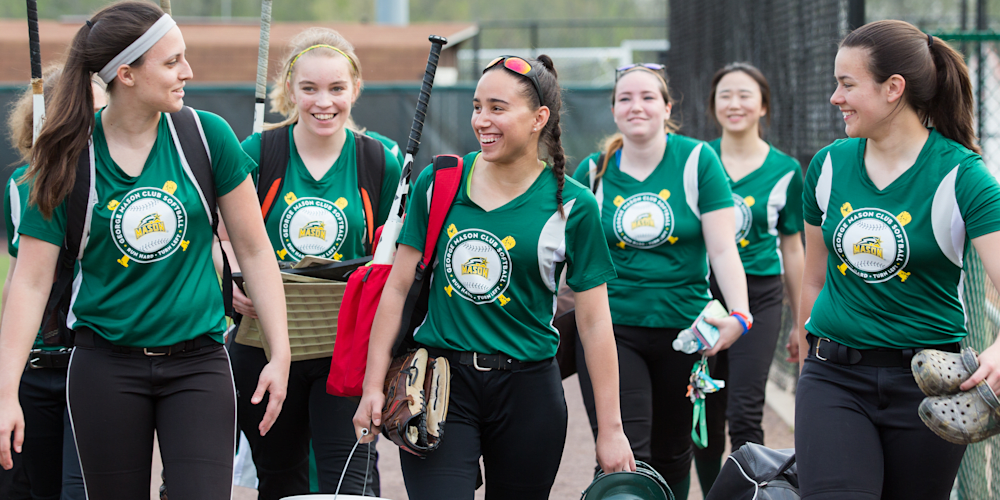
Nothing ruins a sports jersey faster than a logo that cracks, peels, or creates stiff, uncomfortable friction. Often, these aren’t vendor mistakes. They’re simple mismatches between decoration methods and technical fabrics. If you want gear that moves with your athletes and looks as sharp on day 100 as it did on day one, you need sublimation.
Unlike screen printing or heat transfers that sit on top of the fabric, sublimation bonds color directly into the fibers at a molecular level. The result is a breathable, fade-proof, all-over design that lasts for the life of the garment. According to the 2026 Swag Trends Survey, longevity is the top priority for 45% of swag buyers.
In this guide, we break down how dye-sublimation works, why it’s the gold standard for team jerseys, and how to tell if it’s the right choice for your custom activewear.
In This Article
- How Dye Sublimation Works on Performance Fabric
- Fabric Requirements: What Sublimation Needs to Work
- Sublimation vs. Screen Printing vs. Heat Transfer for Athletic Wear
- Designing for Sublimation: All-Over Prints, Gradients, and Photo-Realistic Images
- Products That Work Best with Sublimation
- Wash Care for Sublimated Activewear
- Frequently Asked Questions
Key Takeaways
- Sublimation dye becomes part of the fabric, not a layer on top. At 380–420°F, disperse dyes convert from solid to gas and bond inside the polyester fiber. When the garment cools, the dye is permanently encapsulated. There is no surface layer to crack, peel, or fade.
- Sublimation only works on synthetic fabrics at or above 65% polyester. Below that threshold, the dye has insufficient polymer fibers to bond with; colors print faded and uneven. For best results and most vibrant color, 100% polyester or poly-dominant blends are required.
- All-over print activewear is a sublimation-exclusive capability. Screen printing is physically limited to a 14″x17″ print area. Sublimation covers a garment collar to hem, seam to seam, in unlimited colors at no extra cost per color or location.
How Dye Sublimation Works on Performance Fabric
In science, sublimation is what happens when a solid turns directly into a gas without ever becoming a liquid. Dye-sublimation printing harnesses this reaction to lock vibrant designs straight into your custom activewear.
Instead of laying ink on top of the fabric like screen printing does, sublimation permanently fuses color into the fabric itself through a four-step process:
- Digital print to transfer paper. Specialized disperse dyes are printed onto sublimation paper using a dedicated printer. Unlike water-based or plastisol inks used in screen printing, disperse dyes are not water-soluble; they’re engineered to sublimate under heat.
- Heat press application. The transfer paper is aligned against white or light-colored polyester fabric and placed in a commercial heat press. Temperature: 380–420°F. Pressure: high. Duration: 30–60 seconds depending on fabric weight.
- Simultaneous gasification and polymer expansion. At these temperatures, two things happen at once: the solid dyes sublimate into high-energy gas, and the heat causes the polyester fibers’ molecular structure to expand, opening their microscopic pores.
- Bonding and encapsulation. The gaseous dye permeates the expanded fiber pores and bonds with the polyester polymer at a molecular level. When the press releases and the fabric cools, the pores contract and permanently encapsulate the dye inside the fiber. No surface layer. No adhesive. The dye is the fabric.
This is why a sublimated jersey feels different from a screen-printed one. The print has no weight, no texture, no rubbery hand feel. The original moisture-wicking breathability and four-way stretch of your performance apparel are completely preserved.
Cut and Sew vs. Heat-Press Sublimation
At Custom Ink, we use cut-and-sew sublimation, meaning we print flat fabric panels before the garment is stitched together. Cheaper post-assembly printing, called heat-press sublimation, leaves white creases under the armpits and seams. Cut-and-sew sublimation delivers seamless, edge-to-edge color coverage across every inch of the garment. You can read more about the difference in our guide to sublimated jerseys.
Fabric Requirements: What Sublimation Needs to Work

Sublimation dye chemically bonds only with synthetic polymer fibers, specifically polyester. Because natural fibers (cotton, linen, wool) don’t have the same molecular structure, the dye gas has nowhere to bond when the fabric cools, so it doesn’t adhere. The result on a cotton garment: faded, blotchy, unusable.
To get bright, long-lasting activewear, your fabric choice matters:
| Fabric Composition | Sublimation Result | Notes |
|---|---|---|
| 100% polyester (white or light base) | Best: vibrant, full-color, edge-to-edge | Optimal for team jerseys and all-over print activewear |
| 91–99% polyester / poly-spandex blend | Excellent: same vibrancy, added stretch recovery | Ideal for leggings, compression shorts, fitted athletic wear |
| 65–90% polyester blend | Good: slightly muted colors; visible on light base only | Minimum workable threshold; colors print somewhat dull |
| Below 65% polyester | Unacceptable: faded, uneven, inconsistent adhesion | Do not use for sublimation |
| 100% cotton or natural fibers | Will not work | No polymer fibers for dye to bond with |
Why Base Color Matters
Sublimation inks are transparent. Think of them like watercolor paint rather than opaque acrylic. Because the ink tints the fabric rather than covering it up, dark bases like navy or black will swallow the design. For accurate, vibrant color reproduction, always start with a white or light gray base garment.
Sublimation vs. Screen Printing vs. Heat Transfer for Athletic Wear

Choosing the right decoration method is more than an aesthetic decision. It’s also what protects your gear’s technical performance. Whether your goal is max breathability on race day, high-volume cost efficiency, or intricate multi-fabric customization, matching your printing technique to your garment guarantees custom activewear that looks sharp and performs under pressure.
| Factor | Dye Sublimation | Screen Printing | Heat Transfer (DTF) |
|---|---|---|---|
| How it works | Dye gases bond inside polyester fibers at molecular level | Ink pushed through mesh screen onto fabric surface | Printed film adhered to fabric surface with heat and pressure |
| Breathability after printing | 100% preserved; print is weightless and has no surface layer | Reduced; plastisol ink creates an impermeable barrier over print area | Reduced at print site; flexible but still a surface layer |
| Stretch performance | Unaffected; dye moves with the fiber | Degrades; ink layer can crack under repeated stretch | Good; DTF film is flexible but may edge-lift over time on high-stretch zones |
| Durability | Permanent for life of garment; cannot crack, peel, or fade | Prone to cracking and fibrillation on polyester; better on cotton | Excellent; more durable than DTG, performs well on polyester |
| Color range | Unlimited CMYK; full photographic color, smooth gradients | Limited by screen count; gradients require halftoning | Full color; excellent for complex designs |
| Design coverage | All-over, collar to hem, seam to seam; no print area limit | Typically capped at 14″x17″ print area per location | Limited to transfer sheet size; no all-over coverage |
| Best fabric | 100% polyester (white/light base required) | Cotton and cotton-poly blends; not recommended for 100% polyester | Almost any fabric including polyester, cotton, and blends |
| Minimum quantity | Varies by style; most sublimated jerseys have low minimums | 12+ for screen printing economics | 1+ (no minimum for DTF) |
| Cost per color | No additional cost per color or location | Setup cost per color per location | No additional cost per color |
The clearest way to think about it: screen printing is for cotton. DTF is for flexible, multi-fabric needs. Sublimation is for performance polyester when you need all-over coverage, permanent durability, and zero compromise to the garment’s athletic function.
According to the ASI 2026 Ad Impressions Study, the promotional products industry reached $27.7 billion in annual sales in 2025, with apparel remaining the dominant category. Within apparel, performance gear is the fastest-growing segment. Sublimation is the decoration method driving that growth.

“A record 4 Chicago teams participated in the 2018 U.S. Women’s Team Championship (Howe Cup), the largest women’s squash event with 300 players from US and Canada participating. The D1 team finished in 1st place.”
Featured Products from This Story
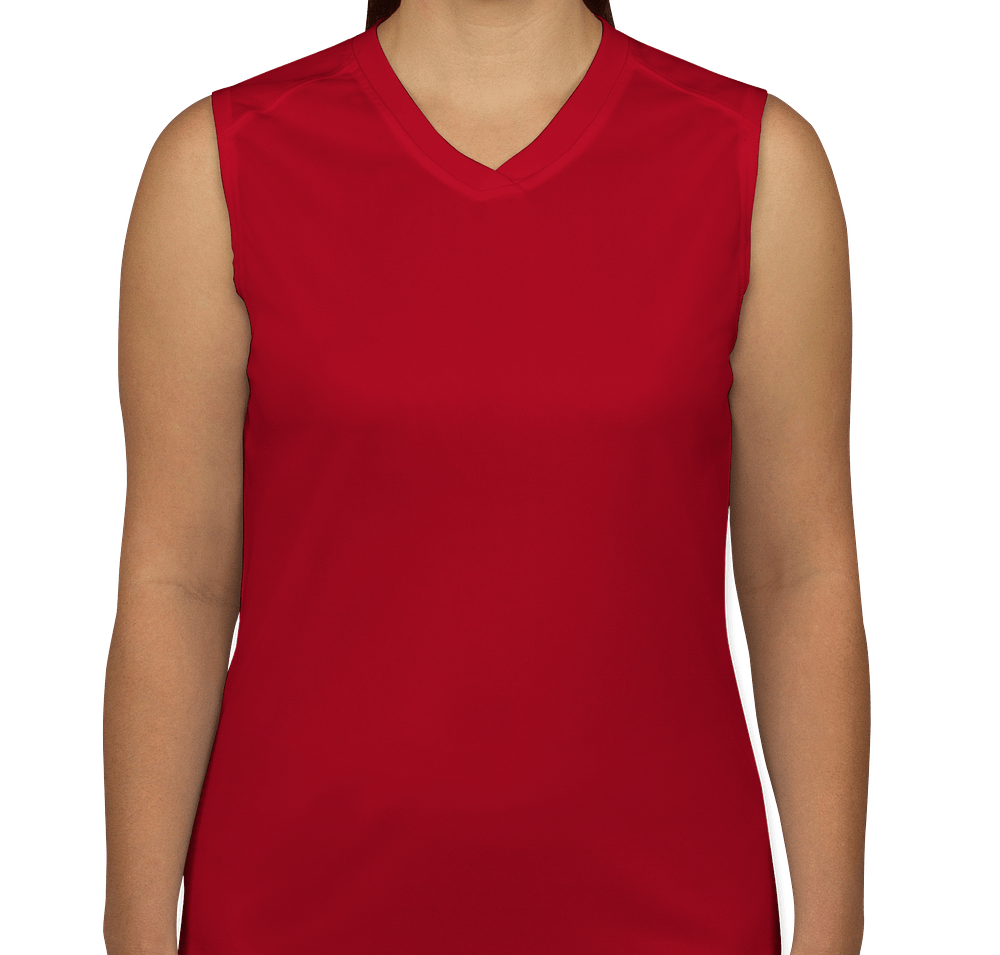
Badger B-Dry Women’s Sleeveless Performance Shirt
- 4.4 oz., 100% B-Dry moisture-wicking polyester; flatlock seams for chafe-free wear
- Sizes XS–4XL; optimal for sublimation on the light base colors
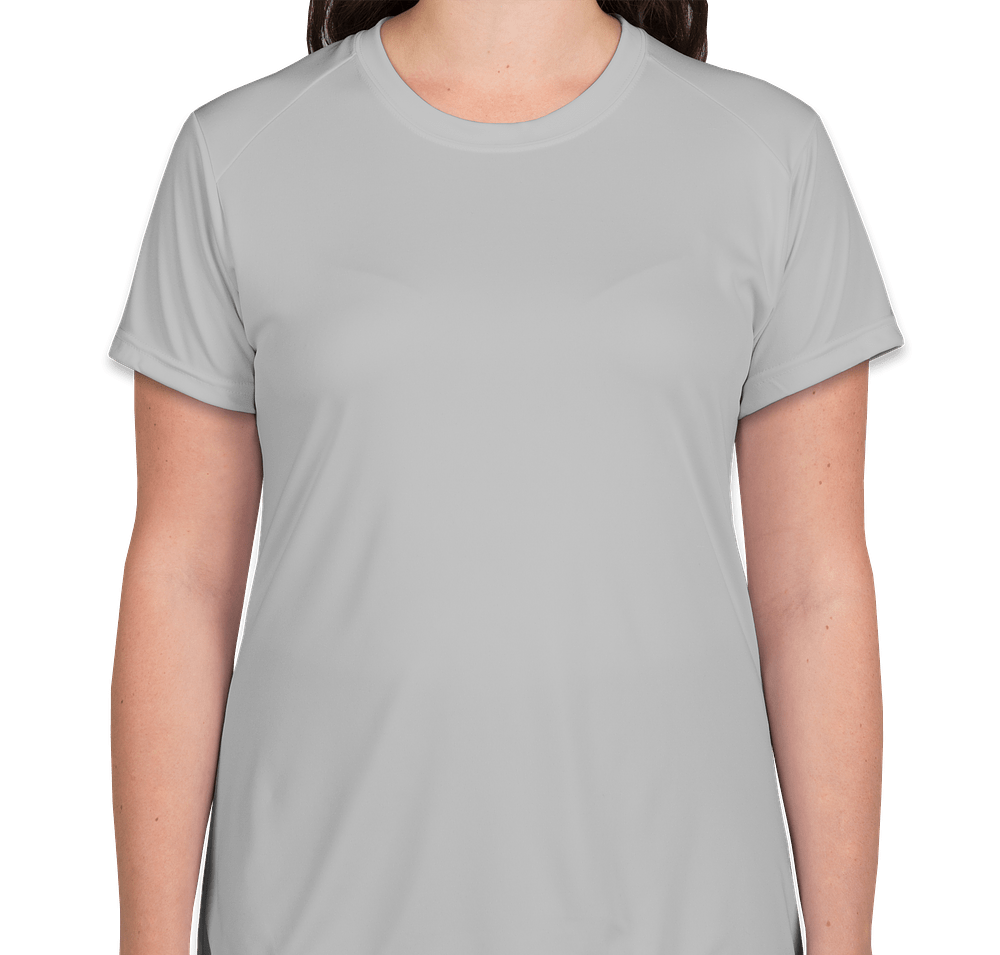
A4 Women’s Promotional Performance Shirt
- 3.8 oz., 100% polyester moisture-wicking performance fabric; set-in sleeves
- Sizes XS–4XL; available in white and light colors compatible with sublimation
Designing for Sublimation: All-Over Prints, Gradients, and Photo-Realistic Images
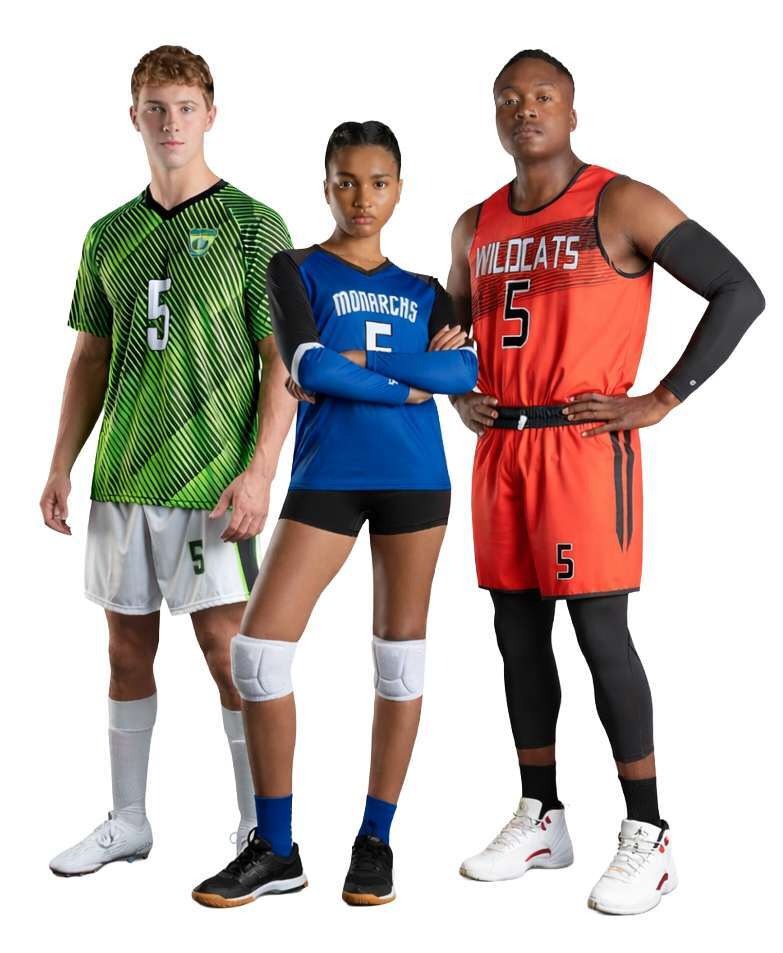
Sublimation gives you total design freedom. There are no color limits, no boxy print boundaries, and zero extra setup fees for complex artwork. But turning a great digital concept into high-performance gear still requires a few smart design choices.
Here is how to set up your files and leverage sublimation’s biggest visual strengths.
File Setup: How to Prepare Your Artwork
- Resolution: 150–300 DPI at print size. Sublimation is a digital print process; raster files (JPEG, PNG, PSD, TIFF) work well at the correct resolution. Vector files (AI, EPS, SVG) are also accepted and preferred for logo elements.
- Color mode: Design in RGB. Sublimation printers use CMYK output, but sublimation dyes achieve the most accurate RGB color conversion; design in RGB and let the production system handle the conversion.
- White as background: Since sublimation dye is transparent, any white in your design must come from the fabric itself, not from a white ink layer. Design your artwork on a white background; the white areas will appear as the natural white of the fabric.
What Works Best on Performance Fabric
- Gradients and color washes: Sublimation renders smooth, photographic-quality gradients that screen printing can only approximate through halftoning. This is where sublimation has the clearest visual advantage.
- All-over geometric and pattern designs: Repeating patterns across the full garment (chevron, camo, abstract geometry) are sublimation’s most popular design format for team jerseys. Pattern continuity across seams requires cut-and-sew sublimation; heat-press sublimation shows white lines at seams.
- Photo-realistic imagery: Logos with photographic elements, realistic shadows, or complex color blending are rendered at full quality by sublimation. Screen printing would require dozens of screens for the same result.
- High-stretch placement: Design bold graphics on the front or back torso panel. Avoid placing fine detail text across high-flex zones (underarm gussets, waistbands, inner knee panels) where the design may distort during movement.
Products That Work Best with Sublimation Printing
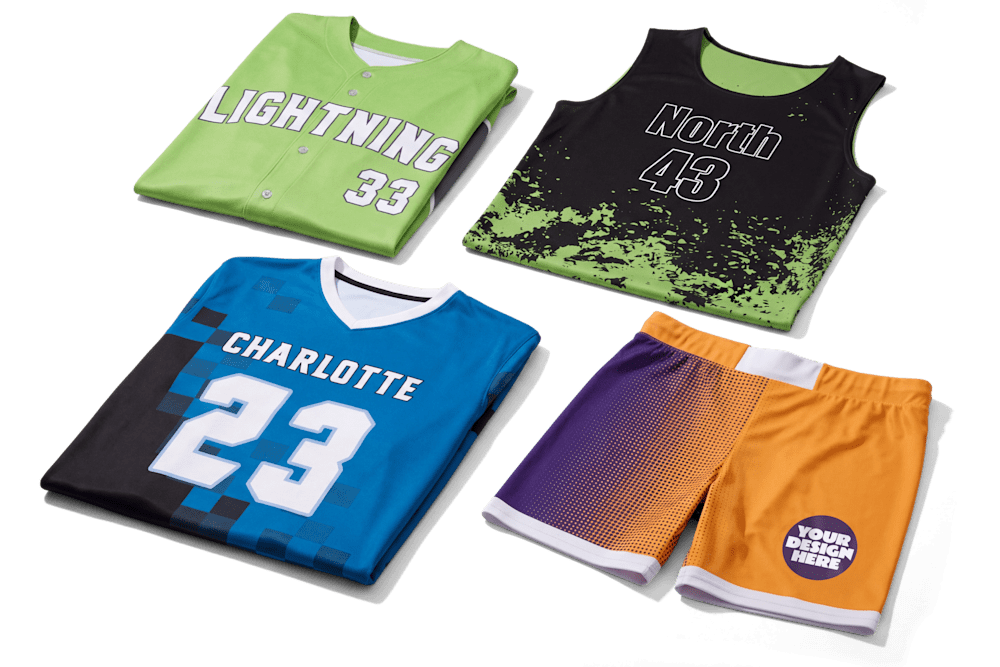
Our custom activewear catalog includes sublimation-ready styles across every product type. These are the formats where sublimation delivers its strongest performance advantage.
Sublimated Team Jerseys
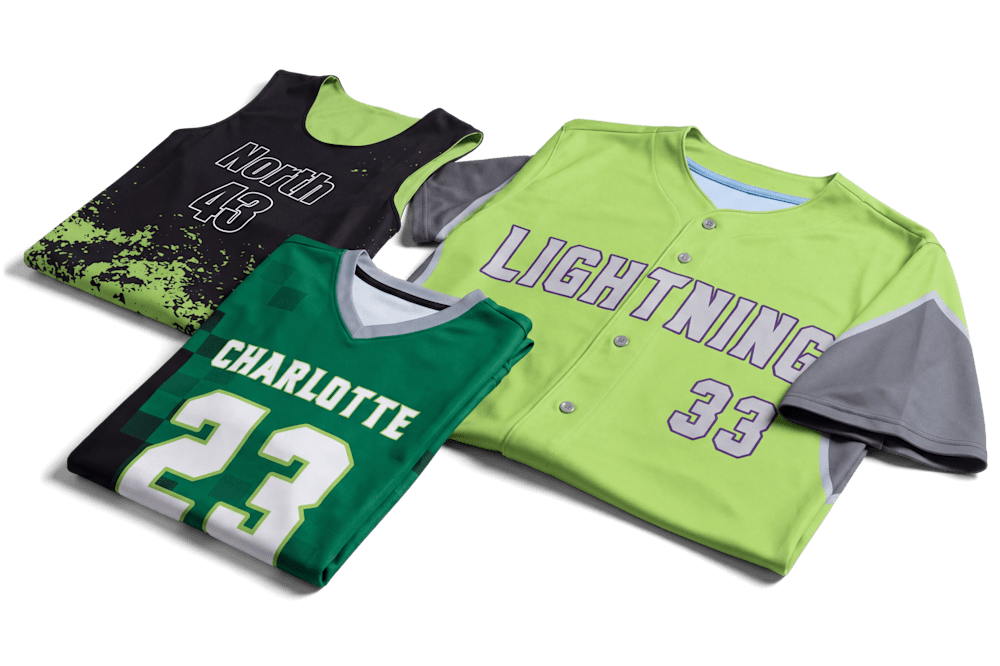
Team jerseys are the primary application for sublimation. Sublimated team jerseys for baseball, basketball, soccer, volleyball, softball, lacrosse, football, and other sports are built from lightweight, moisture-wicking 100% polyester. Names and numbers print in the same production pass at no additional per-unit cost, meaning a full-color jersey with 15 unique player names costs the same to produce as a blank version. For a full breakdown of options, see our sublimated jerseys guide.
Custom Printed Leggings
Women’s activewear, including leggings, with an all-over print requires high-stretch sublimation-compatible fabrics. The Sport-Tek LPST891 Women’s High Rise 7/8 Legging (8.3 oz., 87% polyester / 13% spandex jersey; flatlock seams; tag-free label; integrated cell phone pocket; XS–4XL) hits the sweet spot: the high poly-count guarantees rich, saturated color, while the spandex provides the four-way stretch recovery needed to keep patterns from looking distorted or washed out when worn.
Performance Tanks and Racerback Styles
Tanks and racerbacks for yoga, CrossFit, and court sports use the same sublimation process with slightly smaller print areas. Full-back and all-over designs are most impactful on tanks because the back panel presents an uninterrupted canvas. Any 100% polyester or poly-dominant blend tank in a white or light base color is sublimation-compatible.
Wash Care for Sublimated Activewear
Because sublimated dye becomes a permanent part of the fabric fibers rather than a surface layer, taking care of your gear is remarkably simple. You never have to worry about peeling logos, cracking graphics, or stiff prints. However, properly maintaining the technical polyester fibers ensures your colors remain vibrant season after season.
| Care Action | Recommendation | Reason |
|---|---|---|
| Washing | Cold water, gentle cycle | Hot water accelerates dye migration in blended fabrics; cold preserves print vibrancy |
| Inside-out washing | Yes, always | Reduces abrasion on the print face; extends visual life of the design |
| Drying | Low heat or air dry | Excessive heat (above 300°F sustained) can cause dye re-sublimation; low heat is safe |
| Ironing | Do not iron directly on print | Direct iron heat can cause dye migration or slight color shift on the surface |
| Bleach | Never | Chlorine bleach degrades polyester fibers and destroys dye bonds |
| Dry cleaning | Avoid | Dry cleaning solvents can affect dye stability in poly-spandex blends |
Properly cared for, a sublimated jersey holds full color vibrancy through endless wash cycles. If your organization currently replaces team jerseys or studio merch every season due to fading or cracked logos, switching to dye-sublimation can turn custom team apparel into a long-term asset rather than a recurring annual expense.
Start Designing Custom Sublimated Jerseys
Frequently Asked Questions
Q: What is sublimation printing for activewear and how does it differ from regular printing?
Sublimation printing converts dye from solid to gas under heat (380–420°F), and that gas bonds into the polyester fiber at a molecular level. Regular screen printing deposits ink onto the fabric surface. The practical difference: sublimation prints have no feel, no weight, no cracking risk, and preserve the garment’s moisture-wicking and stretch properties completely. Surface-applied prints reduce breathability and can crack under the repeated stretch of athletic use.
Q: Does sublimation printing work on all activewear fabrics?
No. Sublimation requires a minimum of 65% polyester content, and the base fabric must be white or a very light color. On natural fibers like cotton, sublimation dye has no polymer structure to bond with and won’t produce usable results. Likewise, dark fabrics will not produce a visible result. For dark-base activewear or cotton blends, heat transfer (DTF) is a better option. See our digital printing guide for a full comparison.
Q: Can I get all-over print activewear with no visible seam lines?
Yes, with cut-and-sew sublimation, which is the method we use for team jerseys. The difference matters: heat-press sublimation (used by most print-on-demand services) presses a design onto a completed garment, which leaves white seam lines where the press can’t reach folded fabric. Cut-and-sew sublimation prints the flat fabric panels before assembly, so designs run uninterrupted from edge to edge, including across seams. For leggings and fitted activewear, cut-and-sew sublimation is also what allows patterns to flow across panel seams without visible breaks.
Q: How does sublimation vs. screen printing for athletic wear break down in terms of cost?
For team jerseys with names, numbers, and full-color designs, sublimation is almost always more cost-effective than screen printing. Screen printing charges per color per print location; a jersey with a multi-color logo, a back number, and a player name across three locations would require significant setup fees. Sublimation prints everything in one pass for the same price regardless of color count or design complexity. For simpler 1–3 color designs on cotton or cotton-poly shirts, screen printing is more economical.
Q: How do I design custom printed leggings with sublimation?
Start in our Design Lab and select from several activewear styles, such as leggings. Upload your design or pattern file at 150–300 DPI in RGB color mode. For all-over patterns, your design will be mapped to the product panels and you’ll see a 3D preview before confirming. If you need design help, our design experts are available to optimize your artwork for sublimation at no extra charge.
Q: How long does sublimation printing last on custom activewear?
Properly cared for, sublimation prints are permanent for the life of the garment. Because the dye is bonded inside the fiber rather than sitting on the surface, there is nothing to crack, peel, or wash away. Washed cold inside-out and dried on low heat, sublimated jerseys hold full color vibrancy through countless wash cycles. The garment fabric will wear out before the print does.

The Custom Ink Staff is a team of design enthusiasts and promo product experts dedicated to bringing your ideas to life. From screen printing secrets to the latest trends in custom gear, we draw on decades of collective experience to help you create something unforgettable.