Screen Printing vs. Embroidery for Custom Sweatshirts: Which Method Is Right for You?
 Posted By Custom Ink Staff —
The Custom Ink Staff is a team of design enthusiasts and promo product experts dedicated to bringing your ideas to life. From screen printing secrets to the latest trends in custom gear, we draw on decades of collective experience to help you create something unforgettable.
SHARE:


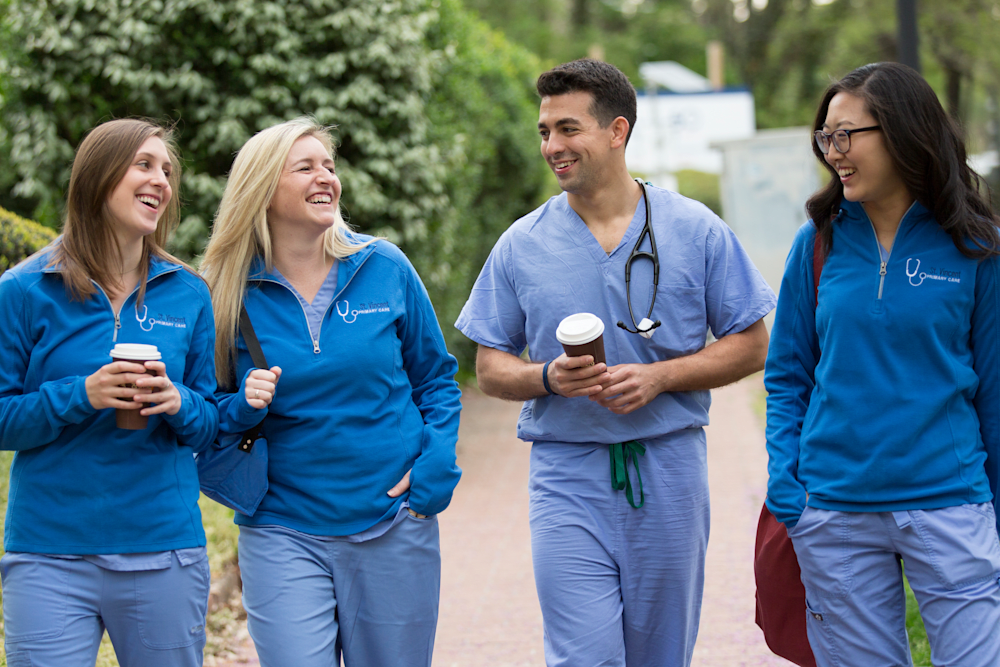
No one wants to open a box of custom sweatshirts only to find that the finished product looks cheap. In fact, a recent Custom Ink survey found that this is the single biggest fear for 30% of custom swag organizers, ranking way ahead of late deliveries or going over budget.
Most of that anxiety comes down to selecting the right decoration method. When it comes to custom sweatshirts, screen printing vs. embroidery isn’t just a matter of taste. For example, heavy fleece handles ink and thread completely differently than a standard t-shirt. Your choice will dictate the final look, the total cost, the durability in the wash, and how well your specific artwork actually translates onto the fabric.
This custom guide breaks down screen printing vs embroidery for sweatshirts, with the exact specifications for both methods so you can choose the best option for your design, budget, and group — without any guessing.
In This Article
- The Full Comparison: Screen Printing vs. Embroidery vs. DTF
- When to Choose Embroidery for Custom Sweatshirts
- When to Choose Screen Printing for Sweatshirts
- DIY Sweatshirt Printing at Home: What Works and What Doesn’t
- How We Handle Both Methods
- Frequently Asked Questions
Key Takeaways
- High-pile fleece (sherpa, thick fleece) cannot be screen printed — ink can’t penetrate the pile, and the result won’t look clean. Embroidery is the only viable method for these fabrics.
- Embroidery costs $6–$8 more per location than printing but lasts the lifetime of the garment — thread won’t crack, fade, or peel, making it the right call for corporate logos and anything worn repeatedly.
- Screen printing is the most cost-efficient method at volume — once you’re ordering 24+ pieces with a bold 1–4 color design, the per-unit cost drops sharply and the results are consistently vivid.
Screen Printing vs. Embroidery vs. DTF: The Full Comparison for Sweatshirts

When you are deciding how to customize a sweatshirt, you aren’t just choosing between ink and thread anymore. While screen printing and embroidery remain the traditional go-to options, a newer technology called Direct-to-Film (DTF) has become a popular choice, especially for smaller sweatshirt orders that have complex, full-color designs.
To help you figure out which option makes the most sense for your sweatshirt, we have broken down how all three decoration methods perform on sweatshirt fabric.
The comparison chart below evaluates each printing method based on the factors that impact your order the most: artwork detail, order size, durability, and total cost.
| Factor | Screen Printing | Embroidery | DTF (Direct-to-Film) |
|---|---|---|---|
| How it works | Ink pressed through a stencil/screen onto fabric; cured at 320°F+ | Thread stitched directly into the garment via digitized stitch file | Design printed on film, powder-bonded, heat-pressed onto fabric |
| Best design type | 1–6 spot colors, bold graphics, team names, event art | Logos, monograms, wordmarks — clean and precise | Full-color photographic, complex art, gradients |
| Minimum order | None (we offer no minimums on select styles) | 6 pieces | None |
| Cost at 24 pieces | Lower; setup $20–$50/screen but amortizes quickly with volume | ~$6–$8 more per location vs. printing; number of thread colors doesn’t change the price | No setup fee; competitive at small quantities |
| Cost at 100+ pieces | Lowest; can reach $3–$5 per print location | Stitch time is fixed per piece — doesn’t scale like printing | Competitive for complex art; less efficient than screen for simple high-volume |
| Durability | Very high (plastisol ink); wash-safe for years | Lifetime of the garment — thread won’t crack, fade, or peel | 50–100 wash cycles; best for shorter-use applications |
| Works on standard fleece? | Yes — mid-weight 50/50 or cotton/poly blends | Yes — all fleece types | Yes — works across most fabric types |
| Works on high-pile fleece/sherpa? | No — ink can’t penetrate pile; surface disrupts print contact | Yes — embroidery is the only clean option | No — heat press can mat or crush the pile |
| Minimum text size | 0.5″ letter height for legibility | 0.25″ letter height minimum (below that, letters blur) | No minimum — handles fine detail well |
| Best for | Schools, events, fundraisers, team spirit — any large run of bold art | Corporate logos, coaches’ gear, fleece uniforms, premium gifts | Small batch, full-color photographic, mixed-fabric orders |
The fabric rule that matters most: If your sweatshirt has a textured, high-pile surface (sherpa, thick fleece, soft-shell), skip screen printing entirely. The ink sits on top of the pile rather than bonding to the fabric, and the result looks uneven when the fabric moves or compresses. Embroidery is the only clean option for those surfaces.
When to Choose Embroidery for Custom Sweatshirts

Embroidery is the right call when the finish needs to look premium — a company logo on a quarter-zip sweatshirt, a name on a coach’s hoodie, or a school crest on a crewneck that’s meant to last through four years of daily wear. The thread doesn’t crack, fade, or peel after washing, making it the most durable option available on any fleece garment.
- Best fabrics for embroidery: Standard mid-weight fleece, sherpa, soft-shell, quarter-zips, full-zip hoodies, structured crewnecks
- Design considerations: Keep text above 0.25″ letter height; avoid photographic detail or gradients (thread is a solid-color medium)
- Minimum order: 6 pieces for embroidery; below that, the setup economics don’t scale
Understanding Embroidery Pricing: Stitch Count Math

Embroidery is priced by stitch count, not by number of colors. That distinction matters: a 4-color embroidered logo costs the same per piece to produce as a 1-color logo at the same stitch count, because all thread colors load simultaneously on a multi-head machine. The standard industry rate is $1–$3 per 1,000 stitches. Here’s what that looks like in practice and what you can expect it to cost:
| Logo Size / Placement | Estimated Stitch Count | Estimated Cost/Piece | Notes |
|---|---|---|---|
| Small left-chest logo (2–3″) | 2,000–4,000 stitches | $4–$8/location | Standard corporate logo placement |
| Standard left-chest logo (3.5–4″) | 5,000–8,000 stitches | $6–$12/location | Most common for polos, hoodies, crewnecks |
| Large chest design (5–6″) | 10,000–15,000 stitches | $15–$25/location | More complex; digitizing fee applies once |
| Second location (sleeve, back) | Additional per-piece cost | +$3–$8/location | Each location = separate setup + stitching time |
One-time artwork digitizing fee: converting your logo into a stitch file typically runs $0 (we include this for standard logos) to $50 for complex artwork. The digitizing file is yours to reuse on future orders.
Customer Story: BBL’s Habitat Build Day

“The BBL Build Team needed hoodies with our logo quickly, in order to have them in time for our Build Day with Habitat for Humanity. We decided to give Custom Ink a try and ordered the Gildan Midweight Zip Hoodies. We were not disappointed — we’ll definitely be ordering from Custom Ink again.”
Featured Products from This Story
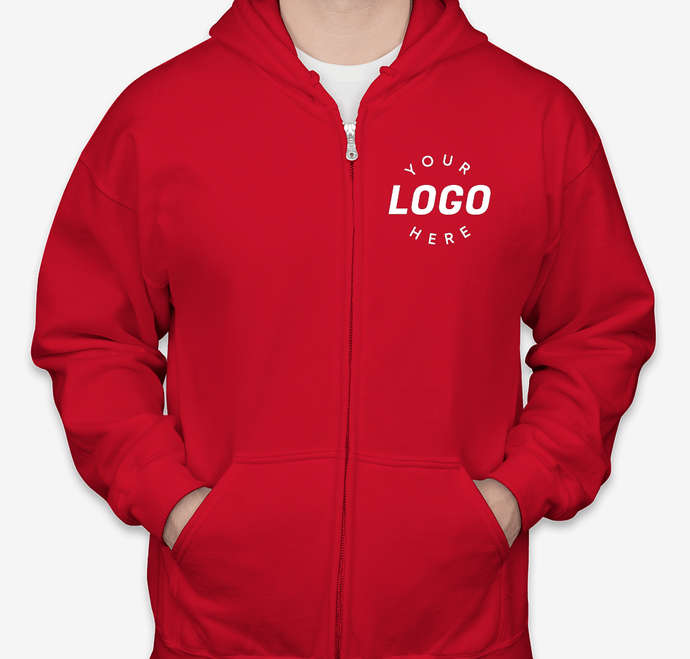
Gildan Midweight 50/50 Zip Hoodie — Logo-Ready Full-Zip
- 8.0 oz., 50/50 US cotton/polyester fleece, air-combed MVS yarn
- Full-zip front with left-chest embroidery zone; flat fleece surface embroiders cleanly
- Available S–3XL; two front pockets with matching zipper pulls
When to Choose Screen Printing for Sweatshirts
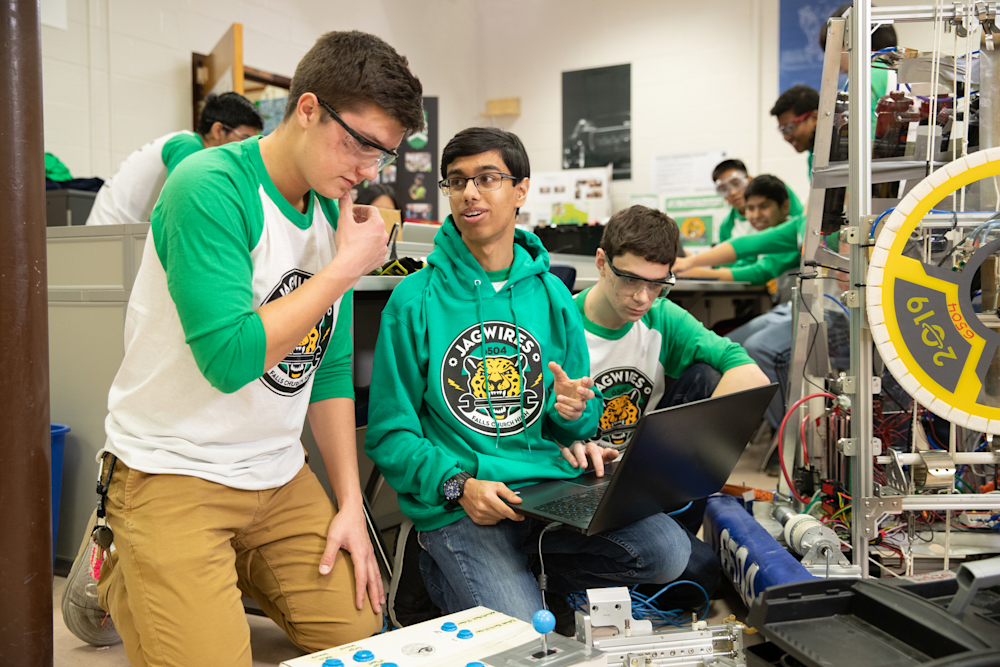
Screen printing is your sweatshirt go-to for group orders where you need bold art at scale. Each color in your design requires a separate screen, with a setup cost of $20–$50 per screen. That cost averages out quickly when you order a high volume. At 100+ pieces, the per-unit print cost can drop to $3–$5 per location. Screen printing is the default print method for school spirit runs, charity events, team sweatshirts, and any order where the design is the point, not just a logo.
Screen printing works best on standard mid-weight fleece (50/50 or cotton-poly blends in the 7.8–12 oz. range). The smooth surface of yarns like Gildan’s air-combed MVS blend or Hanes’ PrintPro XP fleece is specifically engineered to hold ink cleanly and resist cracking after washing. That said, screen printing has real limits:
- Color count drives cost: 1–3 spot colors is the sweet spot. Each additional screen adds $20–$50 to setup. For full-color photographic designs, DTF is a better route.
- Not for high-pile fabrics: Sherpa, textured fleece, and plush surfaces can’t hold screen-printed ink cleanly. Route these to embroidery.
- Minimum text height: Keep any text at 0.5″ letter height or larger for clean legibility at normal viewing distance.
- Full-zip hoodies: The zipper eliminates most of the front print area. Full-front designs work on pullovers; full-zips almost always route to left-chest or back placement.
Customer Story: 4-H Kitsap Kennel Club

“I contacted Custom Ink shortly before the fair began this last August. We changed the colors of the t-shirts and sweatshirts twice and they still got it right. We got our stuff on time and in time for fair. There is nothing I would change.”
Featured Hoodie from This Story
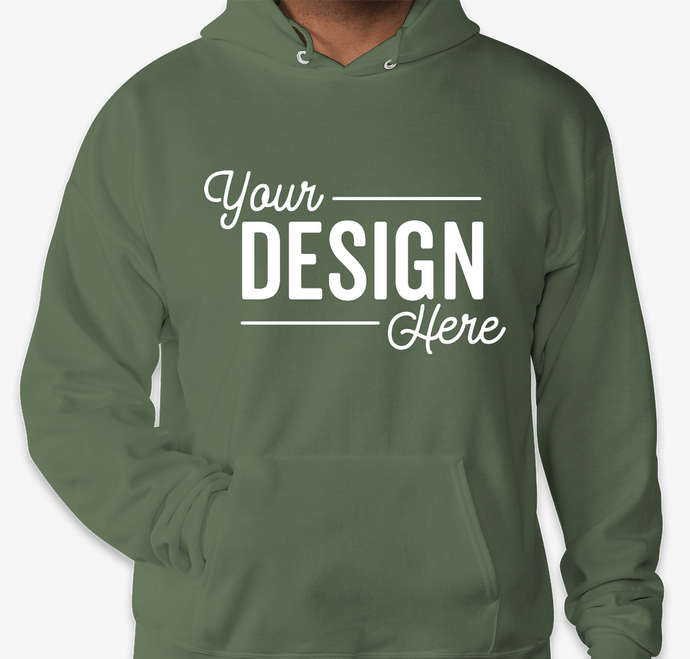
Hanes EcoSmart 50/50 Pullover Hoodie — Screen Print Workhorse
- 7.8 oz., 50/50 US-grown cotton/polyester, PrintPro XP low-pill fleece surface engineered for clean screen printing
- Smooth flat face holds plastisol and water-based inks without cracking through high-volume washing
- Available S–3XL; recycled polyester content from plastic bottles
DIY Sweatshirt Printing at Home: What Actually Works

If you’re really interested in DIY sweatshirt printing at home, the honest answer is that some methods work for single pieces and none of them produce results that compete with professional printing at group scale. Here’s a straightforward breakdown of your at-home options and their real-world limits.
| DIY Method | Works For | Key Limitation | Verdict |
|---|---|---|---|
| Heat transfer vinyl (HTV) | 1–5 garments, solid-color designs | Requires a cutting machine (Cricut/Silhouette) and a heat press; can peel on high-stretch fleece; limited to solid fills | Works for one-off single-color designs; doesn’t scale |
| Iron-on transfer paper | 1–2 garments, full-color images | Fades significantly after 10–20 washes; crinkles on fleece; not durable | Fine for a personal keepsake; not group-order quality |
| Freezer paper stencil + fabric paint | 1 garment, simple shapes | Very time-intensive; paint bleed on fleece; results vary by hand | Craft project, not a group solution |
| DIY embroidery (hand or machine) | 1 garment, simple designs | Requires a multi-head embroidery machine for consistency; stitch density and tension are hard to control without professional equipment | Excellent for single personalized pieces; impractical for groups |
| Professional screen printing (our service) | 6–1,000+ garments | Minimum 1 piece on select no-minimum styles; setup cost amortizes with quantity | Consistent quality, durable results, free standard shipping |
The main reason professional results differ from DIY isn’t the equipment — it’s the cure. Plastisol screen printing ink must reach 320°F+ in a conveyor dryer to bond properly with the fabric. Home ovens and irons can’t reach or maintain that temperature consistently across a full print surface. The result is ink that looks fine at first and then cracks within a few washes.
For one personal sweatshirt, HTV or iron-on works fine. For a group of 12 or more, the time and material cost of DIY almost always exceeds the cost of a professional order — without the quality.
How We Handle Screen Printing and Embroidery

Every custom sweatshirt order we produce starts with a decoration review. When you upload your artwork in our Design Lab, our system flags any file quality or sizing issues before anything goes to production. Our design experts also review every embroidery file for stitchability. If your logo has hairline strokes or fine text that would blur below 0.25″ in thread, we’ll catch it and suggest a fix.
Our minimum order for embroidery is often 6 pieces. Screen printing is available with no minimums on select styles. Both methods ship with our free standard shipping, arriving in about 2 weeks. Rush options are available through our delivery options page.
According to the 2026 ASI Global Advertising Impressions Study, fleece and outerwear generate a cost-per-impression below $0.004 — meaning a branded sweatshirt is one of the most cost-efficient advertising investments available. That return depends entirely on people actually wearing the sweatshirt. Choosing the right decoration method for the garment and use case is what gets it there.
Frequently Asked Questions
Q: What’s better for custom sweatshirts — screen printing or embroidery?
It depends on the design and the fabric. For bold full-front graphics on a group order of 24+, screen printing is more cost-efficient and produces vivid results. For left-chest logos on corporate fleece, coaching gear, or any sweatshirt with a textured surface, embroidery is the better call — it lasts longer and looks more professional up close. If your design is full-color photographic or you’re ordering fewer than 12 pieces, DTF is often the right middle ground.
Q: How much does custom embroidered sweatshirt decoration cost?
Embroidery is priced by stitch count at $1–$3 per 1,000 stitches. A standard left-chest logo (3.5–4″ wide, 5,000–8,000 stitches) typically adds $6–$12 per piece over the base garment cost. A one-time digitizing fee applies to convert your logo into a stitch file — we include this for standard logos in most orders. The number of thread colors doesn’t change the per-piece cost.
Q: Can you screen print on a fleece hoodie?
Yes, on most standard mid-weight fleece hoodies. The key is the surface texture. Smooth 50/50 or cotton-poly blends (like Gildan Midweight 50/50 at 8.0 oz. or Hanes EcoSmart at 7.8 oz.) hold screen printing cleanly. High-pile sherpa and textured fleece cannot be screen printed — ink sits on top of the pile rather than bonding to the fabric, and the result looks inconsistent. Those fabrics must be embroidered.
Q: How do I embroider a sweatshirt?
Professional embroidery requires a multi-head embroidery machine, a digitized stitch file, and stabilizer backing to keep the fabric from puckering during production. The basic process: the sweatshirt is hooped with a stabilizer backing, the stitch file is loaded, and the machine places thousands of stitches to recreate your design. For a standard left-chest logo, that’s 5,000–8,000 stitches. At home, a single-needle hobby embroidery machine can handle the same process, but stitch density and tension are difficult to control at the quality level you’d want for a group order. For anything beyond a single personalized piece, professional embroidery is more consistent and usually more cost-effective.
Q: Can I get some sweatshirts embroidered and some screen printed in the same order?
Yes, though they’ll technically be separate items in your order since each method goes through a different production process. If you need a mix — for example, embroidered quarter-zips for staff and screen-printed pullover hoodies for volunteers — both can be built and submitted together in our Design Lab. Our team will route each garment to the correct production process automatically.
Not sure which method fits your order? Our design experts review every file before it goes to production and can recommend the right method based on your fabric, design, and quantity. Start in the Design Lab and we’ll handle the rest.

The Custom Ink Staff is a team of design enthusiasts and promo product experts dedicated to bringing your ideas to life. From screen printing secrets to the latest trends in custom gear, we draw on decades of collective experience to help you create something unforgettable.