Durable Work Shirts for Landscapers: The Materials and Brands That Actually Last in the Field
 Posted By Custom Ink Staff —
The Custom Ink Staff is a team of design enthusiasts and promo product experts dedicated to bringing your ideas to life. From screen printing secrets to the latest trends in custom gear, we draw on decades of collective experience to help you create something unforgettable.
SHARE:


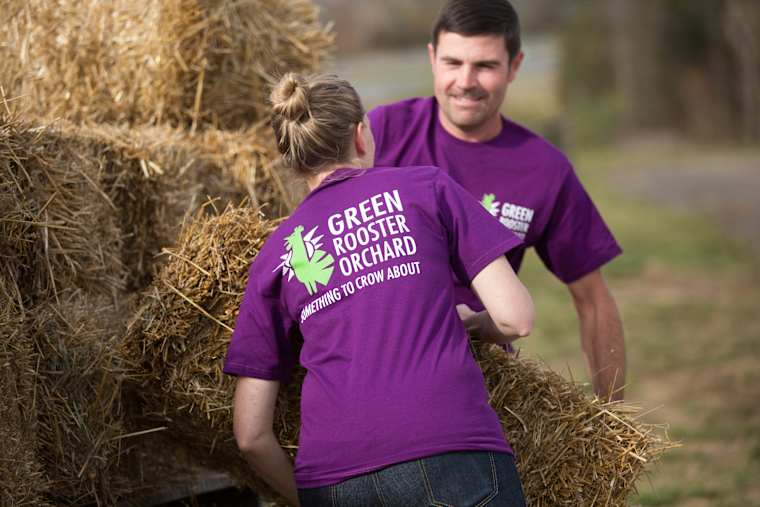
When uniforming your team, a $12 work shirt that rips at the seams by June isn’t cheaper than a $30 shirt that’s still on your landscaping crew’s backs in October. It just moves the cost from your budget line to your reorder pile.
Durability isn’t just about fabric toughness, either. It’s about crew safety. Constant UV exposure on the job raises outdoor workers’ risk of nonmelanoma skin cancer by 60%, according to WHO and ILO research cited by the Skin Cancer Foundation. The gear you supply directly impacts both your bottom line and your team’s day-to-day well-being under a harsh July sun.
This guide breaks down what makes the best durable work shirts for your landscaping business. We look at performance specs, evaluate top workwear contenders like Carhartt, Dickies, and CornerStone, and show you how UPF sun protection and moisture-wicking fabrics hold up against continuous mowing, mulching, and heavy wash cycles.
In This Article
- What Actually Makes a Work Shirt Durable
- Carhartt vs. Dickies vs. CornerStone: Comparing Durable Work Shirt Brands
- Sun Protection for Outdoor Landscaping Crews
- Moisture-Wicking Work Shirts for Summer Heat
- Balancing Durability with Comfort
- The Real Cost of Cheap Work Shirts vs. Durable Ones
- Frequently Asked Questions
Key Takeaways
- UV exposure raises skin cancer risk by 60% for outdoor workers, so a tightly woven, UPF-rated shirt is protective gear, and not an afterthought.
- Fabric weight tells the real durability story: a 4 oz. performance jersey, a 5.25 oz. poly-cotton twill, and a ripstop long-sleeve shirt all serve different jobs on the same crew.
- Durability is now the top purchase driver for buyers, with 45% citing longevity as the single most important feature, per Custom Ink’s 2026 Swag Trends Survey.
What Actually Makes a Work Shirt Durable

When it comes to selecting landscaping work shirts, durability comes down to three things: fiber weight, weave, and stitching. Heavier fabric resists tearing and abrasion longer. A tighter weave resists snags from branches and equipment. And reinforced seams keep a shirt together at the stress points that often fail first: the shoulders, armholes, and pocket edges.
- Fiber weight: measured in ounces per square yard. Heavier fabric (6 oz. and up) resists tearing better than lightweight tees.
- Weave and stitching: double or triple-needle stitching at the shoulders, armholes, and hems is where cheap shirts fail first.
- Ripstop reinforcement: a grid weave built to stop a small snag from becoming a blowout.
Choosing Between Heavy-Duty Fabrics
- Cotton canvas and duck fabric are the heaviest options and offer the most abrasion resistance.
- Poly-cotton blends trade a little of that toughness for faster drying and less shrinkage.
- Ripstop fabric uses a reinforced grid weave that stops small tears from spreading into large ones, which matters most for crews working around thorny plants, fencing, and sharp equipment.

“Showing grandpa his new shirts for his yard service. He loved them. Good job, Custom Ink.” – Trivette’s lawn service
Featured Product from This Story
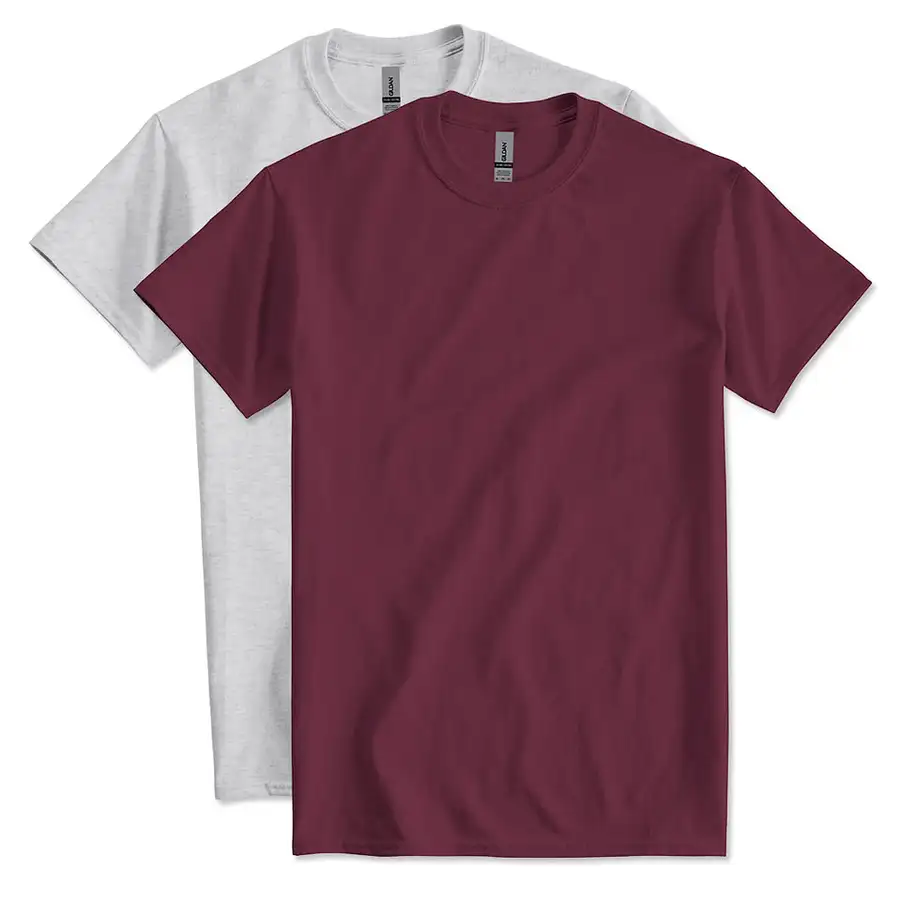
Gildan Ultra Cotton T-shirt
- 6 oz., 100% U.S. cotton with taped neck and shoulders for durability
- Classic fit, seamless body built to handle repeated wear and washing
Carhartt vs. Dickies vs. CornerStone: Comparing Durable Work Shirt Brands

Carhartt, Dickies, and CornerStone dominate the workwear and uniforms conversation, and we carry styles from all three. These brands make reliable, job-ready styles built for heavy daily use. But rather than relying on brand names alone, comparing them by fabric composition, weight, and construction features shows how each option performs on the job site.
| Brand & Style | Fabric & Construction | Best For |
|---|---|---|
| Carhartt Force Sun Defender | 4 oz. 100% polyester jersey, UPF 50+ Sun Defender treatment, Force FastDry moisture-wicking | Summer mowing, roadside crews, all-day sun exposure |
| Dickies Twill Industrial Work Shirt | 5.25 oz. poly-cotton twill blend with a stain-resistant finish | Everyday crew shirt with a structured, professional look |
| CornerStone Select Ripstop Long Sleeve | Ripstop fabric with reinforced triple-needle stitching and stain-release finish | Rough terrain, brush clearing, and equipment-heavy jobs |
Carhartt’s broader lineup is built around its Duck canvas fabric, a 12 oz. 100% ringspun cotton with a water-resistant finish, and its Force line, which trades some of that heft for moisture-wicking performance in the heat.
Dickies leans on twill and poplin poly-cotton blends across its work shirt line, generally in the 4.25 to 5.25 oz. range, with a moisture-wicking finish on most current styles.
CornerStone, a Port Authority family brand, is built specifically for tactical and trade work, with ripstop and duck cloth options that emphasize tear resistance over lightweight comfort.
None of the three is objectively “better.” They’re simply built for different jobs on the same crew.
Sun Protection for Outdoor Landscaping Crews

UPF, or Ultraviolet Protection Factor, measures how much UV radiation a fabric blocks. The Skin Cancer Foundation’s Seal of Recommendation requires a minimum UPF of 50, which blocks 98% of the sun’s rays, and roughly one-third of the U.S. labor force works outdoors as a major part of their job. A standard cotton tee typically falls well short of that rating once it’s worn, washed, and stretched, which is why a dedicated UPF-rated shirt matters more for a landscaping crew than it does for an office polo.
- UPF 50+ is the target for crews working full days outdoors, especially between 10 a.m. and 4 p.m. when UV exposure peaks.
- Dark, tightly woven fabric offers more natural sun protection than light-colored, loosely woven cotton, even without a UPF treatment.
- Long sleeves cover more skin than a UPF-rated short sleeve, which matters as much as the fabric’s rating.
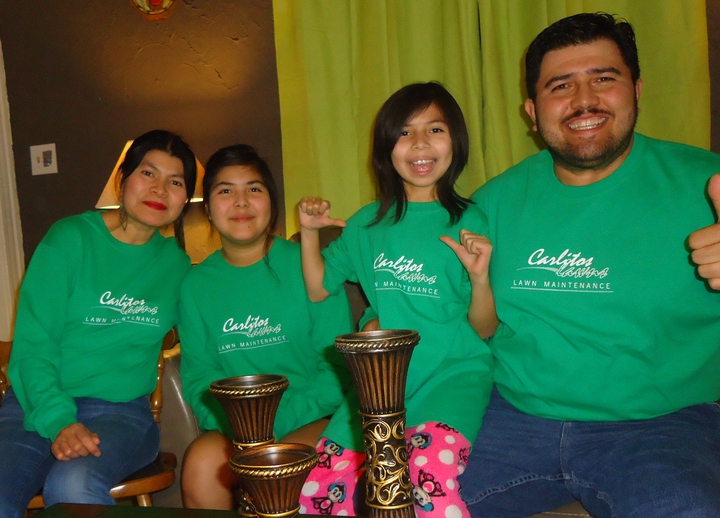
“We’re so happy to start wearing our new t-shirts for the first time. We’re going to look a lot more professional. Thanks, Custom Ink.” – Carlitos Lawns
Featured Product from This Story
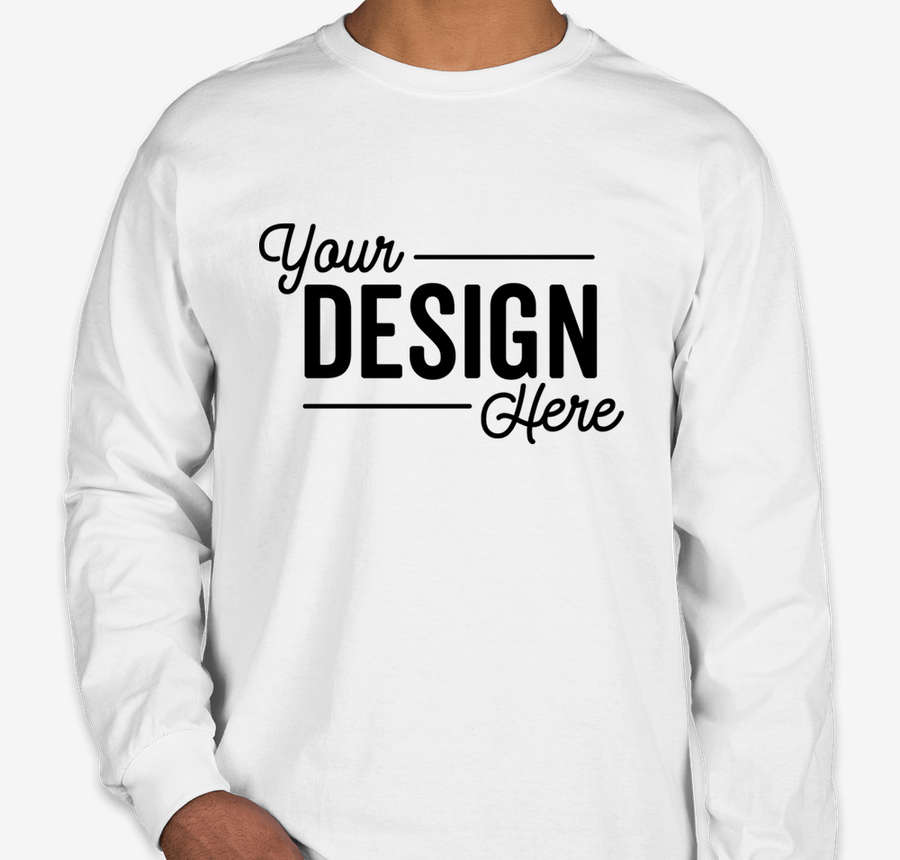
Gildan Ultra Cotton Long Sleeve T-shirt
- 6.1 oz. 100% preshrunk cotton with double-needle stitching at the neck and sleeves
- Full arm coverage for added sun protection during long outdoor shifts
Moisture-Wicking Work Shirts for Summer Heat
Moisture-wicking fabric pulls sweat away from the skin to the outer surface of the shirt, where it evaporates faster. For a landscaping crew working in full sun, that’s the difference between a shirt that becomes heavy and clingy by 10 a.m. and one that keeps a crew comfortable through a full shift. Carhartt’s Force FastDry technology and Dickies‘ moisture-wicking twill finish both use this approach, just on different base fabrics, a lightweight polyester jersey versus a poly-cotton blend twill.
Balancing Durability with Comfort

The most durable fabric on paper isn’t always the right call for each crew member or every season. A 12 oz. duck canvas shirt outlasts almost anything, but it’s overkill and uncomfortably hot for a July mowing route.
The practical approach most landscaping businesses land on is a two-tier system: a lighter, moisture-wicking or standard cotton shirt for daily mowing and planting work, and a heavier ripstop or twill shirt for crew leads, equipment operators, or anyone doing brush clearing and rougher manual work.
- Daily crew work: a 5-6 oz. cotton or poly-cotton t-shirt balances comfort and durability for routine mowing and planting.
- Rough terrain or equipment work: step up to ripstop or a heavier twill for crew members doing brush clearing or operating machinery.
- Full-sun exposure: prioritize a UPF-rated, moisture-wicking shirt over raw fabric weight.
The Real Cost of Cheap Work Shirts vs. Durable Ones
A cheap work shirt that needs replacing every season costs more over three years than a durable one bought once. ASI’s 2023 Ad Impressions Study found branded outerwear and heavier apparel generate roughly 7,856 impressions over its lifetime at less than half a cent per impression, a number that only holds up if the garment actually lasts. Buyers are catching onto this math. Custom Ink’s 2026 Swag Trends Survey found that 45% of buyers now cite longevity as the single most important feature when choosing branded apparel, more than any other factor, and 62% say they plan to move toward heavier, more durable fabrics this year.
- Cost per wear drops with durability: a shirt worn for two seasons costs less per wear than one replaced every few months.
- Buyers are prioritizing longevity: 45% of buyers rank it as the top feature they look for, per Custom Ink’s 2026 Swag Trends Survey.
- Reordering less often saves admin time in addition to material cost, for the person managing your crew’s gear.

“Just finished our mowing routes and we couldn’t be happier with how our new shirts turned out! ” – Sharp Lawn & Landscaping
Whichever fabric fits your crew’s work, the fastest way to see it on a real shirt is our Design Lab, where you can compare styles and get a live quote before you order.
Frequently Asked Questions
Q: What fabric weight makes the most durable work shirts?
Generally, 6 oz. and up for cotton or poly-cotton blends. Heavier fabric resists tearing and abrasion better, though ripstop weave can outperform a heavier plain-weave fabric against snags and small tears.
Q: Is Carhartt or Dickies better for landscaping work shirts?
It depends on the job. Carhartt’s Force line is built for heat and sun with moisture-wicking, UPF-rated fabric, while Dickies‘ twill work shirts offer a more structured, professional look at a lighter fabric weight. Many crews use both across different roles.
Q: Do UPF shirts still protect against sun when wet with sweat?
Most UPF-rated technical fabrics maintain their protection level when wet, though wet cotton and other untreated fabrics can transmit more UV radiation than dry fabric. Check the specific garment’s care instructions if this matters for your crew.
Q: What should landscapers wear for sun protection?
A tightly woven, long-sleeved shirt, ideally UPF 50-rated, along with a wide-brimmed hat and UV-blocking sunglasses. Dark, densely woven fabric offers meaningful protection even without a certified UPF rating.
Q: Are moisture-wicking work shirts worth it for landscaping crews?
Yes, especially for crews working full days in summer heat. Moisture-wicking fabric keeps sweat from soaking through the shirt, which improves comfort and can reduce chafing over a long shift.

The Custom Ink Staff is a team of design enthusiasts and promo product experts dedicated to bringing your ideas to life. From screen printing secrets to the latest trends in custom gear, we draw on decades of collective experience to help you create something unforgettable.