High-Visibility Work Shirts for Landscaping Crews: ANSI Class 2 vs. Class 3 Requirements
 Posted By Custom Ink Staff —
The Custom Ink Staff is a team of design enthusiasts and promo product experts dedicated to bringing your ideas to life. From screen printing secrets to the latest trends in custom gear, we draw on decades of collective experience to help you create something unforgettable.
SHARE:


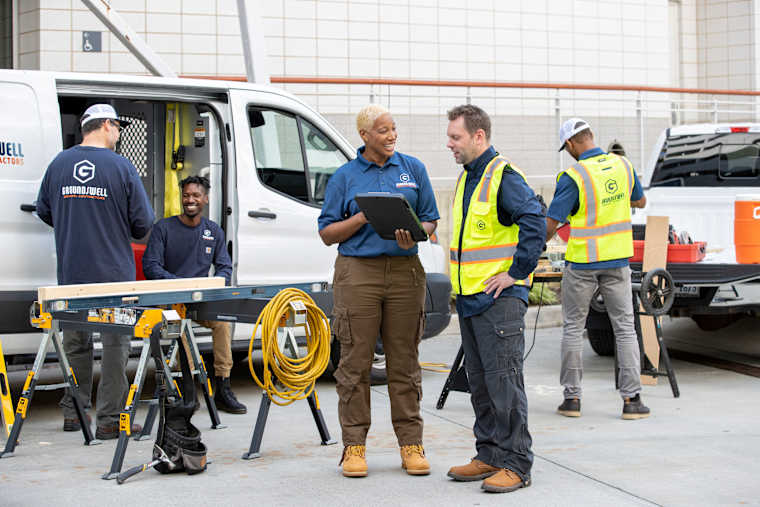
A landscaping crew trimming hedges along a busy road operates just feet away from moving traffic, placing them directly near one of the highest hazard zones in occupational work. According to Bureau of Labor Statistics data, motor vehicle incidents account for roughly 35% of all workplace fatalities each year, with hundreds involving pedestrian workers struck on roadside sites.
That danger is precisely why the ANSI/ISEA 107 standard was created. In high-risk environments, simply handing your crew a bright neon t-shirt isn’t enough to meet safety standards or protect your business from regulatory fines. True safety compliance requires certified high-visibility apparel engineered for specific traffic speeds and visibility conditions.
This guide breaks down when your landscaping business actually requires certified high-visibility work shirts, explains the operational differences between Class 2 and Class 3 garments, and shows you how to add custom logos without compromising your crew’s safety or voiding the garment’s ANSI certification. Once you know which class your crew needs, you can browse our certified custom workwear lineup.
In This Article
- When Landscaping Crews Need High-Visibility Work Shirts
- What ANSI/ISEA 107 Actually Requires
- Class 2 vs. Class 3 High-Vis Work Shirts
- Customizing High-Vis Workwear Without Breaking Compliance
- OSHA Compliance Checklist for Landscaping Crews
- When Standard Work Shirts Are Enough
- Frequently Asked Questions
Key Takeaways
- Roughly 35% of work-related fatalities involve motor vehicles, which is why OSHA requires certified high-vis apparel for crews exposed to traffic, and bright colors alone don’t satisfy that requirement.
- Class 2 and Class 3 aren’t interchangeable: Class 3 requires full-body coverage including sleeves, and is mandated for roads over 50 mph or low-visibility conditions.
- Smart fabric features now matter to buyers as much as compliance: 65% rate moisture-wicking and wrinkle-free performance as very or extremely important for daily-wear uniforms, per Custom Ink’s 2026 Swag Trends Survey.
When Landscaping Crews Actually Need High-Visibility Work Shirts

Not every landscaping job requires certified high-vis apparel, but several common situations do. OSHA’s General Duty Clause requires high-visibility apparel for workers exposed to the danger of being struck by public or construction traffic, and the Federal Highway Administration’s Worker Visibility rule extends that requirement to all workers within the right-of-way of a federal-aid highway who are exposed to vehicular traffic or equipment.
- Roadside mowing and median work: any crew working within a highway right-of-way exposed to traffic.
- Municipal and government contracts: many city and county contracts require ANSI-rated apparel as a condition of the bid.
- Low-light or early-morning shifts: crews starting before sunrise face reduced visibility even off major roads.
- Around heavy equipment: mowers, chippers, and trucks operating in the same space as ground crews.

What ANSI/ISEA 107 Actually Requires
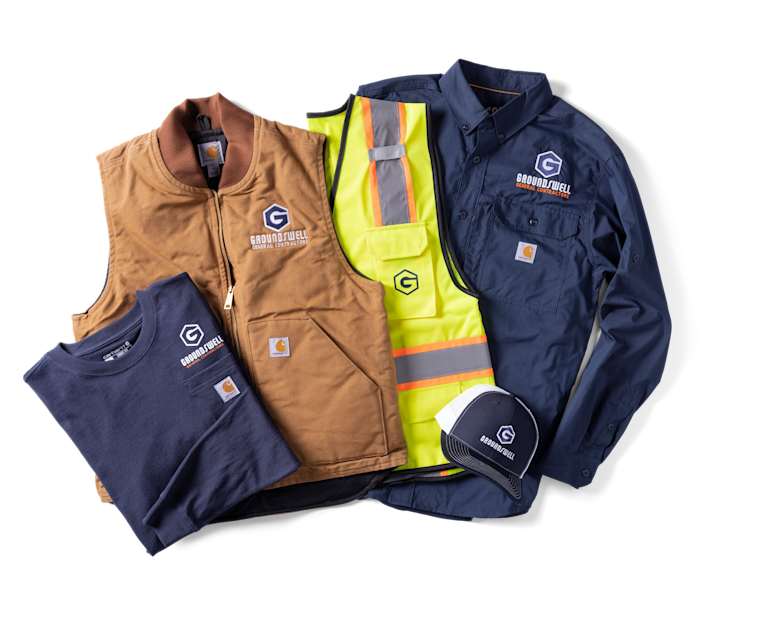
ANSI/ISEA 107 is the national standard for high-visibility safety apparel, covering both the amount of fluorescent background material and the amount of retroreflective tape a garment must have to earn a class rating. Garments are rated Type O (off-road, no traffic exposure), Type R (roadway, exposed to public traffic), or Type P (public safety, for first responders).
For landscaping crews near traffic, Type R is the relevant category, and the class rating within it, Class 2 or Class 3, depends on traffic speed and job risk.
- Background material: the fluorescent yellow-green or orange-red fabric that makes a garment visible in daylight.
- Retroreflective material: the reflective tape or striping that bounces headlights back at a driver in low light.
- Class rating: determined by how much of each material the garment includes and how it’s positioned on the body.
Class 2 vs. Class 3 High-Visibility Work Shirts: Which Does Your Crew Need
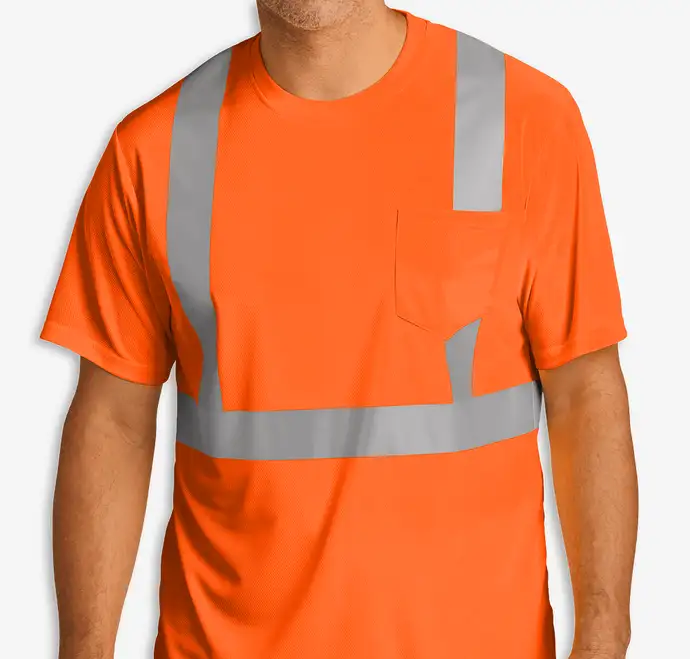
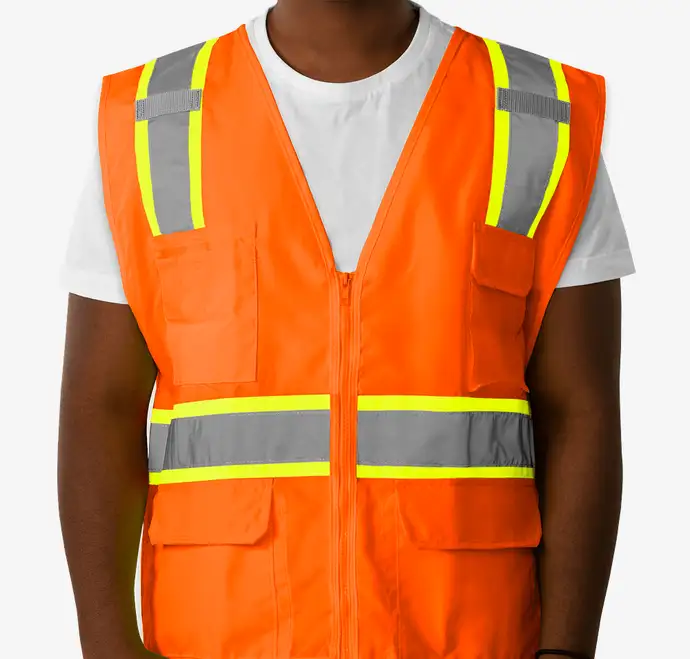
Class 2 is the baseline for most roadside work at moderate speeds, while Class 3 steps up to full-body coverage for high-speed roads or reduced-visibility conditions. The table below compares real, in-stock styles at each class level.
| Product | Class & Fabric | Best For |
|---|---|---|
| CornerStone Class 2 Mesh Safety Pocket T-shirt | 4.1 oz. 100% polyester birdseye mesh, ANSI Class 2, 2″ reflective tape, moisture-wicking | Daily crew wear on moderate-speed roads and municipal jobs |
| Kishigo Class 2 Contrast Safety Vest | 100% poly mesh, ANSI Class 2 compliant, dual-tone orange and lime | Layering over standard work shirts on job sites requiring Class 2 |
| Kishigo Class 3 Hi-Vis Hooded Full Zip Sweatshirt | 9 oz. polyester fleece, ANSI/ISEA Class 3 compliant, 2″ VizLite® reflective material | High-speed roads (50+ mph), cold-weather shifts, and low-visibility conditions |
A designated safety person at your company should confirm which class applies to each job, since the choice depends on posted speed limits, worker task, and site conditions rather than personal preference. When in doubt, a Class 3 garment satisfies any requirement that calls for Class 2, but the reverse isn’t true.
Customizing High-Vis Workwear Without Breaking Compliance

You can absolutely put your logo on ANSI-rated apparel, the standard doesn’t require plain garments. The rule to follow is simple: decoration can go on the background material, but it can never cover, interrupt, or be placed over the retroreflective tape. Covering reflective striping with a logo, even partially, can void the garment’s certification.
- Chest and back placement: the safest zones for a logo are the solid background panels between reflective stripes.
- Never print over reflective tape: this is the single most common compliance mistake companies make with custom hi-vis gear.
- Check minimum coverage after decoration: confirm your logo placement still leaves the certified amount of background and reflective material visible.
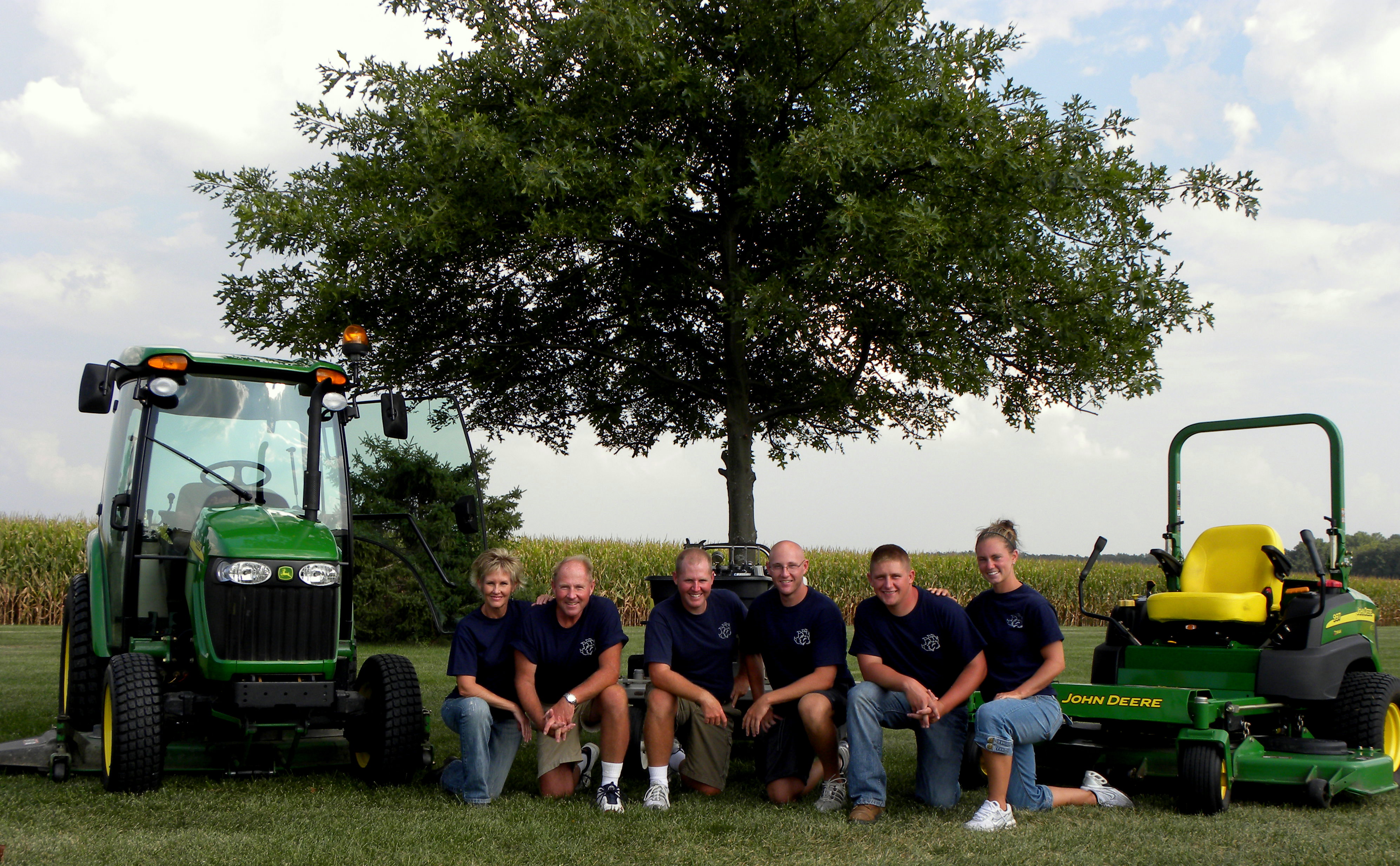
“This is the Turf Tamer crew. We specialize in lawn care fertilization, aeration, and weed control. The equipment is just a few of our “pieces” but thought they fit well with the picture. ” – Turf Tamer
OSHA Compliance Checklist for Landscaping Crews
- Identify which jobs expose crew members to public traffic, construction equipment, or low-light conditions.
- Assign the correct ANSI/ISEA 107 class (2 or 3) based on posted road speed and task risk, with a designated safety person making the call.
- Confirm the specific garments you order carry a current ANSI/ISEA 107 label rather than just a “high-vis” color.
- Keep decoration off retroreflective tape and background-material minimums.
- Replace garments once they’re faded, torn, or visibly dirty, since worn-out material no longer performs at its rated class.
- Document your uniform policy in writing so new hires know which jobs require which class of gear.
Getting the class rating right protects your crew and your contract, and a stop-work order over the wrong garment is expensive to untangle after the fact. If you’re not sure which class a specific job calls for, our team can help you sort it out before you commit to an order.
When Standard Work Shirts Are Enough

Not every crew member needs to be in certified hi-vis workwear every day. Office staff, estimators meeting clients, and crews working entirely on private residential lots away from any roadway typically don’t need ANSI-rated apparel.
Reserve certified high-vis gear for the specific jobs that expose workers to traffic or equipment risk, and use standard work shirts for everything else. Buyers are increasingly thinking about apparel this way across their whole crew: Custom Ink’s 2026 Swag Trends Survey found that 65% of buyers rate smart fabric features like moisture-wicking and wrinkle resistance as very or extremely important for daily-wear uniforms, whether or not that uniform needs a safety rating.
Frequently Asked Questions
Q: What is ANSI Class 2 for high-vis landscaping uniforms?
Class 2 is a mid-level ANSI/ISEA 107 rating for workers exposed to traffic at moderate speeds, requiring a set minimum of fluorescent background material and retroreflective tape. It’s the common baseline for roadside landscaping crews.
Q: Is high-vis clothing legally required for landscaping crews?
It depends on the job. OSHA requires it under the General Duty Clause for workers exposed to public traffic, and federal-aid highway work falls under the FHWA’s Worker Visibility rule. Municipal contracts often add their own requirement as a condition of the bid.
Q: Can I put my company logo on a high-vis work shirt?
Yes, as long as the decoration stays on the background material and never covers the retroreflective tape. Covering reflective striping can void the garment’s ANSI certification.
Q: What’s the difference between a Class 2 safety vest and a Class 3 safety vest?
Class 3 requires more background and reflective material and full coverage including sleeves, making it visible from a greater distance. Class 3 is required for high-speed roads over 50 mph or reduced-visibility conditions; Class 2 covers moderate-speed roadside work.
Q: Do landscaping crews need hi-vis gear year-round?
Only for the specific jobs that expose workers to traffic, low light, or heavy equipment. Crews working entirely on private property away from roads typically don’t need certified high-vis apparel every day.

The Custom Ink Staff is a team of design enthusiasts and promo product experts dedicated to bringing your ideas to life. From screen printing secrets to the latest trends in custom gear, we draw on decades of collective experience to help you create something unforgettable.