Business Signs 101: What Goes Outside, What Goes Inside, and What to Buy First
 Posted By Custom Ink Staff —
The Custom Ink Staff is a team of design enthusiasts and promo product experts dedicated to bringing your ideas to life. From screen printing secrets to the latest trends in custom gear, we draw on decades of collective experience to help you create something unforgettable.
SHARE:


According to a FedEx Office “Signs of the Times” survey, 75% of consumers have told someone about a business based on its signage. Not a digital ad. Not a social post. A sign.
For a small business owner spending real money on marketing, that statistic reframes the conversation: your signs are not overhead; they are one of the highest-ROI marketing channels you have. The catch is that most small business owners approach custom signage the wrong way, starting with questions about price before answering questions about placement, purpose, and permanence.
This guide fixes that sequence.
In This Article
- Two Layers of Business Signage: Permanent and Flexible
- Outdoor Signs for Small Business
- Indoor Business Signs
- What to Buy First: Signage Priorities by Business Type
- Design Rules That Apply to Every Business Sign
- How to Order
- Frequently Asked Questions
Key Takeaways
- 75% of consumers have recommended a business to someone else based on its signs, per the FedEx Office “Signs of the Times” survey. Your signage is not just wayfinding; it is word-of-mouth marketing.
- Start with flexible signage, layer in permanent signage over time: vinyl banners, yard signs, and car magnets are low-cost, fast to produce, and easily updated. Permanent installed signage (channel letters, monument signs) requires permits, contractors, and 5 to 10 year planning horizons.
- 30% of organizers say their biggest fear is branded materials looking “cheap” in person, per our 2026 Swag Organizer Survey. That same quality anxiety applies to your signage: a banner that fades in six weeks, a car magnet that curls off a door, or an undersized yard sign that cannot be read from the road all send the wrong signal about your business.
Two Layers of Business Signage: Permanent and Flexible
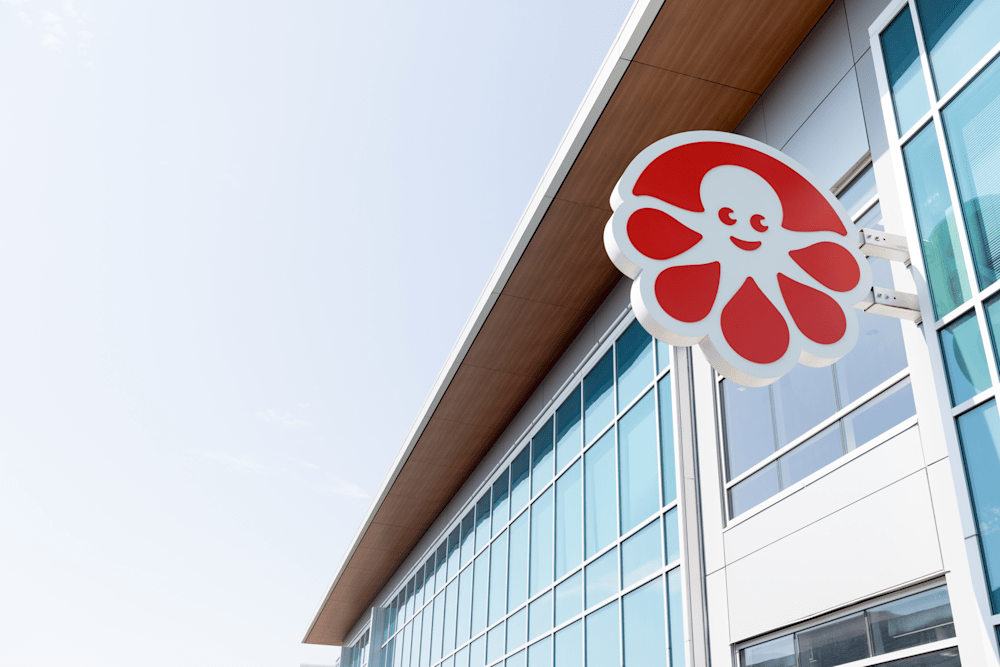
Every small business needs two types of signage working simultaneously, and most owners only think about one of them.
Permanent signage is the architectural layer: channel letter signs, monument signs, pylon signs, and dimensional wall signs. These are fabricated by local sign shops, require building permits in most jurisdictions, and take weeks to months from approval to installation. They are built to last 10 to 20 years and form the fixed identity of a physical location. They are also expensive, and they cannot be updated quickly when your offer changes, your hours shift, or a promotion goes live.
Flexible signage is the promotional and mobile layer: vinyl banners, yard signs, feather flags, retractable banners, and vehicle magnets. These print in days, require no installation permits, can be swapped or updated for a fraction of the cost of permanent work, and travel with you to events and job sites. They are not a substitute for permanent signage. They are the active layer that does the day-to-day marketing work your permanent sign cannot do.


Our custom signs catalog covers the flexible layer in full. What follows maps that catalog to specific business situations so you can prioritize correctly.
Outdoor Signs for Small Business


The outdoor layer of your flexible signage strategy handles three jobs: attracting passing traffic, reinforcing your brand at a distance, and driving customers to the door during promotions and events. These are the formats that do that work.
| Sign Type | Core Spec | Viewing Range | Outdoor Lifespan | Best Business Use | Notes |
|---|---|---|---|---|---|
| Vinyl banner | 13 oz scrim-reinforced PVC vinyl, UV-cured inks | Up to 100+ ft (with proper sizing) | 6–12 months | Grand openings, seasonal promotions, storefront announcements, event perimeter | Hung with grommets; stitched hems required for sustained outdoor use |
| Feather flag | Dye-sublimated polyester, 8 ft standard height | 50–150 ft | 1+ year with storage | Curb appeal, grand openings, event entrances, high-visibility roadside display | Movement catches the eye from angles where static banners go unnoticed |
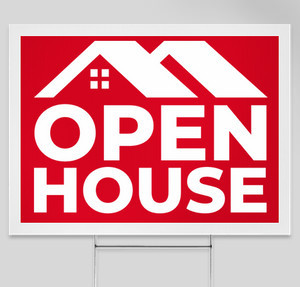
| Yard sign | 4mm corrugated polypropylene, 18″ × 24″ standard, 9-gauge H-wire stake | Up to 30 ft at 35 mph | 6–12 months | Contractor job sites, real estate, seasonal business, local campaign-style promotions | Double-sided for corner lots; step stakes for roadside wind resistance |
| Car door magnet | 30 mil high-energy magnetic sheeting, UV-resistant laminate, 18″ × 11.5″ | 15–25 ft | 1–2 years | Service businesses, mobile advertising, real estate, fleet branding | Adheres to ferrous steel only; test panel before ordering |
Featured Products


Indoor Business Signs

Indoor signage does different work than outdoor: it reinforces brand professionalism for customers who are already inside, supports sales at the point of decision, and brands your event or trade show presence for an audience that is already engaged with you. The viewing conditions are more controlled (lower wind, no rain, shorter distances), which changes both the materials and the formats that work.
| Sign Type | Core Spec | Setup Required | Portable? | Best Business Use | Notes |
|---|---|---|---|---|---|
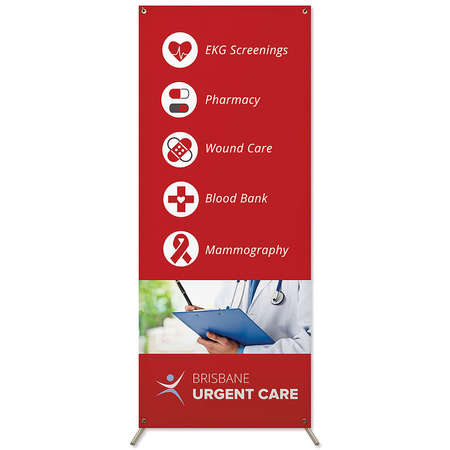
| Retractable banner | Smooth vinyl, spring-loaded aluminum base, 31.5″ × 81.8″ | Under 1 minute | Yes (carry case) | Trade show booths, lobby branding, retail point-of-sale displays, conference rooms | Rolls into cassette; carry case included; graphic panel replaceable |
| Stand-up banner (X-frame) | Smooth vinyl, X-frame stand, 30.5″ × 74″ | Under 2 minutes | Yes | Events, school fundraisers, pop-up retail, wayfinding at multi-room venues | Lighter than retractable; graphic panel swappable between frames |
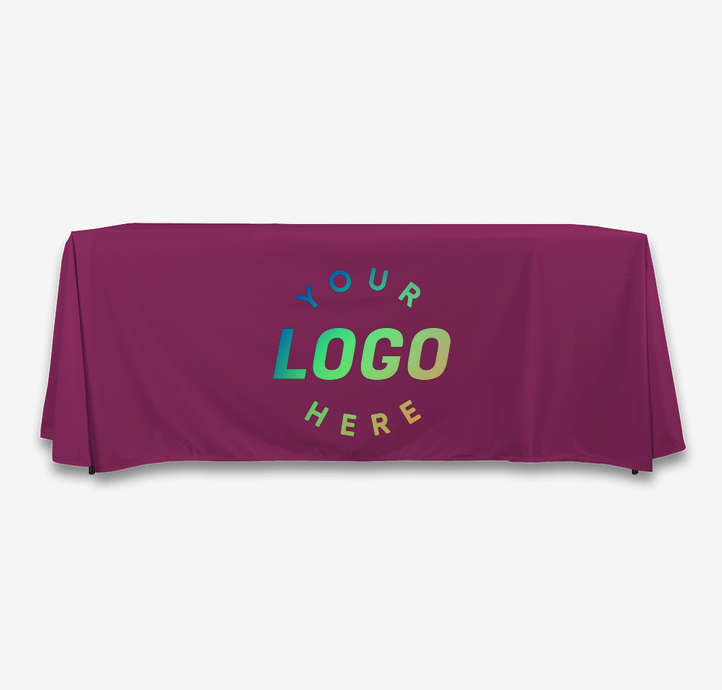
| Table cover | Branded polyester throw; 6 ft and 8 ft table sizes | Drape and smooth | Yes | Trade show booths, event tables, registration desks, product demo stations | Full-color logo front panel; all-over print available |
| Window clings and stickers | Removable vinyl; no adhesive residue | Peel and stick | No (installed) | Retail hours and promotions, office door branding, product launches, seasonal displays | Removable without damaging glass; repositionable |
Featured Products

What to Buy First: Signage Priorities by Business Type

Budget is always limited, and not every business needs the same signage stack. This table maps the most common small business types to their first, second, and third signage purchases, in order of impact.
| Business Type | First Priority | Second Priority | Third Priority |
|---|---|---|---|
| Retail storefront | Vinyl banner (grand opening, window-level promotion) | Feather flags (curb appeal flanking the entrance) | Retractable banner (interior point-of-sale or product feature display) |
| Service business (contractor, HVAC, plumber, electrician) | Car door magnets (every vehicle becomes a mobile ad at every job site) | Yard signs (placed at each active job site; neighbors are the best leads) | Vinyl banner (seasonal promotion for spring/fall service push) |
| Restaurant or food service | Vinyl banners (specials, hours, seasonal menus, grand opening) | Feather flags (roadside visibility for passersby who don’t know you yet) | Retractable banners (inside: daily specials board, loyalty program, catering call-to-action) |
| Professional services (real estate, law, consulting, financial) | Retractable banners (office lobby and conference room branding) | Car door magnets (personal and company vehicles; removable for personal use) | Yard signs (open house directional arrows, campaign-style local visibility) |
| Event vendor / farmers market / pop-up retail | Vinyl banner (booth backdrop with logo and product categories) | Table cover (your table is your storefront; brand it) | Feather flags (two flags flanking the booth entrance draw foot traffic from across the venue) |
| Mobile or home-based service | Car door magnets (your vehicle is your only physical presence) | Yard signs (job site placements and neighborhood-targeting) | Vinyl banner (local events, sponsorships, street fairs) |
A few patterns hold across all these business types. Car magnets and yard signs have the lowest cost-per-impression of any physical advertising format, which is why service businesses should almost always start there. Retail and restaurant businesses should prioritize outdoor visibility first because their signage needs to pull in passersby, people who were not already looking for them. Professional services need indoor branding more urgently because their clients are already inside the office when the impression forms.
Design Rules That Apply to Every Business Sign

The design rules for business signage are the same whether the sign is outdoor or indoor, temporary or reused across multiple events. The variables change (viewing distance, ambient light, wind), but the principles do not. Our Design Lab has templates for every sign format with safe zones and bleed areas pre-configured.
- One primary message per sign. Your permanent architectural sign carries your business name and identity. Your vinyl banner or yard sign carries one additional message: a promotion, a service, a date, a phone number. Every element you add beyond the primary message halves the sign’s effectiveness. Signs are scanned in 2 to 3 seconds, not read.
- Match letter height to viewing distance. The United States Sign Council standard: 1 inch of capital letter height per 10 feet of readability. A vinyl banner viewed from the sidewalk at 20 feet needs 2-inch letters minimum. A yard sign at the edge of a 35 mph road needs 9-inch letters for the headline. Most small business signs are designed at a desk at close range and are unreadable from the distances customers actually view them.
- Brand consistency across all formats. Your vinyl banner, yard sign, and car magnet do not need to be identical, but they must use the same logo, typeface, and primary color palette. Inconsistency across sign formats creates the impression of multiple businesses operating in the same space, which is the opposite of what you want.
- 70% contrast minimum between text and background. White on navy, black on white, white on red, and black on yellow all pass. Light blue on white, gray on silver, and yellow on cream all fail. Outdoor signage viewed in variable light conditions loses contrast at angle; if it barely passes at close range, it fails in the field.
- File resolution: 150 DPI minimum at full print dimensions. Vector formats (PDF, AI, EPS, SVG) scale without quality loss and are always preferred. For raster uploads, a standard 18″ × 24″ yard sign requires a minimum file size of 2,700 x 3,600 pixels. A 6 ft x 4 ft vinyl banner requires at minimum 5,400 × 3,600 pixels. Our design team reviews every file before production and flags resolution issues before your order reaches print.
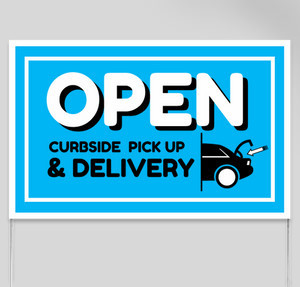
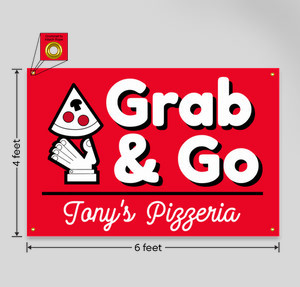
Featured Sign and Banner Templates
How to Order Business Signs
- Identify your first priority sign. Use the business type table above. Most small businesses start with one outdoor sign that addresses their most urgent visibility gap, then layer in additional formats. Browse the full catalog at our custom signs hub to confirm the right format and size for your situation.
- Prepare your brand files before opening the Design Lab. Gather your logo in vector format (AI, EPS, PDF, or SVG), your brand colors in hex codes, and any photography you plan to use. Raster images (JPEG, PNG) are acceptable if they are at least 300 DPI at the intended print size. Having these files ready before you start saves time in the design process.
- Design your sign. Open the Design Lab and select your sign format. Start from one of our business-specific templates (pre-sized, with safe zones configured) or upload your existing artwork. Apply the design rules above: one primary message, correct letter height for your viewing distance, and 70% contrast minimum.
- Review your proof carefully. Before production, you receive a digital proof at actual print proportions. Check letter size against real viewing conditions, not the computer screen. If your sign will be viewed from 30 feet, hold the proof at a distance and confirm the headline is readable.
- Select your delivery timeline. Standard orders include free standard shipping with delivery in approximately two weeks. Rush options are available. For a multi-sign launch (outdoor banner, yard signs, and car magnets ordered together), everything ships in a single order and arrives at the same time, useful for coordinating a grand opening or seasonal campaign launch.
Frequently Asked Questions
Q: What is the most effective outdoor sign for a small business?
It depends on your business type and primary viewing context. For a service business, car door magnets and job-site yard signs deliver the highest visibility per dollar because your vehicle and work locations are already where your best prospects are. For a retail storefront or restaurant, a vinyl banner at or near the entrance addresses the largest single visibility gap. Feather flags are the most effective option for drawing foot traffic past your business from a distance, because movement catches the eye before text can be read.
Q: Do I need permits for outdoor business signs?
Permanent installed signage (channel letters, monument signs, pylon signs) typically requires a permit from your local municipality, and requirements vary significantly by zoning and jurisdiction. Temporary flexible signage (vinyl banners, yard signs, and feather flags) generally has different (and more lenient) rules, though some cities do restrict the duration and placement of temporary signage. Check with your local planning or zoning office before placing any sign on public property or visible from a public right-of-way. Signs placed entirely on private property you own or lease typically have more permissive rules.
Q: How much should a small business spend on signage?
There is no universal answer, but a useful frame: signage has among the lowest cost-per-impression of any marketing channel. A set of two car door magnets (under $100 total) on a vehicle driven 15,000 miles a year generates tens of thousands of local impressions. A vinyl banner at a high-traffic storefront generates impressions for every passerby over its 6 to 12 month outdoor lifespan. For a new business with limited budget, starting with flexible signage (magnets, yard signs, banners) provides immediate visibility at a fraction of the cost of permanent architectural signage. Add permanent signage as the business stabilizes and the location is confirmed for the long term.
Q: Can I get help designing my business signs?
Yes. Our design experts are available to help scale logos for large-format printing, clean up artwork files, and advise on layout and contrast. This is included at no extra charge with your order. The Design Lab also has templates organized by business type and sign format, which handle the sizing and safe zone configuration automatically.
Q: What is the difference between indoor and outdoor business signs?
The core difference is material durability and mounting method. Outdoor signs use UV-resistant inks, weather-resistant materials (13 oz scrim-reinforced PVC vinyl, 4mm corrugated polypropylene, 30 mil magnetic sheeting), and attachment methods designed for wind load (stitched hems, grommets, H-wire stakes, step stakes). Indoor signs use lighter materials optimized for portability and reuse (smooth vinyl on retractable mechanisms, polyester table covers, window clings), since they do not face moisture, UV, or wind. Using an indoor sign outdoors is the most common ordering mistake: retractable banners collapse in wind, table covers stain in rain, and smooth vinyl loses color faster under direct UV than scrim-reinforced outdoor materials.

The Custom Ink Staff is a team of design enthusiasts and promo product experts dedicated to bringing your ideas to life. From screen printing secrets to the latest trends in custom gear, we draw on decades of collective experience to help you create something unforgettable.