Sustainable Swag: A Guide to Eco-Friendly Branded Merchandise
 Posted By Custom Ink Staff —
The Custom Ink Staff is a team of design enthusiasts and promo product experts dedicated to bringing your ideas to life. From screen printing secrets to the latest trends in custom gear, we draw on decades of collective experience to help you create something unforgettable.
SHARE:


Sustainable promotional products are now a $3.69 billion segment of the U.S. promo industry, up roughly 20% from the prior year, according to PPAI’s 2024 Sales Volume Estimate. That number reflects something buyers already sense: the pressure to align branded merchandise with sustainability commitments has moved from “nice to have” to a real procurement consideration.
Our Sustainable Corporate Gifts Survey found that 69% of employees prefer sustainably made gifts and company swag—and among employees aged 25–34, that number climbs to 75%.
This guide breaks down what sustainable swag actually means, which certifications to trust, how to spot greenwashing, and what to order when your swag program needs to match your values.
In This Article
- What Is Sustainable Swag?
- Why It Matters: The Business Case for Green Swag
- What Makes a Promotional Product Eco-Friendly?
- How to Avoid Greenwashing
- Custom Sustainable Merchandise to Consider
- Frequently Asked Questions
Key Takeaways
- Sustainable swag is a $3.69B market and growing — PPAI’s 2024 data shows a 20% year-over-year increase, driven by rising buyer demand across every industry segment.
- 69% of employees prefer sustainably made company swag — according to Custom Ink’s Sustainable Corporate Gifts Survey, and companies that align swag with ESG commitments see measurable engagement gains.
- Certifications like GRS, GOTS, and Fair Trade are the only reliable verification — vague terms like “eco-friendly” or “green” have no legal definition, and roughly 42% of eco-labeled merchandise cannot substantiate its claims when pressed.
What Is Sustainable Swag?
Sustainable swag refers to branded merchandise designed, sourced, and distributed in ways that reduce environmental and social harm over its full lifecycle.
In August 2024, PPAI published the first formal industry definition: “making, sourcing and distributing promotional items in ways that reduce negative environmental and social impacts while supporting long-term economic success.” The definition rests on five pillars: environmental responsibility, social equity, product lifecycle, transparency, and governance. That last point matters for buyers — verified, audited claims, not just a company’s word.
Three material terms come up constantly in sustainable swag, and they are not interchangeable. Understanding the difference helps you evaluate supplier claims with precision:
| Term | What It Means | Certification to Look For |
|---|---|---|
| Recycled | Materials recovered from waste streams and reprocessed into new raw material. Post-consumer recycled (PCR) — from used bottles and textiles — diverts actual landfill waste. Pre-consumer recycled (PIR) — from manufacturing offcuts — has lower environmental impact because producers already had economic incentive to reuse it. | GRS (Global Recycled Standard) or RCS (Recycled Claim Standard) |
| Organic | Grown without synthetic pesticides, herbicides, or GMOs under a certified farming standard. Reduces agricultural chemical runoff and soil degradation. Has no relation to recycled content — a shirt can be 100% organic and made from virgin cotton. | GOTS (Global Organic Textile Standard) or USDA Organic |
| Upcycled | Existing discarded materials repurposed into new products without breaking them down chemically. Requires zero new raw material input. No universal certification; difficult to scale, but the most resource-efficient option. | No standard certification; ask for chain-of-custody documentation |
One term conspicuously absent from this table: “biodegradable.” The FTC’s Green Guides consider unqualified biodegradability claims deceptive unless an item demonstrably decomposes within one year. California bans the term in marketing outright. Avoid it in supplier conversations unless the vendor can provide ASTM D6400 compostability certification — and confirm that the local composting infrastructure exists to handle it.
Why It Matters: The Business Case for Green Swag
The argument for sustainable swag rarely needs to be made to the person responsible for buying the swag. The harder conversation is usually with the person controlling the budget. Three data points tend to move that conversation:
- Employee engagement: Companies with genuine sustainability commitments see a 16% increase in employee engagement levels compared to peers, according to Culture Amp’s analysis of data from more than 1,000 companies. That number comes from structural organizational commitment — not one-off gestures — but swag that visibly reflects those values reinforces the signal employees are already looking for.
- Talent acquisition: 55% of Gen Z and Millennial employees research a company’s environmental practices before accepting a job offer (Deloitte 2023 Gen Z and Millennial Survey, 22,000+ respondents). Onboarding swag that contradicts a stated ESG commitment creates immediate cognitive dissonance for incoming hires.
- Brand perception: 46% of consumers feel more favorable toward a brand that gave them an eco-friendly promotional product, and among 18–35-year-olds, that figure rises to 58%, according to ASI’s Ad Impressions Study (25,000+ consumers).
There is also a waste argument that resonates with budget holders. Custom Ink’s 2026 Swag Trends Survey found that 47.6% of swag organizers say seeing their swag in the donation pile or trash is their primary motivation to find better quality next time. Sustainable swag typically means higher-quality, longer-lasting items — which means lower discard rates and fewer repeat orders to replace discarded gear.
HDR, an engineering and architecture firm, put this logic into practice with their Norfolk, Virginia Green Team. They rallied volunteers for an Earth Day cleanup at the Ernie Morgan Environmental Action Center — and used custom t-shirts as the incentive.
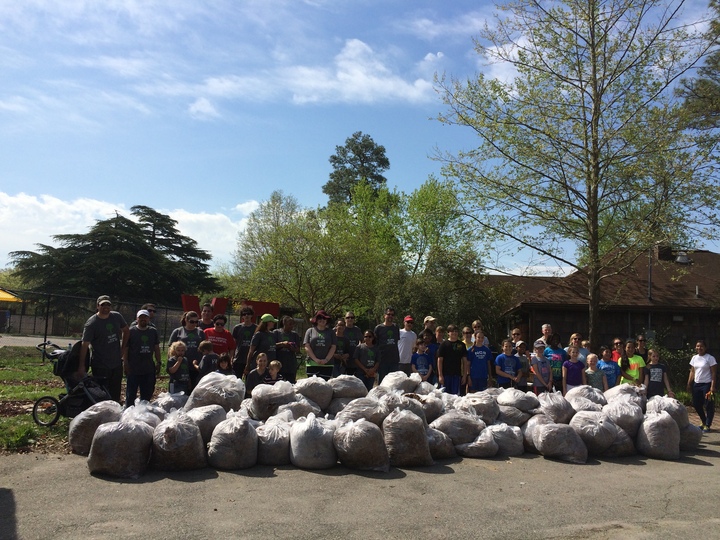
“HDR is an engineering and architecture firm committed to promoting environmental sustainability. The HDR Norfolk, VA Green Team rallied volunteers to help clean-up and beautify the Ernie Morgan Environmental Action Center… When they came in and I told the office that if they volunteered they’d get a t-shirt our event participation doubled! T-shirts really DO unite!”
The HDR team ordered the Gildan Softstyle Jersey T-Shirt for their event — proof that even a well-chosen standard tee can carry a sustainability message when the program behind it is real. For teams that want their gear to match their mission from materials to message, our sustainable swag catalog takes it further.
What Makes a Promotional Product Eco-Friendly?
The difference between a genuinely eco-friendly product and a marketing claim is third-party certification. Six certifications cover the vast majority of sustainable swag categories:
| Certification | What It Verifies | Key Threshold | Best For |
|---|---|---|---|
| GRS (Global Recycled Standard) | Recycled content + full supply chain traceability + social/environmental requirements at each stage | Min. 50% recycled content for consumer-facing GRS logo; 20% for B2B | rPET bags, recycled polyester apparel, recycled-content hard goods |
| GOTS (Global Organic Textile Standard) | Organic fiber status from raw material through manufacturing + wastewater and chemical standards | Min. 95% certified organic for “organic” grade; 70% for “made with organic materials” | Organic cotton tees, canvas tote bags |
| OEKO-TEX Standard 100 | Product safety — absence of 1,000+ harmful substances including PFAS, azo dyes, heavy metals, formaldehyde | Four classes by skin contact; Class I is strictest (baby products) | Any textile; certifies safety, not sustainable production process |
| Fair Trade Certified | Ethical labor practices, safe working conditions, and community development payments | Factory certification + Fair Trade Premium fund paid to workers | Apparel from developing-world producers; ethical sourcing verification |
| B Corp | Company-wide social and environmental performance across governance, workers, community, environment | Min. 80 of 200 points on B Impact Assessment; recertified every 3 years | Supplier vetting; certifies the company, not individual products |
| FSC (Forest Stewardship Council) | Responsibly managed forestry and chain of custody for forest-derived products | FSC 100% (all certified), FSC Recycled (min. 70% post-consumer), or FSC Mix | Notebooks, journals, wooden/bamboo items, paper bags |
Two certifications from the table deserve extra attention.
OEKO-TEX Standard 100 is widely misunderstood as an eco certification — it tests for harmful substances in the finished product, not the environmental impact of manufacturing. A shirt can be OEKO-TEX certified and made from 100% virgin petroleum-derived polyester. It confirms safety, not sustainability.
GRS, on the other hand, is the gold standard for recycled-content claims — it requires chain-of-custody documentation from every supplier in the production chain, and the database at Textile Exchange lets you verify any certificate in about 30 seconds.
For context on what certified specs look like in practice, three of the most widely available eco-apparel options break down this way:
| Product | Weight | Material | Key Certification | Notable Tech |
|---|---|---|---|---|
| Bella + Canvas Boxy Heavyweight T-shirt | 7.5 oz./yd² | 100% cotton | BlueSign | BELLA+CANVAS uses sustainable manufacturing with Blue Sign certified dyes, eco-conscious dye houses, solar-powered cutting facilities, and recycling programs for paper and fabric waste |
| Next Level Ideal Thermal Long Sleeve T-shirt | 5.5 oz./yd² | 60/40 combed ring-spun cotton/recycled polyester | Socially Conscious Manufacturing | RPET from post-consumer plastic bottles; organic cotton free of synthetic pesticides |
| Hanes EcoSmart 50/50 T-Shirt | Midweight | 50% cotton / 50% EcoSmart recycled polyester from recycled plastic water bottles; tear-away label; 30+ color options | EcoSmart fabric designation | Dries faster and shrinks less than 100% cotton; accessible price point for large group orders |
How to Avoid Greenwashing
Industry research suggests roughly 42% of eco-labeled corporate merchandise cannot substantiate its environmental claims when pressed. The FTC’s Green Guides prohibit broad, unqualified environmental claims — but enforcement is complaint-driven, and unverified “eco,” “green,” and “natural” labels remain common. Five red flags catch the most common greenwashing patterns in swag procurement:
| Red Flag | What to Ask Instead |
|---|---|
| Vague terms: “eco-friendly,” “green,” “natural,” “sustainable” with no specs | “What percentage of recycled or organic content? Post-consumer or pre-consumer recycled?” |
| Self-created eco logos or badges not from an accredited third party | “Which certification body issued this? Can you share the certificate ID for verification?” |
| “Recyclable” label with no infrastructure context | “Is this material accepted in standard curbside programs in most U.S. markets?” |
| Sustainable material claim with no labor information | “What are the working conditions at the manufacturing facility? Any Fair Trade, SA8000, or FLA certification?” |
| OEKO-TEX certification presented as an eco credential | “Is the product made from recycled or organic content? OEKO-TEX only confirms absence of harmful substances — not sustainability of production.” |
PPAI’s 2024 framework explicitly names transparency and accountability as core sustainability pillars — meaning verified claims and third-party audits, not marketing copy.
When evaluating suppliers, ask for certificate IDs and verify them in the relevant accreditation database. GRS and GOTS certificates are searchable at Textile Exchange. FSC certificates are searchable at fsc.org. B Corp status is searchable at bcorporation.net. Each verification takes under a minute.
Custom Sustainable Merchandise to Consider
Our sustainable swag catalog includes apparel, drinkware, and bags made from recycled polyester, recycled plastic water bottles, organic cotton, and low-impact dyes. Three subcategories cover the most common program needs:
All products in the collection meet at least one verified eco standard — you can filter by material type and certification to match your program’s specific requirements.
For organizations that want their swag to start conversations, the product choice matters. The Earth Citizens group in Libertyville, Illinois chose the Hanes EcoSmart 50/50 T-Shirt — made from recycled plastic water bottles — for their Earth Day awareness walk. Their experience ordering with a four-day lead time reflects one thing we hear often: sustainability commitments don’t always come with long planning timelines, and we can work with that.

“We had an Earth Citizens Walk this past Saturday, April 23rd in Libertyville, Illinois to raise awareness that we are all earth citizens before anything else. We also talked about how to create sustainability and change within ourselves in order for it to reflect in our world. CustomInk helped make this event a success with their awesome staff helping me with last minute ordering (3-4 days before the event) and they did an amazing job! Very helpful and I would recommend them to everyone!”
Featured Products from This Story

Hanes EcoSmart 50/50 T-Shirt — Recycled-Bottle Tee
- 50% cotton / 50% EcoSmart recycled polyester made from recycled plastic water bottles
- Midweight blended fabric; dries faster and shrinks less than 100% cotton; tear-away label for comfort
- 30+ color options; sizes youth through 3XL; minimum order of 6; ideal for large group orders
Design Inspiration for Sustainable Swag Programs
Our Design Lab has templates built for exactly this kind of program — green team events, cause walks, corporate sustainability initiatives, and volunteer days. Start with one of these and customize colors, text, and artwork to match your organization:
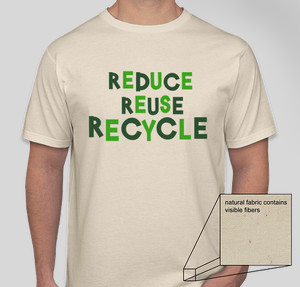
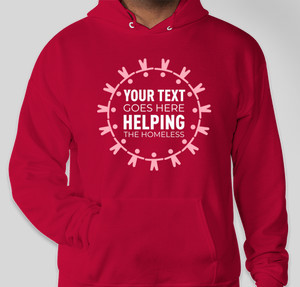
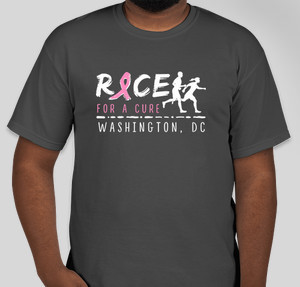
Beyond apparel, consider pairing t-shirts with the Full Color 27 oz. Era Recycled Water Bottle — made from 100% RPET plastic sourced from post-consumer recycled bottles.
Sustainable bags, like our laminated 100% recycled shopper totes, round out a complete onboarding or event kit that holds together as a program, not just individual items.
Frequently Asked Questions
Q: What is sustainable swag?
Sustainable swag is branded merchandise designed, sourced, and manufactured in ways that reduce negative environmental and social impacts. PPAI, the promotional products industry’s governing trade association, defined sustainability for the industry in 2024 as covering five pillars: environmental responsibility, social equity, product lifecycle, transparency, and governance. In practical terms, sustainable swag uses recycled, organic, or responsibly sourced materials; is made under fair labor conditions; is built to last rather than be discarded; and comes with third-party certification to verify those claims.
Q: What certifications should I look for when buying eco-friendly promotional products?
For recycled-content claims, look for GRS (Global Recycled Standard) or RCS (Recycled Claim Standard) — both require chain-of-custody verification from every supplier in the production chain. For organic textiles, GOTS (Global Organic Textile Standard) is the most rigorous, requiring a minimum of 70–95% certified organic fiber depending on grade. For ethical labor practices, Fair Trade Certified and SA8000 are the main recognized standards. For forest-derived products like notebooks and journals, FSC (Forest Stewardship Council) certification covers responsible sourcing. OEKO-TEX Standard 100 confirms absence of harmful substances in finished textiles but does not verify eco-friendly production — don’t count it as a sustainability credential on its own.
Q: Is sustainable swag more expensive than standard promotional products?
Sustainable swag often carries a modest price premium at lower quantities, but the gap narrows significantly with volume. Our bulk order pricing applies to eco-friendly items the same way it does to standard items. The more relevant cost comparison is lifetime value: higher-quality sustainable products have lower discard rates, which means fewer replacement orders and less waste over the life of a program. For procurement decisions, factor in the cost of swag that gets used versus swag that ends up in the donation pile — our 2026 Swag Trends Survey found that 47.6% of organizers say trash-pile swag is their top motivation to order better next time.
If you’re sourcing for executive gifting or client relationships rather than volume programs, our sustainable corporate gifts guide covers premium options, per-unit budget tiers, and individual fulfillment logistics.
Q: Does Custom Ink offer sustainable promotional products?
Yes. Our sustainable swag catalog includes apparel made from recycled polyester, RPET, and organic cotton; reusable drinkware from 100% recycled plastic; and bags made from recycled materials. Products in the collection are organized by material type and carry certifications including GRS, GOTS, and FSC, depending on the item. Our design experts are available seven days a week to help you build a swag program that fits your sustainability criteria and your budget.
Q: How far in advance should I order sustainable swag?
Orders with our free standard shipping arrive within two weeks of placing your order. If you need items faster, rush options are available for an additional charge. For large corporate programs — onboarding kits, event giveaways, multi-site distributions — ordering at least three to four weeks ahead gives you more product options and reduces the need for rush shipping. As the Earth Citizens team above found, we can work with tighter timelines when needed, but planning ahead gives you the most flexibility.
Q: Can employees choose their own sustainable swag and pay separately?
Yes. Our group order feature lets each participant choose their size, enter their shipping address, and pay individually — no manual collection of sizes or funds required on your end. For ongoing swag programs, our Online Stores let employees or stakeholders order on their own schedule from a curated selection you control. Both options work with our sustainable product catalog.
Building a sustainable swag program takes more than swapping one t-shirt for another. It means choosing products with verified certifications, working with suppliers who can document their claims, and selecting items built to last long enough to matter. We’ve helped organizations of every size — from corporate green teams to conservation nonprofits — build programs that hold up to scrutiny. Our sustainable catalog is a good place to start, and our design experts are here to help you build the rest.

The Custom Ink Staff is a team of design enthusiasts and promo product experts dedicated to bringing your ideas to life. From screen printing secrets to the latest trends in custom gear, we draw on decades of collective experience to help you create something unforgettable.