What Is Employee Onboarding? Process, Steps, and Why It Matters
 Posted By Custom Ink Staff —
The Custom Ink Staff is a team of design enthusiasts and promo product experts dedicated to bringing your ideas to life. From screen printing secrets to the latest trends in custom gear, we draw on decades of collective experience to help you create something unforgettable.
SHARE:


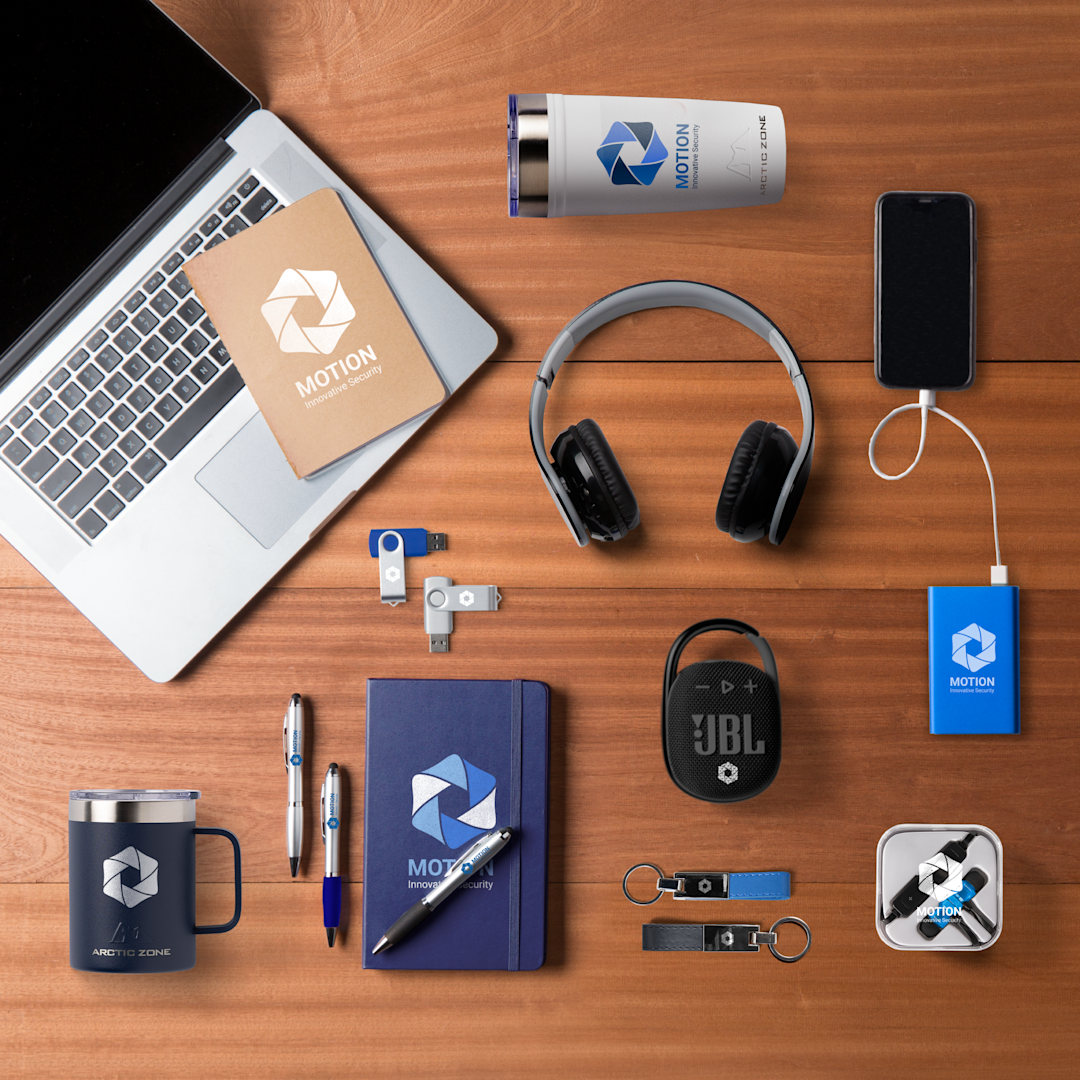
Only 12% of employees strongly agree that their organization does a great job onboarding new hires. Yet companies with a strong onboarding process improve new hire retention by 82% and productivity by over 70%, according to the Brandon Hall Group. That gap — between how most companies onboard and what great onboarding actually produces — costs U.S. businesses $1 trillion per year in voluntary turnover.
The good news is that the fix isn’t complicated — it starts with understanding what onboarding actually is, how it differs from orientation, and which moments matter most to a new hire.
In This Article
- What Is Employee Onboarding?
- Why Onboarding Matters
- The 5 Phases of Employee Onboarding
- The Belonging Gap Most Companies Miss
- Employee Onboarding Best Practices
- Frequently Asked Questions
Key Takeaways
- Orientation is a single event; onboarding is a strategy. Orientation covers paperwork and policy. Onboarding is a structured 90-day to 12-month process that builds culture, clarity, and connection.
- The decision to stay happens fast. According to BambooHR, 70% of new hires decide whether a job is the right fit within the first month — which means you have roughly 44 days to make your case for staying.
- Belonging starts before the badge. Our 2026 Employee Onboarding Experience Audit found that new hires who receive a welcome kit on Day 1 are nearly twice as likely to feel complete belonging immediately compared to those who receive nothing.
What Is Employee Onboarding?
Employee onboarding is the structured process of integrating new hires into your organization — covering everything from their first day to full productivity and cultural belonging, typically over 90 days to 12 months. It includes role-specific training, relationship building, goal-setting, and the cultural immersion that turns a new hire into a committed team member.
According to SHRM, onboarding is “a comprehensive process involving management and other employees” that can last up to 12 months. Orientation — which most companies conflate with onboarding — is only one component of that larger process.
Orientation vs. Onboarding: What’s the Difference?
The two terms are often used interchangeably, but they describe very different things. Orientation is an event. Onboarding is a process that orientation feeds into.
| Dimension | Orientation | Onboarding |
|---|---|---|
| Duration | 1 day to 1 week | 90 days to 12 months |
| Nature | One-time event | Ongoing process |
| Focus | Administrative and compliance | Cultural integration and performance |
| Activities | Paperwork, policies, system access | Training, mentoring, goal-setting, team connection |
| Ownership | Primarily HR | HR + Manager + Team + Mentors |
| Goal | Compliance readiness | Productivity, engagement, and belonging |
As Gallup puts it, a common and costly mistake is treating onboarding as a “new employee orientation class or the first 30 days” rather than the extended cultural investment it should be. Organizations that make this mistake pay for it in early attrition.
Why Onboarding Matters
Onboarding has a direct, measurable impact on retention, engagement, and productivity. The data here is unusually consistent across research organizations.
| Finding | Source | What it means for your team |
|---|---|---|
| Organizations with strong onboarding improve new hire retention by 82% | Brandon Hall Group | Investing in onboarding delivers one of the highest retention ROIs available to HR |
| Employees with exceptional onboarding are 2.6x more likely to be extremely satisfied with their workplace | Gallup | Onboarding quality drives satisfaction scores — it’s not a side effect, it’s a driver |
| 69% of employees are more likely to stay 3 years after a great onboarding experience | SHRM | Onboarding is your longest-duration retention tool — not just an HR checklist |
| 70% of new hires decide if a job is right for them within the first month | BambooHR (2023) | You have roughly 44 days to influence long-term retention — not 90, not 12 months |
| U.S. businesses lose $1 trillion per year to voluntary turnover | Gallup | Replacing one employee costs 0.5x to 2x their annual salary — onboarding is preventive spend |
Being systematic about onboarding also accelerates time-to-productivity. HBR research by Michael D. Watkins found that structured onboarding gets new employees up to speed 50% faster than unstructured approaches. When you add that to the retention numbers above, the case for a formal onboarding program is hard to argue against.
The 5 Phases of Employee Onboarding
Effective onboarding follows a consistent arc across organizations that do it well. These five phases reflect the consensus framework from SHRM, Gallup, BambooHR, and HBR.
| Phase | Timeline | Key Activities |
|---|---|---|
| 1. Pre-boarding | Offer acceptance → Day 1 | Welcome email, digital paperwork, IT setup, buddy assignment, welcome kit shipment |
| 2. Orientation | Day 1 – Week 1 | Formal welcome, mission and values introduction, benefits enrollment, team introductions |
| 3. Training & Role Integration | Weeks 1–4 | Job-specific training, 30-day goal-setting, weekly manager check-ins |
| 4. Integration & Growth | Days 30–90 | 30/60/90-day check-ins, expanding internal network, increasing autonomy |
| 5. Ongoing Development | 3–12 months | Stretch assignments, performance milestones, recognition of onboarding completion |
Pre-boarding is where most programs fall short. The time between offer acceptance and Day 1 is when “buyer’s remorse” sets in — counter-offers arrive, anxiety builds, and the new hire starts forming impressions before they’ve ever walked through the door. A simple pre-boarding sequence (a welcome email, a package in the mail, a buddy introduction) converts that uncertainty into anticipation.
See here for a full employee onboarding checklist, broken out by Week 1, and then 30/60/90 days.
The Belonging Gap Most Companies Miss
Most onboarding programs focus on compliance and role clarity. Fewer focus on belonging — and that’s where the biggest opportunity sits. Research from the O.C. Tanner 2025 Global Culture Report (n=38,075) found that employees with above-average onboarding transitions are 251% more likely to plan to stay two or more years. Giving new hires recognition at 30 days alone creates an 89% decrease in their likelihood to leave.
We surveyed 303 HR professionals and 303 employees for our 2026 Employee Onboarding Experience Audit, and the belonging gap showed up clearly in the timing data alone.
| Feeling on Day 1 | Received welcome kit on Day 1 | Kit arrived late | No kit |
|---|---|---|---|
| Completely belonged right away | 34% | 15% | 18% |
| Mostly welcomed, some gaps | 37% | 27% | 26% |
| Took time to feel included | 22% | 49% | 44% |
| Felt like a stranger for weeks | 7% | 9% | 12% |
New hires who receive a welcome kit on Day 1 are nearly twice as likely to feel complete belonging immediately compared to those who receive nothing. The same survey found that 50% of employees said onboarding quality directly affected how long they stayed — and 71% said high-quality branded gear signals that the employer values its people.
One call center manager captured the dynamic well. After using custom-branded shirts to rally her team around a goal, she described the result this way:

“I manage a call center in Las Vegas and sometimes call centers can be less than exciting… so we pitched a few ideas on how to generate interest in team building, set a goal, and came together as one.”
Branded gear does something paperwork can’t: it makes team membership feel tangible and visible on Day 1. For companies that want to close the belonging gap, new hire welcome kits are one of the most direct levers available — and one of the easiest to implement before a new hire’s first day.
For a ranked list of what employees actually want in that kit — based on survey data from 303 employees — see our guide to new hire welcome kit ideas.
Employee Onboarding Best Practices
The best onboarding programs share a few common behaviors. These practices don’t require expensive software — they require consistency and intentionality.
- Start before Day 1. Send a welcome email within 24 hours of offer acceptance. Ship a welcome kit to arrive before their start date. Assign a buddy or onboarding contact. The window between offer and start date is your first impression — use it.
- Give them clarity on Day 1. Gallup’s research identifies five questions new hires need answered: What do we believe in? What are my strengths? What is my role? Who are my partners? What does my future look like? Orienting Day 1 around these questions outperforms any amount of handbook reading.
- Build in recognition at the 30-day mark. O.C. Tanner’s 2025 Global Culture Report found that recognition at 30 days creates an 89% decrease in the likelihood of attrition. A check-in meeting, a shout-out in a team channel, or a small milestone gift all qualify.
- Use a 30/60/90-day framework. Schedule structured check-ins at 30, 60, and 90 days with clear goals for each stage. These checkpoints create accountability for both the manager and the new hire — and give you early signals if something is off.
- Measure what’s happening. Our 2026 audit found that HR professionals who formally track onboarding impact are 41% more likely to feel extremely confident in their program. Tracking doesn’t need to be complex — even a 3-question pulse survey at 30 and 90 days tells you a lot.
- Treat remote and hybrid employees like onsite hires. Remote new hires are more likely to feel disconnected during onboarding — which means the physical and cultural signals (welcome kits, team swag, care packages) carry more weight, not less. Shipping a welcome kit directly to a remote hire’s home address is one of the highest-impact things you can do for Day 1 belonging.
Employee onboarding is one of the few processes where small investments in the first 30 days pay dividends for years. The data is consistent: structured programs improve retention, accelerate productivity, and build the kind of belonging that makes people want to stay. If your current process ends on Day 1, you’re leaving most of that value on the table. Start with the phases above, measure what you’re doing, and don’t underestimate the signal a thoughtful welcome sends before a new hire ever opens their laptop.
Frequently Asked Questions
Q: What is the difference between orientation and onboarding?
Orientation is a short, one-time event — typically Day 1 — focused on paperwork, compliance, and introductions. Onboarding is the broader, longer-term process of integrating a new hire into the company culture, their role, and their team. Orientation is a component of onboarding, not a synonym for it. SHRM defines onboarding as a process that “can last up to 12 months” and involves managers, mentors, and team members — not just HR.
Q: How long should employee onboarding last?
Most experts recommend 90 days as the minimum for a structured onboarding program, with the full process extending to 12 months. In practice, many companies end onboarding within the first week — which explains why only 12% of employees say their company does a great job at it. The first 30 days are the most critical window for retention: BambooHR’s research shows 70% of new hires form their “stay or go” decision within the first month.
Q: What are the most important elements of a successful onboarding program?
Gallup’s research points to five questions every new hire needs answered: what the organization believes in, what the employee’s strengths are, what their role entails, who their key partners are, and what their future looks like. Programs that address all five — rather than just policy and paperwork — produce new hires who are 2.6x more likely to be extremely satisfied with their workplace. Beyond content, structure matters: pre-boarding communications, a buddy or mentor, 30-day recognition, and regular manager check-ins all drive measurably better outcomes.
Q: Does employee onboarding affect retention?
Directly and significantly. According to SHRM, 69% of employees are more likely to stay with a company for three years if they experience great onboarding. The Brandon Hall Group found that strong onboarding improves new hire retention by 82%. Our own 2026 Employee Onboarding Experience Audit found that 50% of employees said onboarding quality directly affected how long they stayed.
Q: What should be included in a new hire welcome kit?
According to our 2026 Employee Onboarding Experience Audit, the items new hires most want in a welcome kit are a high-quality water bottle or tumbler (43%), a tote bag or backpack (36%), a branded hoodie or sweatshirt (34%), tech accessories (34%), and a branded t-shirt (32%). Kit quality matters as much as the contents: 71% of employees said high-quality branded gear signals their employer values them, while 64% said cheap or low-quality gear creates a negative impression. We offer ready-to-ship new hire welcome kits with options across all budgets — including free standard shipping and individual direct-to-employee shipping for remote teams.
Q: What is pre-boarding and why does it matter?
Pre-boarding is the period between offer acceptance and the new hire’s first day. It’s when counter-offers arrive, second-guessing sets in, and the new hire forms their first impressions — often before they’ve met a single colleague. A strong pre-boarding sequence includes a welcome email within 24 hours of the offer, digital paperwork to reduce Day 1 administrative overload, an introduction to their buddy or manager, and a welcome kit shipped to arrive before or on their start date. Research from Enboarder found that 84% of new hires found pre- and post-Day 1 communications beneficial for building early relationships.
For teams onboarding distributed employees, these practices require additional planning around kit logistics and virtual connection. Our guide to remote and hybrid onboarding covers the specific adjustments that matter most.

The Custom Ink Staff is a team of design enthusiasts and promo product experts dedicated to bringing your ideas to life. From screen printing secrets to the latest trends in custom gear, we draw on decades of collective experience to help you create something unforgettable.