Does Polyester Shrink? A Complete Care Guide for Custom Apparel
 Posted By Custom Ink Staff —
The Custom Ink Staff is a team of design enthusiasts and promo product experts dedicated to bringing your ideas to life. From screen printing secrets to the latest trends in custom gear, we draw on decades of collective experience to help you create something unforgettable.
SHARE:


Custom gear that shrinks out of shape doesn’t just look bad, it wastes money. According to our 2026 Swag Organizer Survey, 30% of swag buyers say their biggest fear is gear looking cheap in person. Fabric choice and wash habits are two things you control before a single shirt ever ships.
This guide answers the “does polyester shrink?” question with actual specs, a fabric comparison table, and washing rules built for custom t-shirts, hoodies, and team uniforms. Not generic laundry advice.
In This Article
- Does Polyester Shrink? The Science Explained
- Does Cotton Shrink? Comparing the Two
- Does Polyester Shrink in the Dryer?
- Polyester vs. Cotton: Which Is Better for Custom Printing?
- How to Wash Custom Printed Shirts Without Damaging the Design
- Best Fabrics for Custom Team Uniforms That Need to Last
- Frequently Asked Questions
Key Takeaways
- 100% polyester resists shrinkage in normal washing, staying within 0.3–0.5% of its original dimensions in warm water; only sustained heat above 150°C (302°F) causes meaningful contraction.
- Cotton preshrinks down 2–3% even after treatment; the Gildan 5000 Heavy Cotton, one of the most-ordered blanks in custom printing, carries a 5% shrinkage tolerance per international standards at high heat.
- Your print method matters as much as your fabric: screen printed and DTG-printed designs can crack or fade if you wash on hot and dry on high, regardless of whether the fabric shrinks.
Does Polyester Shrink? The Science Explained
Polyester is a thermoplastic synthetic fiber, essentially a form of plastic derived from petroleum. During manufacturing, the fibers are heated, stretched, and locked into shape. That “locked” molecular structure is what makes polyester so stable in the wash. Under normal laundry conditions (warm water, medium heat), 100% polyester stays within 0.3 to 0.5% of its original dimensions. That’s effectively zero shrinkage you’d ever notice.
The trouble starts at high heat. Polyester fibers begin to distort at temperatures above 150°C (302°F). At that point, the molecular chains that were locked during manufacturing can relax and snap back toward a shorter state. This is permanent, unlike cotton’s temporary stiffening. The practical takeaway: a polyester shirt run through a high-heat dryer cycle repeatedly will eventually lose a small percentage of its length, but a single cold wash followed by low-heat drying will show essentially no change.
| Condition | 100% Polyester Shrinkage | Risk to Custom Print |
|---|---|---|
| Cold wash + air dry | 0% | None |
| Warm wash + low-heat dry | 0.3–0.5% | Minimal |
| Hot wash + medium-heat dry | 1–2% | Low (may dull colors over time) |
| Hot wash + high-heat dry (repeated) | 2–3% | Moderate (screen print may crack) |
| Boiling or sustained heat above 302°F | Up to 5% | High (permanent damage) |
One more consideration specific to custom apparel: polyester’s PosiCharge technology, used in Sport-Tek’s 3.8-ounce, 100% polyester flat-back RacerMesh shirts, actively locks dye into the fiber. High heat can disrupt that bond and cause colors to bleed or fade, which is why our production team recommends following care tags on all custom-decorated polyester.
Does Cotton Shrink? Comparing the Two
Cotton shrinks because it’s a natural, absorbent fiber. When cotton gets wet, the individual fibers swell. When heat is then applied in the dryer, those swollen fibers contract, pulling the weave tighter and reducing overall garment dimensions. The higher the heat and the more agitation, the more it shrinks.
The most commonly ordered cotton blank in custom printing is the Gildan 5000 Heavy Cotton at 5.3 oz./yd², 100% preshrunk cotton (heather colorways are 50/50 cotton/polyester). “Preshrunk” means the fabric was pre-washed during manufacturing to remove most of the initial shrinkage. Even so, it carries a 5% shrinkage tolerance per international standards under high heat. Real-world testing shows it runs about 3% shrinkage in length and 2% in width after repeated hot-water washes.
| Fabric | Key Spec | Expected Shrinkage (Cold Wash / Low Heat) | Expected Shrinkage (Hot Wash / High Heat) | Best For |
|---|---|---|---|---|
| 100% Polyester | 3.8 oz. (performance tees) | 0% | 1–3% | Athletic, moisture-wicking team uniforms |
| 100% Cotton (preshrunk) | 5.3 oz. (Gildan 5000) | ~1% | 3–5% | Everyday custom tees, events, promos |
| 50/50 Cotton/Polyester | Varies (most heather colors) | <1% | 2–3% | Balance of softness + stability |
| Tri-Blend (poly/cotton/rayon) | 3.4–4.3 oz. typical | <1% | 2–4% | Fashion-forward event shirts, retail feel |
For a more detailed look at how cotton and polyester differ in feel, durability, and print performance, see our full breakdown of screen printing on different fabrics.
Does Polyester Shrink in the Dryer?
Yes, but only at high heat settings, and only noticeably after repeated exposure. A single low-heat or medium-heat dryer cycle won’t shrink a polyester shirt in any way you’d measure. The concern is cumulative: running performance shirts on high heat cycle after cycle gradually relaxes those locked molecular chains.
For custom-decorated polyester, heat in the dryer creates a second problem beyond shrinkage. The high sustained warmth can soften the ink in a screen printed design, causing it to crack or peel at the edges. DTG-printed polyester is especially sensitive because the ink sits on top of the fibers rather than being pressed into them. The rule for custom polyester gear: low heat or air dry, every time.
- Low heat (under 130°F): Safe for all polyester, including custom-decorated shirts. No meaningful shrinkage, no risk to screen print or DTG inks.
- Medium heat (130–150°F): Generally safe for 100% polyester performance tees without prints. Use with caution on custom-decorated garments.
- High heat (above 150°F): Avoid entirely for polyester. Causes shrinkage, color distortion from PosiCharge disruption, and print cracking over time.
- Air drying: The gold standard for extending the life of any custom-decorated garment, polyester or cotton. Polyester dries fast enough that air drying rarely adds more than 30–45 minutes.
Polyester vs. Cotton: Which Is Better for Custom Printing?
The honest answer is: it depends on the print method and the use case. Neither fabric is universally better; they’re optimized for different things. The table below compares them across the variables that matter most for custom-decorated apparel.
| Factor | 100% Polyester | 100% Cotton | 50/50 Blend |
|---|---|---|---|
| Screen printing | Good (PosiCharge locks color) | Excellent (ink absorbs deeply) | Very good |
| DTG / DTF printing | Requires pretreatment; lower vibrancy | Excellent (ink bonds to natural fibers) | Good (cotton side accepts ink well) |
| Embroidery | Good (stable base) | Excellent (holds thread securely) | Excellent |
| Shrink resistance | Excellent | Moderate (preshrunk helps) | Good |
| Moisture wicking | Excellent | Poor (absorbs and holds moisture) | Moderate |
| Breathability | High (engineered mesh options) | High (natural) | High |
| Soft hand feel | Moderate (depends on construction) | High (especially ringspun) | High |
| Color vibrancy after 20+ washes | Excellent (PosiCharge holds dye) | Good (fades slightly over time) | Very good |
| Cost at bulk quantities | Comparable | Comparable | Comparable |
Choose polyester when: you need moisture-wicking performance, color retention over many washes, or a shirt that survives high-activity events. Athletic teams, 5K runs, and corporate activewear programs all benefit from polyester’s stability.
Choose cotton when: the priority is soft hand feel, maximum ink saturation for DTG, or a classic retail look. Everyday company tees, fundraiser shirts, and promotional giveaways are a natural fit.
Choose a blend when: you want the middle of both worlds: a shirt that washes easily, holds its shape, and still feels soft. Many of our most popular custom hoodie and crewneck styles use cotton/poly blends for exactly this reason.
Customer Story: Performance Shirts That Keep Up with the Team
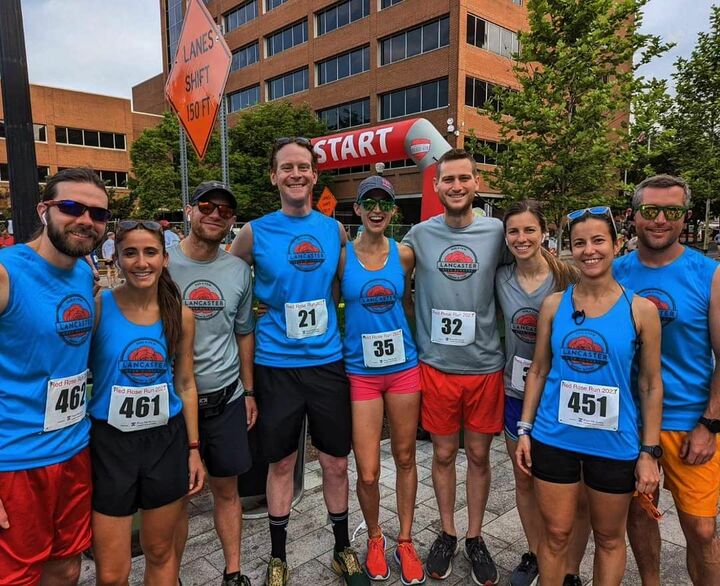
“After 5 years with my running group, we finally got shirts made for the Red Rose Run in Lancaster last year. They got a lot of attention and have been great as a walking advertisement for our group.”
Featured Products from This Story
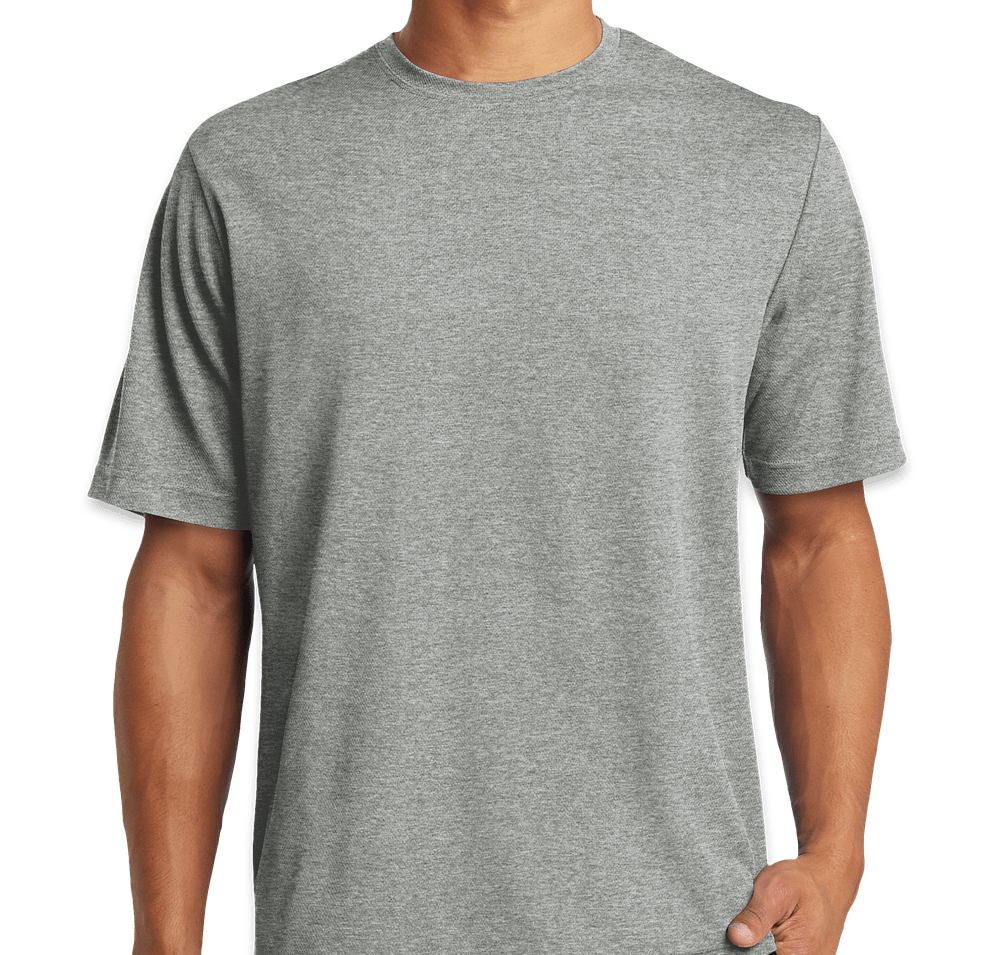
Sport-Tek PosiCharge RacerMesh Tee
- 3.8 oz., 100% polyester flat-back mesh with PosiCharge technology
- Moisture-wicking; tag-free label; set-in sleeves
- Color-locking dye process protects custom prints through repeated washing
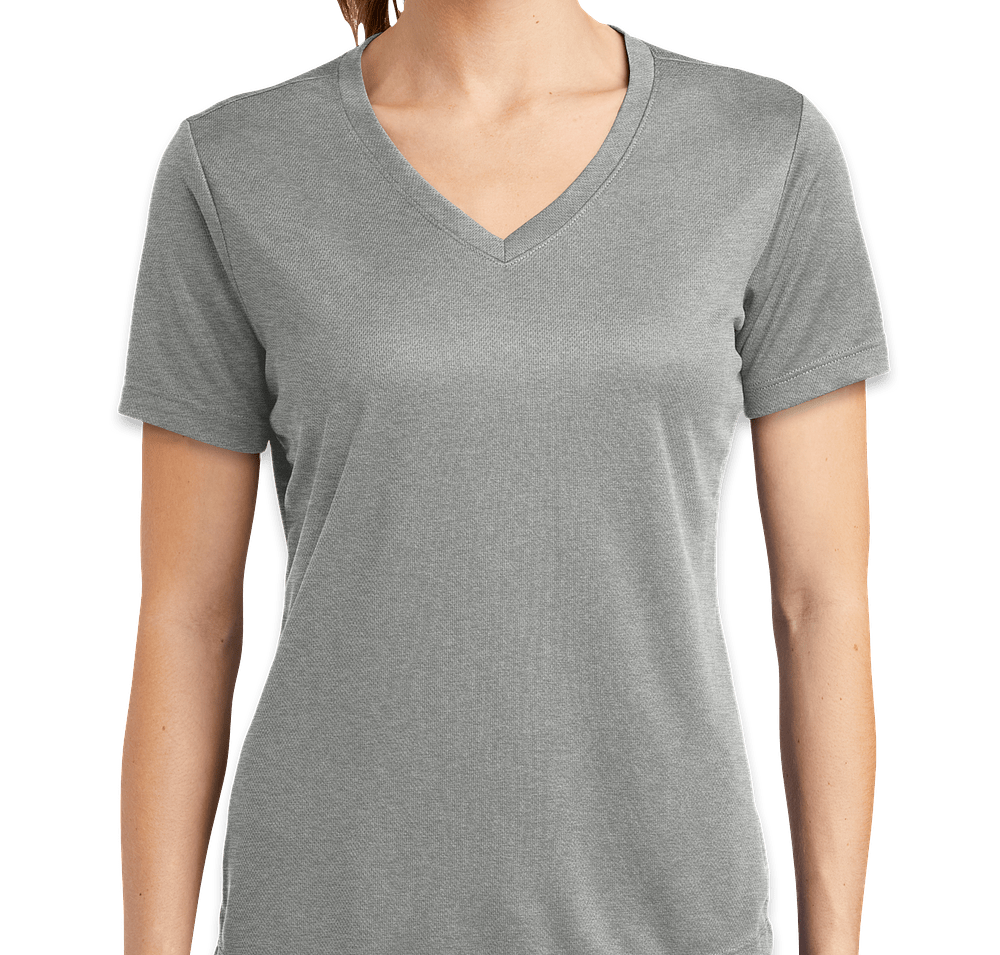
Sport-Tek Women’s RacerMesh V-Neck, Women’s Cut
- 3.8 oz., 100% polyester flat-back mesh with PosiCharge technology
- Self-fabric V-neck; tag-free label; set-in sleeves
- Identical shrink resistance to men’s style; same color-lock protection
How to Wash Custom Printed Shirts Without Damaging the Design
The fabric question and the print question are related but separate. A shirt can survive 50 washes without shrinking and still have a faded, cracked design, because the fabric held up but the print wasn’t protected. These rules apply whether your shirt is screen printed, DTG-printed, or DTF-printed.
Wash Rules by Print Method
| Print Method | Wash Temperature | Dry Setting | Turn Inside Out? | Notes |
|---|---|---|---|---|
| Screen print (plastisol ink) | Cold or warm | Low heat or air dry | Yes | High heat can crack thick ink deposits |
| DTG (water-based ink) | Cold | Low heat or air dry | Yes | Most vulnerable to heat; avoid hot water entirely |
| DTF (film transfer) | Cold or warm | Low heat or air dry | Yes | Edges can lift with high heat over time |
| Embroidery | Cold or warm | Low heat or air dry | Recommended | Gentle cycle; avoid snags on delicate threads |
| Sublimation (polyester only) | Cold or warm | Low heat | Optional | Colors are baked into fiber (most durable method) |
Step-by-Step Care for Custom Shirts
- Turn the shirt inside out before washing. This protects the printed surface from friction with other garments in the drum, the single most effective thing you can do to extend print life.
- Use cold or warm water, never hot. Hot water accelerates ink breakdown on all print methods and causes cotton content in blends to contract.
- Select a gentle cycle. Less agitation means less friction on the print surface and less mechanical stress on the fabric structure.
- Skip fabric softener on polyester. Softener coats synthetic fibers, reducing moisture-wicking performance and, over time, causing prints to lose adhesion.
- Dry on low heat or air dry. For polyester, air drying adds minimal time; polyester sheds water quickly. For cotton, low-heat tumble drying keeps shrinkage to a minimum after the first few washes.
- Do not iron directly over the design. If ironing is needed, flip the garment inside out and use a pressing cloth. Never apply a hot iron directly to screen-printed or DTG ink.
For questions about how a specific decoration method affects care, our design experts can walk you through the details before you finalize your order.
Best Fabrics for Custom Team Uniforms That Need to Last
Team uniforms get washed more often, worn harder, and need to look consistent across an entire group, sometimes for multiple seasons. Fabric choice here covers comfort and consistency across 20 or 50 shirts that need to stay looking the same wash after wash. Our 2026 Swag Organizer Survey found that for employee uniforms specifically, 35% of organizers rank “quality looking cheap” as their top fear, more than late delivery or design errors. The right fabric choice addresses that before the order ships.
Performance Polyester
Best for: Athletic teams, 5K/charity runs, summer outdoor events, any situation where players or volunteers are physically active.
- Shrink resistance: Essentially zero under proper care (cold/warm wash, low-heat dry)
- Print durability: PosiCharge technology on Sport-Tek styles locks dye and keeps colors consistent across the group wash after wash
- Key spec: Sport-Tek PosiCharge RacerMesh: 3.8 oz., 100% polyester flat-back mesh; moisture-wicking, tag-free, set-in sleeves
- Weakness: DTG printing requires pretreatment for best results; screen printing and sublimation are the strongest decoration methods for 100% poly
Preshrunk Cotton
Best for: Staff or volunteer shirts, casual team events, school organizations, situations where wearing comfort matters more than athletic performance.
- Shrink resistance: Good after first wash if cared for correctly (cold water, low-heat dry); expect 2–3% initial settling
- Print durability: Excellent for screen printing and DTG; ink absorbs deeply into natural fibers for rich color saturation
- Key spec: Gildan 5000 Heavy Cotton at 5.3 oz./yd², 100% preshrunk cotton; double-needle stitching; sizes S–5XL
- Weakness: Hot water or high-heat drying can still cause 3–5% shrinkage; bleach degrades fabric and print color over time
Cotton/Poly Blends
Best for: Hoodies, crewnecks, and long-wearing uniform programs where softness and durability both matter.
- Shrink resistance: Better than 100% cotton; the polyester content stabilizes the weave; expect under 2% in normal conditions
- Print durability: Strong across all methods; screen printing and embroidery both perform well on blends
- Key benefit: Softer hand feel than pure polyester, more stable than pure cotton, the practical middle ground for uniforms worn all day
For teams ordering 12 or more uniforms, our activewear and workwear and uniform categories are built around exactly these use cases, with fabric options across all three types. Our design experts can also help match fabric to your specific decoration method before you lock in your order.
Customer Story: Custom Jerseys That Stand the Season
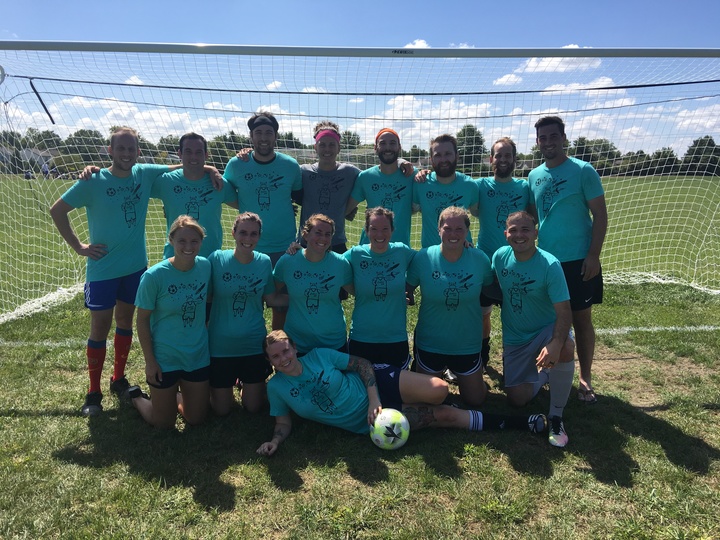
“We have been playing soccer together for 7 years in Columbus, Ohio. Our jerseys from CustomInk have always been the talk of the league.”
When your team needs uniforms that hold up season after season, fabric quality and print method are both part of the equation. Our team jerseys are designed for exactly this kind of long-term wear, with performance fabric options that minimize shrinkage and keep designs looking sharp.
Frequently Asked Questions
Q: Does polyester shrink in the washing machine?
Under normal conditions, no. 100% polyester stays within 0.3–0.5% of its original dimensions in cold or warm water. Shrinkage only becomes noticeable with repeated hot-water washes above 130°F. For custom-printed polyester shirts, cold water is the safe standard regardless of what the fabric could technically handle.
Q: Does polyester shrink in the dryer?
Polyester can shrink in the dryer at high heat settings, typically 1–3% after repeated high-heat cycles. On a low-heat setting, polyester shows essentially no shrinkage. For any custom-decorated polyester garment, low heat or air drying is the right choice, because high heat can also disrupt the PosiCharge dye lock on performance fabrics and cause screen prints to crack over time.
Q: Does cotton shrink more than polyester?
Yes, significantly. Even preshrunk cotton (like the Gildan 5000 at 5.3 oz., 100% preshrunk cotton) carries a 5% shrinkage tolerance per international standards under high heat, compared to near-zero for polyester under the same conditions. A 50/50 blend splits the difference: expect 2–3% shrinkage under hot conditions, versus 3–5% for straight cotton.
Q: How do I wash custom printed t-shirts without ruining the design?
Turn the shirt inside out, wash in cold or warm water on a gentle cycle, and dry on low heat or air dry. Skip fabric softener on polyester because it reduces moisture-wicking performance and can weaken ink adhesion over time. Never iron directly over a screen-printed or DTG-printed design; flip the shirt inside out and use a pressing cloth if needed.
Q: What’s the best fabric for custom team uniforms that need to last multiple seasons?
For athletic teams: 100% performance polyester (like Sport-Tek’s 3.8 oz. PosiCharge RacerMesh) offers the best shrink resistance, moisture-wicking, and color consistency over many washes. For staff or volunteer uniforms where comfort is the priority: preshrunk cotton blends provide softness with better stability than raw cotton. For a universal option: a 50/50 cotton/poly blend gives you softness, durability, and significantly better shrink resistance than 100% cotton.
Q: Can I order custom team uniforms in both polyester and cotton so everyone gets their preference?
Yes. Our group order feature lets each person in your group choose their own size, style, and even pay separately. If your team has a mix of athletes and support staff with different preferences, you can include multiple fabric options in a single group order. Our design experts can help you make sure the same design prints consistently across different fabric types.
Q: How long do screen-printed designs last on polyester shirts?
With proper care (cold wash, low-heat dry, turned inside out), screen-printed designs on polyester performance shirts can last the life of the garment, typically 50+ wash cycles with minimal fading. The PosiCharge technology in Sport-Tek fabrics actively helps hold the ink’s color. The biggest threat to print longevity on polyester isn’t shrinkage; it’s sustained high heat in the dryer and direct ironing over the design.

The Custom Ink Staff is a team of design enthusiasts and promo product experts dedicated to bringing your ideas to life. From screen printing secrets to the latest trends in custom gear, we draw on decades of collective experience to help you create something unforgettable.