How to Plan a Company Offsite That Boosts Morale: The 12-Week Playbook
 Posted By Custom Ink Staff —
The Custom Ink Staff is a team of design enthusiasts and promo product experts dedicated to bringing your ideas to life. From screen printing secrets to the latest trends in custom gear, we draw on decades of collective experience to help you create something unforgettable.
SHARE:


Remote work has revolutionized flexibility, but it has also introduced a “connection tax.” According to Gallup, only 28% of remote employees feel truly connected to their team and organization’s mission. While Slack and Zoom sustain daily operations, they cannot manufacture the deep social capital required for long-term retention.
A well-planned offsite is the single most powerful team-culture investment a mid-size company can make. The average high-performing company now runs 2.8 offsites per year, according to Emburse’s State of Corporate Offsites report, and 59% of companies have increased their offsite budgets since 2019. A successful retreat doesn’t just boost morale; it synchronizes your team’s vision and recharges their commitment to the goal.
This guide gives you the complete 12-week planning playbook, real cost benchmarks, a sample 3-day itinerary, and the one step every other offsite guide skips: when and how to order custom team gear that keeps the offsite alive for months after everyone goes home.
In This Article
- Why Offsites Are Worth the Investment
- The 12-Week Planning Timeline
- Choosing an Offsite Location
- Building Your Offsite Itinerary
- Confirm, Execute, and Follow Up
- Common Offsite Planning Mistakes
- Frequently Asked Questions
Key Takeaways
- The ROI case is straightforward. Replacing a single mid-level employee costs 50–200% of their annual salary (SHRM). A $3,500/person offsite that retains even one person at a 150-person company pays for itself. High-performing companies run 2.8 offsites per year on average; that frequency is a signal, not a coincidence.
- Swag is a planning step, not a parting gift. According to our 2026 Swag Trends Survey (1,000+ corporate buyers), 74% cite team unity as their primary objective for branded merchandise, and 67% only consider swag successful if recipients voluntarily wear or use it. The swag decision belongs at Week 5 of the planning timeline, not the night before the offsite.
- The “Magic Mix” is 30/40/30. According to TheOffsiteCo.’s survey of 500+ retreat attendees, 85% want some unscheduled free time, and 89% want activities to be optional. The formula that works: 30% structured work, 40% team activities, 30% free time.
Why Offsites Are Worth the Investment
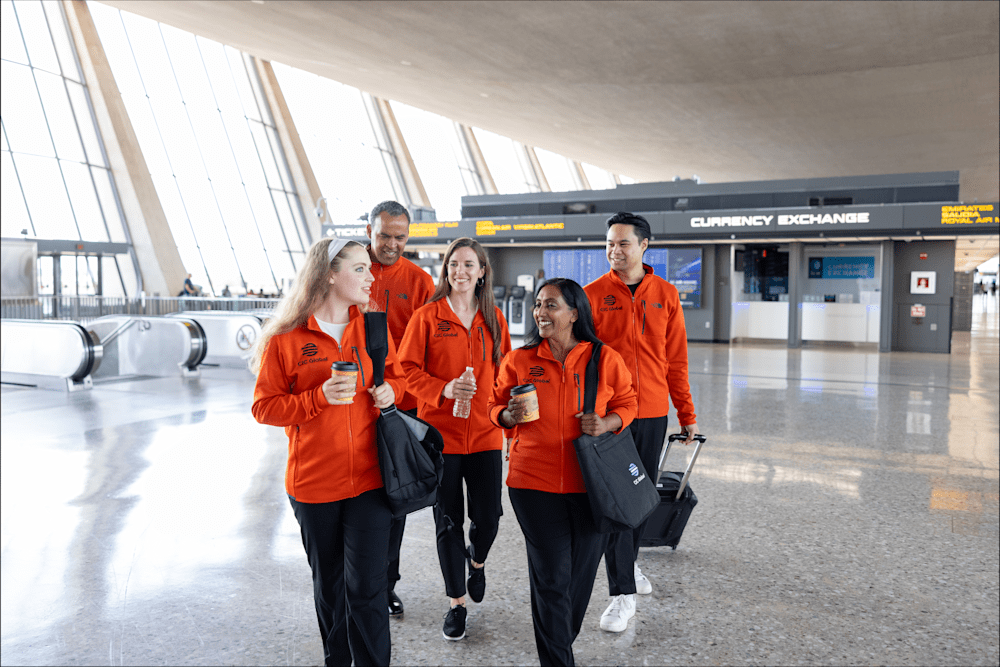
The most common reason companies skip offsites isn’t budget; it’s the inability to justify the number to a CFO. So start with the math. SHRM puts the cost of replacing a mid-level employee at 50%–200% of annual salary. For a $70K manager, that’s $35,000–$140,000 per departure, not counting lost institutional knowledge or team disruption. Gallup research shows connected teams are 21% more profitable and 78% less absent than their disconnected counterparts. A well-run annual offsite is one of the highest-leverage cultural investments a mid-size company can make: it builds the social capital that makes Slack more productive, 1:1s more honest, and departures less common.
Surf Office’s 2025 State of Company Offsites report found that 91% of offsite organizers now operate in remote or hybrid models. For those teams, the offsite isn’t a perk; it’s the annual infrastructure maintenance for a team that can’t build casual trust over lunch. If your team is distributed, treat the offsite budget as a non-discretionary line item and make the case accordingly.
The 12-Week Planning Timeline for Offsites

Most offsite planning failures trace back to a compressed timeline. Book too late and your best venues are gone. Wait too long on the agenda and you’re running slide decks that were built the night before. Order swag too late and you’re either paying rush fees or handing out plain lanyards. The table below shows the full 12-week arc, with the swag step placed where it actually belongs.
| Timing | Phase | Key Actions |
|---|---|---|
| T-12 to T-10 weeks | Strategy & Approval | Define 2–4 concrete outputs (not themes); set per-person budget; survey attendees on dietary needs and format preferences; get exec sign-off |
| T-10 to T-8 weeks | Venue Search | Issue RFPs to 3–5 venues; confirm airport proximity under 90 min; verify AV, group dining capacity, outdoor space, and Wi-Fi reliability; collect dietary and accessibility information from attendees |
| T-8 to T-6 weeks | Lock Contracts | Sign venue contract; book group travel; review attrition clauses carefully (an unfavorable clause cost one startup $88K per an Offsite.com case study) |
| T-6 to T-5 weeks | Itinerary v1 | Draft 3-day agenda using 30/40/30 structure; identify activities; book outside facilitator if needed; confirm Day 1 is light |
| T-5 to T-4 weeks ⭐ | Order Branded Swag | Finalize design; collect sizes via self-service form; place order at least 4 weeks out for standard 2-week production plus a 2-week buffer; decide on ship-to-office, ship-to-venue, or direct-to-home distribution |
| T-4 to T-3 weeks | Itinerary v2 | Lock the final agenda; brief external speakers or facilitators; confirm team-building activity details; send calendar holds to all attendees |
| T-3 to T-1 weeks | Communicate & Confirm | Send attendee packing list, agenda, and FAQ; hold a pre-trip Q&A call; confirm AV setup; inspect swag delivery and verify sizes |
| T-0: The offsite | Execute | Protect Day 1 for arrival and light social; run the workhorse Day 2; distribute swag at the Day 2 morning peak; close Day 3 with commitments and a group photo |
| T+2 days | Follow-up | Send the action plan (1-day / 1-week / 1-month format) within 48 hours; archive group photos for employer-brand use; schedule 30-day commitment check-in |
Choosing a Location for Your Offsite

Location choice is the single biggest cost variable after team size, and it sets the emotional tone of the entire event. A hotel conference center signals “this is a long meeting.” A mountain lodge signals “this is different.”
Ninety-two percent of retreat attendees in TheOffsiteCo.’s survey preferred a unique location over a fancy hotel. Use the table below to match venue type to your team’s goals and budget.
| Venue Type | Cost/Person/Day (all-in) | Best For | Watch Out For |
|---|---|---|---|
| Urban hotel / conference center | $200–$350 | Large teams (100+); tight budgets; easy multi-coast travel logistics | Feels like a relocated meeting; high F&B minimums; generic atmosphere |
| Resort / all-inclusive retreat center | $350–$700 | Mid-size teams (30–80) wanting a clear mental “off” switch; simplified planning (one bill) | Higher headline cost; can feel touristy; book 4–6 months out for peak dates |
| Vacation-home buyout | $300–$600 | Small teams (20–40); leadership retreats; when full-team housing under one roof drives bonding | AV and catering usually DIY; requires a strong on-site coordinator; book 3–6 months ahead in high-demand markets |
| Mountain lodge / countryside inn | $250–$500 | Strategy-heavy, focused-work retreats; teams that need a nature reset and fewer distractions | Limited dining variety; weather-dependent activities; seasonal availability |
| Unique / non-traditional venue | $200–$500 | Creative teams; orgs that want a social-shareable experience; groups under 40 | AV often improvised; logistics more complex; needs earlier catering coordination |
Wherever you land, run every finalist through this five-factor filter before signing:
- Under 90 minutes from a major airport with multi-coast direct flights
- Dedicated meeting space that isn’t shared with another group
- Group dining capacity with documented dietary handling
- Reliable Wi-Fi (93% of attendees in TheOffsiteCo.’s survey call this non-negotiable)
- A venue coordinator who can receive pre-shipped swag
That last point eliminates most problems in Step 5 of the timeline.
Building Your Offsite Itinerary
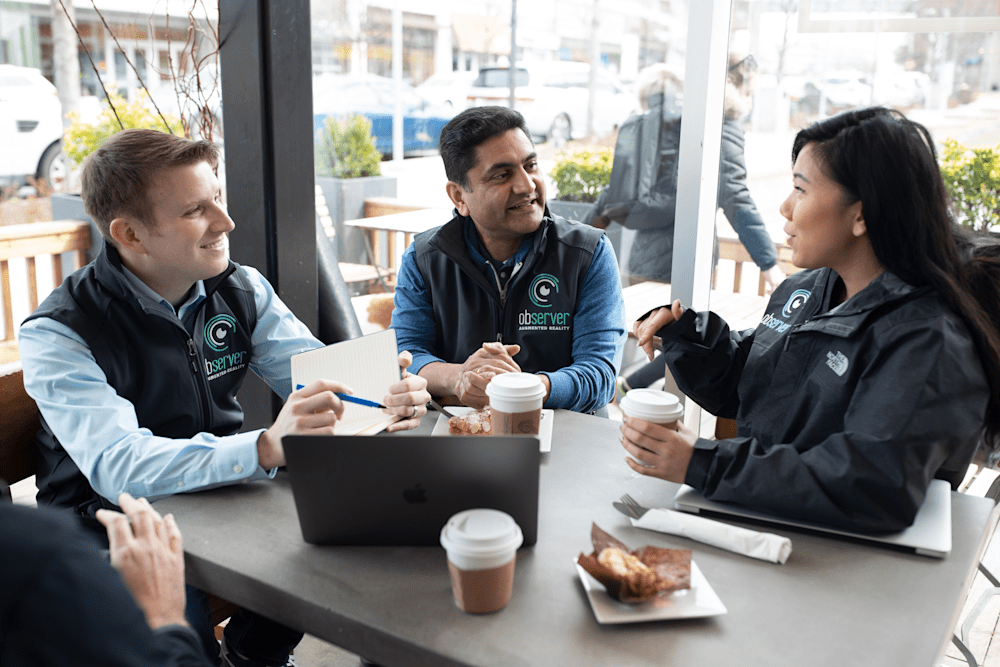
The most expensive offsite mistake isn’t overspending on the venue; it’s underspending on white space. A packed agenda recreates the exhaustion of the office in a prettier zip code.
The 30/40/30 formula works: 30% structured work sessions, 40% team activities, 30% unscheduled free time. For a 3-day event, that maps to roughly one deep-work day, one activity day, and deliberate breathing room throughout.
The sample offsite itinerary below is built for a 40-person team, domestic, 3 days and 2 nights. It also marks the moment when swag distribution does the most work.
| Day & Time | Block | Notes |
|---|---|---|
| Day 1, 12–4 PM | Rolling check-in; light lunch; optional outdoor reset walk | No formal agenda. Travel fatigue is real. Don’t squander Day 1 on strategy sessions |
| Day 1, 5:30–8:30 PM | Welcome reception + family-style group dinner; CEO 10-minute “why we’re here” | Short, purposeful opening that sets the tone without over-explaining |
| Day 2, 8–9 AM | Breakfast | Arrival at seats. Custom swag kit at every place setting. Matching t-shirts go on for the rest of the day; the 92% connection effect kicks in before the first agenda item |
| Day 2, 9 AM–12 PM | Strategy and deep-work sessions (90-min blocks with 15-min breaks) | The workhorse window. Guard it: no side calls, no cross-project check-ins, no one on a laptop doing something else |
| Day 2, 1:30–4 PM | Cross-functional breakouts on 2–3 named outputs | Each breakout has a scribe and a 3-minute report-out slot on Day 3 |
| Day 2, 4–6 PM | Team activity (cooking class, hike, scavenger hunt (team decides)) | Optional is better: 89% of retreat-goers prefer non-mandatory activities (TheOffsiteCo. survey) |
| Day 2, 6:30–8:30 PM | Themed dinner at an off-venue restaurant; informal conversation | Matching tees from morning = free group-photo op; keep photos for employer-brand use |
| Day 3, 9–10:30 AM | Synthesis: breakout teams report outputs; leadership responds live | The most important 90 minutes of the entire offsite |
| Day 3, 10:30–11:30 AM | 1-day / 1-week / 1-month commitments, signed by every participant | Commitment format from Gustavo Razzetti / Fearless Culture: specificity prevents evaporation |
| Day 3, 11:30–12 PM | Closing circle; group photo; departures | Post action plan within 48 hours; without follow-up, “nothing changes” (Arden Coaching) |
Week 5: Order Your Branded Swag

Every other offsite planning guide treats swag as a parting gift or skips it entirely. It belongs at Week 5, on equal footing with venue contracts and travel logistics, because it’s the only budget line item that keeps generating returns after everyone goes home.
From our Company Swag Survey (1,064 U.S. employees at companies with 50+ employees): 92% of employees say wearing matching branded apparel increases their sense of connection and community. 88% feel more positive about their employer after receiving a favorite piece of swag. PPAI research shows a branded hat earns an average of 3,400+ impressions over roughly 10 months of use. One $40 hoodie worn at Monday standups for a year is a better engagement investment than three happy hours that nobody remembers in February.
The Lead-Time Math
Standard production is 2 weeks. Rush is 1 week (approximately +15% cost). Super Rush is 3 business days (approximately +30%). For groups of 50+, ordering at the 4-week mark gives you room for a design proof round, a size-collection window, and a buffer if headcount shifts. Ordering inside 3 weeks means paying rush fees or skipping the order; neither is a good outcome for a $3,000/person event.
The size-collection step trips up more organizers than any other swag task. Our 2026 Unsung Heroes Survey (516 swag organizers) found that 54% play “size consultant,” fielding individual questions and managing spreadsheets instead of doing their real job. The fix is a self-service size-collection form: you send a link, each attendee enters their own information, the order populates automatically. For distribution, choose from three options: ship to your office and transport to the venue, ship to the hotel’s front desk with the coordinator’s name and arrival date, or drop-ship individual kits directly to attendees’ homes before the event, which extends the anticipation and turns the offsite into a two-stage experience.
What to Order: The Swag Comparison Table

According to our 2026 Swag Trends Survey, 67% of buyers only consider swag successful if recipients voluntarily wear or use it. 91% say employees feel more valued when the swag carries a recognized retail brand on the tag. And 62% plan to try heavyweight tees and fleece in 2026, while 24.6% call standard unisex cotton tees the most overdone item of the year. The table below helps you choose the right items for the right budget tier.
| Item Category | Use at Offsite | Cost/Person | Why It Works in 2026 | Avoid |
|---|---|---|---|---|
| Heavyweight or garment-dyed tee | Day 2 activity shirt; group photo; daily wear for months after | $18–$32 | 62% of buyers want heavyweight tees; garment-dye gives vintage look that earns voluntary wear | Standard thin unisex cotton: top overdone item per our 2026 survey |
| Pullover hoodie or crewneck | Take-home kit centerpiece; worn at morning sessions in cooler venues | $35–$65 | High wearability year-round; 46% prefer boxy/relaxed fit over slim cut | Cheap fleece that pills; slim-fit cuts that run small |
| Premium retail-brand jacket or vest | Outerwear layer for mountain/outdoor offsites; the “wow” kit item | $80–$150 | 91% of employees feel more valued receiving a name-brand item (Nike, Patagonia, North Face) | Private-label outerwear that looks generic on the tag |
| Insulated tumbler (YETI, MiiR, Hydro Flask) | Table prop at Day 2 breakfast; daily use for 2+ years | $28–$55 | Longest average lifetime of any swag category; daily impressions; basic plastic bottles = top overdone item | Generic BPA-free tumblers with no brand credibility |
| Premium backpack or weekender | Carries all offsite gear home; doubles as employer-brand asset in group photos | $45–$110 | Highest “still using it 12 months later” rating; especially effective at multi-day events | Cheap drawstring bags that stretch out after one use |
| Wellness kit item (candle, blanket, Ember mug) | Take-home recognition gift; good for winter or cabin-venue offsites | $30–$80 | Top non-apparel breakout category in 2026; signals “your comfort matters” | Random assortments without a coherent theme |
Budget Tiers for Custom Swag
Lean ($25–$40/person): t-shirt + tumbler + sticker pack. Target sweet spot ($40–$75/person): heavyweight tee + cap + insulated tumbler in a kraft bag.
Premium ($75–$150/person): retail-brand hoodie or jacket + tumbler + tech accessory. The sweet spot covers most 20–100 person teams and runs under 2% of a typical $3,500/person offsite total; the cheapest ROI per dollar in the entire event budget.
Customer Story
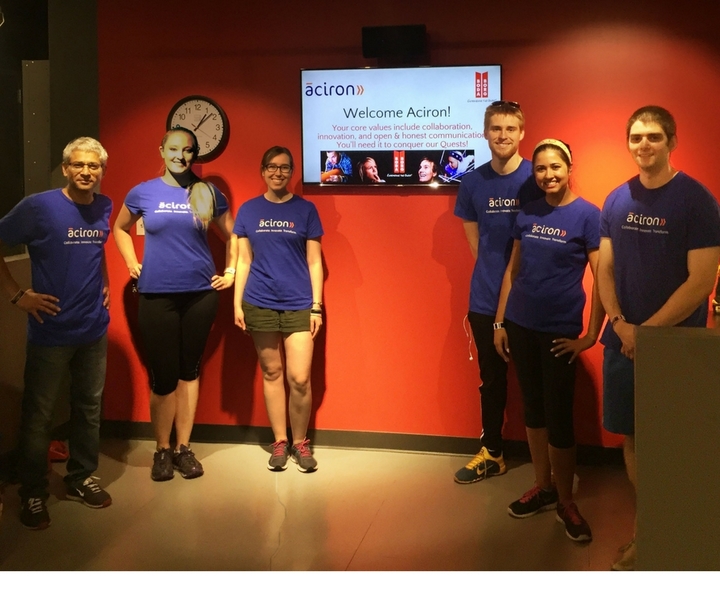
“The Aciron Consulting team recently celebrated the company’s 10th anniversary with a fun day at Boda Borg Boston. We used our teamwork and problem-solving skills to conquer the challenging physical and mental Quests. Our matching Aciron tees from Custom Ink united our group and amplified our team spirit!”
Featured Offsite Apparel Styles
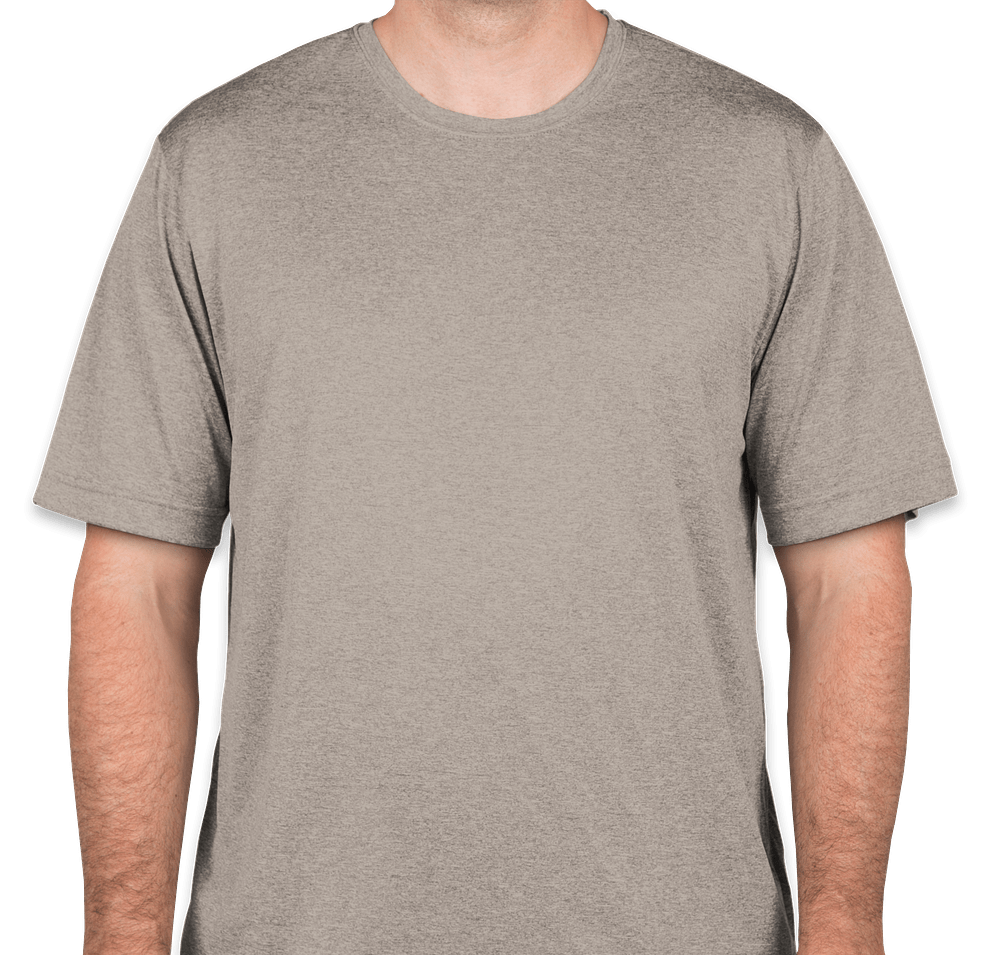
Sport-Tek Heather Contender Performance Shirt
- 3.8-oz, 100% polyester with PosiCharge technology that locks in color and logos through repeated washing; the spec that matters when your matching tees need to look sharp on Day 2 and again at the gym three months later
- Semi-fitted athletic cut; tagless label for comfort during active offsite programming; moisture-wicking construction handles everything from a morning hike to an afternoon escape room
- Available XS–4XL in a wide color range; works equally well as the Day 2 activity shirt and as a lightweight everyday layer back at the office
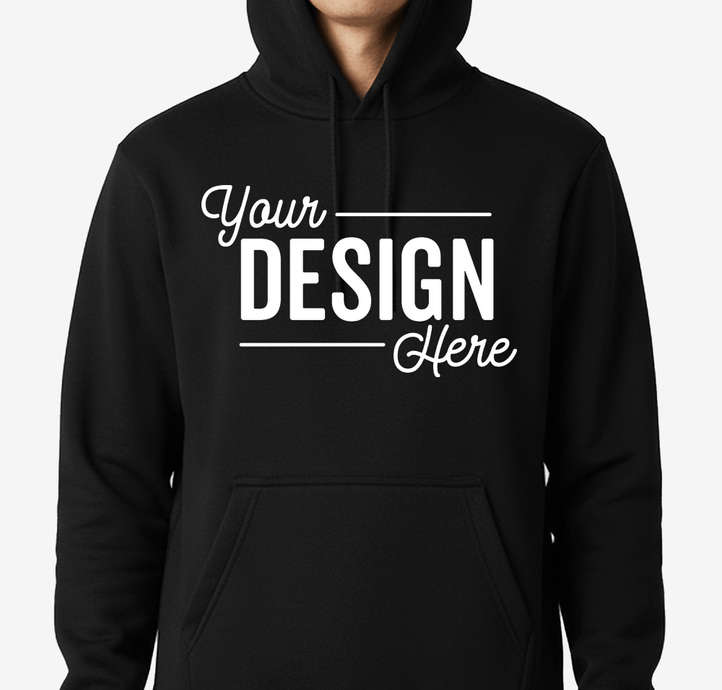
Port & Company Easy Fleece Pullover Hoodie
- 7.8-oz, 50/50 cotton/polyester fleece with double-needle stitching throughout; mid-weight construction means it works at a mountain venue in September and as a Monday-standup uniform in January
- Front pouch pocket; matching drawstring; set-in sleeves for a clean logo placement on the chest or left chest; built to be worn voluntarily, which is exactly how our 2026 Swag Trends Survey says buyers measure success
- Available S–4XL; one of the most-requested styles for offsite welcome kits because it’s genuinely worn after the event, not relegated to a drawer
Design your offsite gear in our Design Lab or work with one of our Inkers to build a consistent visual identity across every item in the kit. We offer free standard shipping on all orders. For the full range of custom team gear built for corporate events and offsites, see our team-building apparel collection.
Confirm, Execute, and Follow Up

The final three weeks before the offsite are about eliminating surprises, not adding new items.
At T-3 weeks, send every attendee a single page covering the agenda, packing list, dietary confirmations, and travel logistics.
At T-1 week, designate a separate on-site coordinator whose only job during the event is logistics (AV, food timing, swag distribution, room transitions), so the agenda host can stay fully present.
After the event, the 48-hour action-plan send is non-negotiable. Every planning guide says this and teams still skip it. The commitments made in the Day 3 closing session have a half-life of about a week without a written follow-up in writing. Send the document, assign owners, schedule the 30-day check-in before anyone boards a plane home.
One often-overlooked follow-up: collect and organize the group photos. The matching team gear from your offsite becomes an employer-brand asset every time it shows up in a team photo on LinkedIn or a careers page. Forty people in matching branded t-shirts is worth more in recruitment marketing than most paid job postings. It’s also a subtle signal to your existing team that this culture is worth staying for. For additional ideas on sustaining connection between offsites, see our guides on team building activities and virtual team building for distributed teams.
Common Offsite Planning Mistakes
| Mistake | What Goes Wrong | The Fix |
|---|---|---|
| No clear output defined before booking | The offsite becomes an expensive vibe with no takeaways | Define 2–4 specific deliverables (a decision, a roadmap, a realignment) before choosing dates |
| Overstuffed agenda; no white space | Attendees hit Day 3 exhausted; the synthesis session gets compressed into 20 minutes | Apply the 30/40/30 formula; protect at least 90 minutes of unstructured time on Day 2 |
| Day 1 programming starts at 2 PM | Travel-fatigued attendees sit through strategy sessions and remember nothing | Keep Day 1 social, light, and low-stakes; let arrival happen across a 4-hour window |
| Ordering swag in the final week | Rush fees add 15–30%; wrong sizes arrive; some items don’t make it at all | Order at T-5 to T-4 weeks; use a self-service size form; confirm ship-to-venue address with the hotel coordinator |
| Skipping post-event follow-up | Commitments dissolve within a week; next year’s budget request has no ROI story | Send the action plan within 48 hours; assign every commitment an owner and a due date |
| One person handles both logistics and facilitation | The agenda host is distracted by room-temperature complaints and late lunch deliveries | Designate a separate on-site coordinator for Day 2 and Day 3; they run nothing except the logistics |
| Treating all content like a board meeting | Attendees check their phones and wonder why this couldn’t have been an email | Design for participation: breakouts, live polls, working sessions, not lectures |
Frequently Asked Questions
Q: How far in advance should I plan a company offsite?
For groups of 20–100, a 12-week lead time (3 months) is the practical minimum for popular domestic destinations. Offsite.com recommends 6 months for groups over 100. If your target window falls during spring conference season (April–June) or fall peak (September–October), add 4–6 weeks to every estimate. The venue is your longest lead-time item; sign contracts before you finalize the agenda.
Q: How much does a company offsite cost per person?
Naboo’s 2026 benchmark is approximately $201 per person per day for mid-size domestic retreats. For a 2-night, 3-day offsite, that’s roughly $600 per person at the low end, and $2,200–$4,000 per person all-in (travel, lodging, food, activities) for larger fully planned retreats, per Offsite.com client data. RetreatsAndVenues’ survey of 210 companies put the average at $3,692 per employee for retreats of 3–4 days including flights. A useful starting framework: allocate roughly 25% each to accommodation, transportation, food, and activities. Swag should run $25–$75 per person on top of that and generates measurable ROI that most other budget lines don’t.
Q: When should I order branded swag for an offsite?
Order at the 4–5 week mark. Standard production is 2 weeks; ordering 4 weeks out gives you a design proof round, a size-collection window, and a 1-week buffer for reorders if headcount shifts. Ordering inside 3 weeks means either a rush surcharge (approximately +15–30%) or arriving at your offsite with nothing to hand out. If you’re shipping to the hotel, confirm the receiving address and coordinator name at booking, not the week before.
Q: How long should a company offsite be?
Two nights and three days is the sweet spot for most teams. RetreatsAndVenues found that the average retreat length is 3.78 days, with 4 days being the median. Less than 2 nights doesn’t allow for meaningful synthesis. Day 1 is travel and settling in, Day 2 is the workhorse, Day 3 is closure. Going beyond 4 days shows diminishing returns for most teams and adds significant travel cost for no proportional cultural gain.
Q: What swag do employees actually keep after a company retreat?
According to our 2026 Swag Trends Survey, the items with the highest voluntary-use rate are heavyweight or garment-dyed t-shirts (62% of buyers plan to include them in 2026), cozy fleece hoodies, premium insulated tumblers from recognized brands, and quality backpacks. The items most likely to end up in a drawer or donation pile: standard thin unisex cotton tees (the top “overdone” item named by 24.6% of buyers), generic plastic water bottles, and cheap tech accessories. The rule: if you wouldn’t buy it for yourself, your team won’t wear it voluntarily, and 67% of buyers say voluntary use is the only measure of swag success that matters.
Q: Do company offsites actually improve morale?
Yes, when they’re designed well. High-performing companies run 2.8 offsites per year on average (Emburse, 2025), and Gallup data links connected teams to 21% higher profitability and 78% less absenteeism. The design element is non-negotiable: an overstuffed agenda in a nice location produces the same exhaustion and resentment as a bad week at the office, just with better scenery. The 30/40/30 formula, clear outputs defined before booking, and genuine unstructured time are the three design decisions that separate offsites people talk about for years from the ones that generate a “that was a lot of money for a PowerPoint” response on the flight home.

The Custom Ink Staff is a team of design enthusiasts and promo product experts dedicated to bringing your ideas to life. From screen printing secrets to the latest trends in custom gear, we draw on decades of collective experience to help you create something unforgettable.