55 Fun Team Building Activities & Games for Work in 2026
 Posted By Sofia Fox —
Sofia loves compiling data on custom swag our customers love and working with our internal experts to bring you the very best buying guides, advice, and industry stats.
SHARE:


Only 21% of employees globally are engaged at work, according to Gallup’s 2025 State of the Global Workplace report, costing the world economy $438 billion in lost productivity last year. If you’re the person responsible for changing that number on your team, this list is for you.
It covers 55 team building activities across three categories: free options, paid experiences worth the investment, and exercises any manager can run without a facilitator. Each one includes time, group size, cost, and the Tuckman group development stage it fits best, so you can match the activity to where your team actually is. This list also includes custom team-building apparel and swag ideas that help bring teams together.
In This Article
- Choosing the Right Activity: Budget, Frequency, and Stage
- 18 Free Team Building Activities
- 18 Paid Team Building Activities
- 16 Manager-Led Team Building Exercises
- How Branded Gear Amplifies Every Activity
- Frequently Asked Questions
Key Takeaways
- $438 billion is lost annually to disengagement: That’s Gallup’s 2025 figure. Teams that run regular team-building activities see 14% productivity gains and 23% higher profitability. Organizations spending more than $25 per person per month report 25% fewer morale issues.
- Managers run 70% of what matters: Per Gallup, managers account for 70% of the variance in team engagement. That’s why manager-led activities belong in your toolkit alongside facilitated events, and why this guide treats them as a distinct category.
- Custom gear extends the half life of team moments: 74% of HR and people leaders rank team unity and belonging as their #1 goal for custom swag, according to our 2026 Custom Ink Swag Trends Survey. Pairing activities with branded apparel or gear turns a two-hour activity into a six-month culture signal.
Choosing the Right Activity: Budget, Frequency, and Stage

Three questions should drive every team-building decision: What’s your budget? How often will they happen? And where is your team in Tuckman’s five stages of development?
According to the Tuckman model, every team moves through five predictable stages:
- Forming: The team is new and polite, roles are unclear, and the manager carries almost all the direction.
- Storming: Begins when the real work starts: friction emerges, people push back, and conflict surfaces. It’s uncomfortable, but it’s a sign the team is working.
- Norming: The team finds its rhythm. Trust develops, roles clarify, and people start relying on each other. The risk here is becoming so harmonious that dissenting opinions get suppressed.
- Performing: Work flows, decisions get made without constant escalation, and the manager’s job shifts from directing to removing obstacles.
- Adjourning: When the team ends. How this stage is handled shapes how members feel about the organization and what they carry into the next team they join.
Matching these variables to activity type is what separates programs that move engagement metrics from ones that just pass an afternoon. Here’s what the research says about planning team-building activities.
| Factor | Benchmark | Source |
|---|---|---|
| Budget | $100–$500 per employee per year (avg. $147–$212) | Teambonders 2025 |
| Optimal frequency | 2–4 times per year for structured events; monthly micro-rituals | EML Team Building; Asana employee survey |
| Manager impact | 70% of engagement variance tied to manager behavior | Gallup State of Global Workplace 2024 |
| Swag amplification | 92% of employees say matching branded gear increases team connection | Custom Ink Company Swag Survey |
18 Free Team Building Activities for Work

The team building games below cost nothing but time, and several are strong enough to serve as your default quarterly touchpoint. Each team-building technique is tagged to the Tuckman stage it serves best (Forming, Storming, Norming, Performing, and Adjourning), because deploying the wrong activity at the wrong stage is the most common reason team-building programs fail to move metrics. You’re not just picking what sounds fun. You’re finding the ones that will move the needle.
| # | Activity | Time | Group | Best Stage | Focus Area |
|---|---|---|---|---|---|
| 1 | Two Truths and a Lie | 15 min | 4–25 | Forming | Rapport, low-stakes disclosure |
| 2 | Human Knot | 20 min | 8–12 | Storming | Verbal coordination, trust |
| 3 | Marshmallow Challenge | 35 min | 4–8/team | Norming | Prototyping, collaboration roles |
| 4 | Office Trivia | 30 min | 6–60 | Norming | Shared identity, fun competition |
| 5 | Show and Tell | 20 min | 5–15 | Forming | Self-disclosure, belonging |
| 6 | A Penny for Your Thoughts | 20 min | 5–20 | Forming | Storytelling, psychological safety |
| 7 | Blind Drawing | 15 min | Pairs | Storming | Communication, listening gaps |
| 8 | The Minefield | 25 min | 6–20 | Storming | Trust, verbal direction |
| 9 | Reverse Brainstorm (Worst Idea First) | 20 min | 4–15 | Norming | Psychological safety, creative unblocking |
| 10 | Paper Tower Challenge | 30 min | 4–8/team | Norming | Problem-solving, leadership surfacing |
| 11 | Egg Drop Challenge | 45 min | 4–8/team | Norming | Prototyping, team dynamics |
| 12 | Lost at Sea Survival Ranking | 40 min | 4–8/team | Storming | Negotiation, consensus |
| 13 | Speed Networking / Speed Friending | 25 min | 10–50 | Forming | Cross-team relationships at scale |
| 14 | Find Someone Who (Bingo) | 20 min | 10+ | Forming | Discovering hidden commonalities |
| 15 | Virtual Coffee Chats (Donut/Slack) | 25 min | Pairs | Forming/Norming | Remote rapport, social isolation |
| 16 | Virtual Pet or Hobby Show and Tell | 20 min | 5–25 | Forming | Humanizing remote teammates |
| 17 | One-Word Check-In | 5 min | Any | All stages | Psychological safety, meeting opener |
| 18 | DIY Office Scavenger Hunt | 45 min | 8–40 | Norming | Energy, friendly competition |
Spotlight: Three Free Activities Worth Doing This Week

The Marshmallow Challenge
Time: 35 min (18 min build + debrief) | Group: Teams of 4 | Materials: 20 spaghetti sticks, 1 yard tape, 1 yard string, 1 marshmallow per team
Teams build the tallest freestanding structure they can, with the marshmallow on top. The catch is that most teams prototype nothing and discover the marshmallow is heavier than expected only in the final seconds. Tom Wujec’s research across hundreds of groups found that kindergartners consistently outperform MBA graduates because they iterate instead of plan, and that CEOs with executive assistants outperform CEOs alone. The debrief is where the real value lives: ask teams what they’d do differently, and you’ve surfaced your team’s actual collaboration patterns in 35 minutes with no budget.
Reverse Brainstorm (Worst Idea First)
Time: 20 min | Group: 4–15 | Materials: Whiteboard or sticky notes
Pose a real work problem. Ask the team to generate the worst possible solutions first. Then flip each bad idea: what would the opposite look like? Removing the pressure to be right immediately lowers the psychological barrier Amy Edmondson’s research identifies as the primary blocker of creative candor. This works best for Norming-stage teams who have settled into safe, predictable thinking patterns and need a jolt of productive friction.
Virtual Coffee Chats via Donut or Slack
Time: 20–25 min | Group: Pairs | Materials: Donut bot (free tier) for Slack
A bot randomly pairs teammates for non-work conversations weekly or biweekly. No agenda, no deliverable. It sounds trivial but Gallup’s Q12 research is clear: employees who report having a best friend at work are significantly more likely to be fully engaged, produce higher-quality work, and stay with the organization longer. For distributed teams, random pairings build the cross-team relationships that in-office teams form accidentally over lunch.
18 Paid Team Building Activities Worth the Investment
Budget benchmark: most professional team-building programs run $35–$75 per person for facilitated events, and $150–$300 per person for half-day experiential formats. At an average team-building budget of $147–$212 per employee per year (per Teambonders’ 2025 analysis), a quarterly plan might pair two free activities with one paid event per year.
| # | Activity | Time | Group | Cost/Person | Best Stage |
|---|---|---|---|---|---|
| 1 | In-Person Escape Room | 75 min | 4–10/room | $30–$45 | Norming |
| 2 | Virtual Escape Room (Hosted) | 75 min | 4–500 | $15–$35 | Norming |
| 3 | Corporate Cooking Class | 2–3 hrs | 8–60 | $60–$200 | Norming |
| 4 | Virtual Cooking or Mixology | 90 min | 5–100+ | $50–$120 | Norming/Performing |
| 5 | Charity Bike Build | 2–3 hrs | 10–500 | $150–$250 | Performing |
| 6 | Volunteer Day (Habitat, Food Bank) | Half-day | 5–100 | Free–$50 | Performing |
| 7 | App-Based Scavenger Hunt | 90 min | 8–500 | $30–$60 | Norming |
| 8 | Hosted Trivia Game Show | 75 min | 10–500 | $25–$45 | Norming |
| 9 | Murder Mystery (In-Person or Virtual) | 2 hrs | 8–50 | $35–$75 | Norming |
| 10 | Improv or Comedy Workshop | 2 hrs | 8–30 | $50–$150 | Storming/Norming |
| 11 | Painting or Pottery Class | 2 hrs | 6–40 | $35–$75 | Norming |
| 12 | Axe Throwing, Bowling, or Topgolf | 2 hrs | 6–80 | $30–$80 | Norming/Performing |
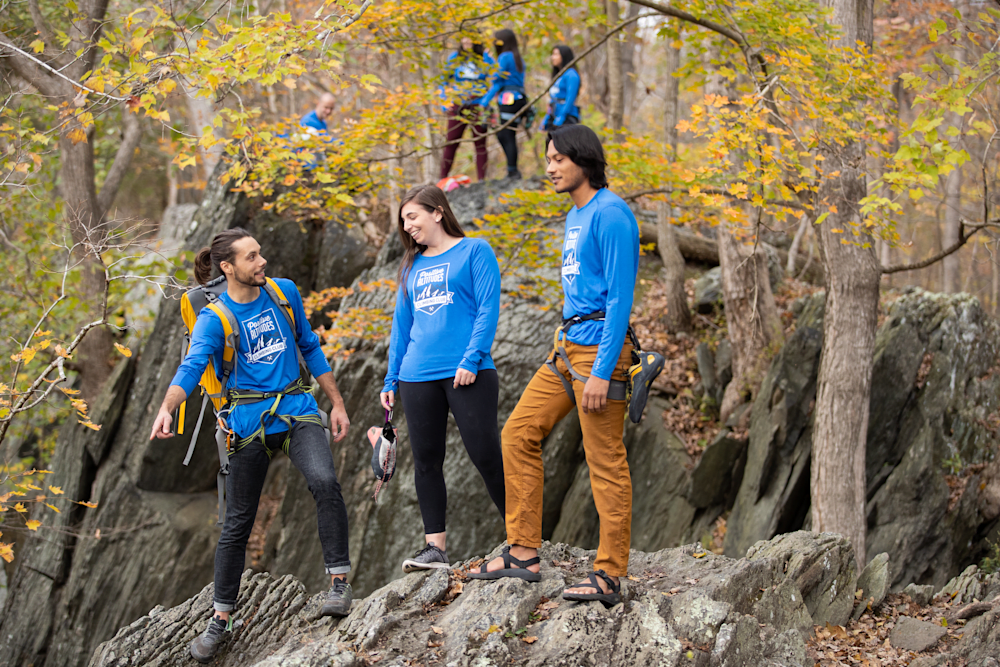
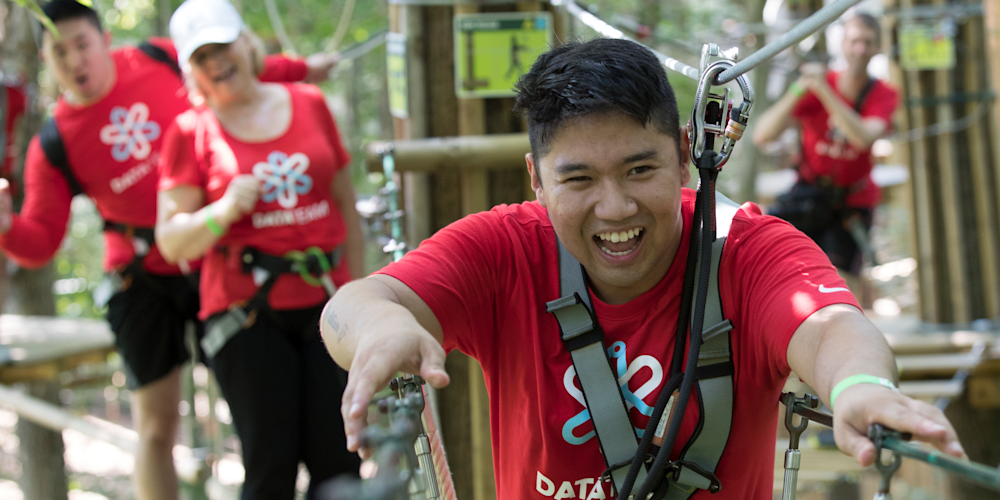
| 13 | Outdoor Adventure or Ropes Course | Half-day | 8–50 | $80–$300 | Storming/Norming |
| 14 | Company Retreat or Off-Site (Multi-Day) | 2–3 days | 10–200 | $500–$2,500+ | All stages |
| 15 | Working Genius Workshop (Lencioni) | 2–3 hrs | 6–50 | $25–$200 | Norming |
| 16 | DiSC, Insights Discovery, or StrengthsFinder | Half-day | 6–50 | $60–$200 | Storming/Norming |
| 17 | Professional Facilitation Program | Custom | Custom | $35–$300 | Storming/Norming |
| 18 | Sports League, Pickleball, or 5K | Recurring | 10–200 | $25–$100 | Norming/Performing |
Spotlight: Three Paid Activities That Punch Above Their Price
Improv or Comedy Workshop (Second City Works, UCB Corporate)
Cost: $50–$150/person | Time: 2 hours | Best for: Teams in Storming who need to lower the psychological barrier to candor
The core principle of improv, “Yes, and,” is the behavioral opposite of the passive resistance that characterizes stuck teams. Participants practice accepting a premise and building on it rather than evaluating or shutting down contributions. Amy Edmondson’s research on psychological safety identifies this exact acceptance behavior as a precondition for high team performance. Improv training operationalizes it in 90 minutes without a whiteboard in sight.
Charity Bike Build (Build-A-Bike, TeamBonding)
Cost: $150–$250/person (includes bike + facilitation + donation) | Time: 2–3 hours | Best for: Performing-stage teams or year-end events
Teams compete to assemble bikes fastest, then donate them to organizations like Boys and Girls Clubs. The combination of time pressure, friendly competition, and a meaningful outcome produces one of the highest purpose-sentiment scores of any format. Outback Team Building reports 75% participation rates for CSR-oriented events, compared to lower engagement for purely social activities. The bikes become a physical memory anchor the team owns permanently through the cause they supported.
Company Retreat or Multi-Day Off-Site
Cost: $500–$2,500+/person | Time: 2–3 days | Best for: All stages, especially major resets after reorgs or new-team formation
Stanford research links team retreats to 20% productivity gains in the weeks following. Harvard Business Review reports 25% increases in cross-team collaboration post-retreat. These aren’t soft outcomes. The reason retreats produce disproportionate results is the combination of uninterrupted time, physical distance from the office environment, and shared meals, which research consistently identifies as among the strongest trust-builders available to managers. The investment case is straightforward: if you lose one mid-level employee because the team never bonded, you’ve spent more than the entire retreat budget in replacement costs.
16 Team Building Exercises for Managers (No Facilitator Required)

This is the category of team-building activities that most competitors forget to include. Here’s why that’s a major oversight: Gallup’s research found that the single biggest factor in whether a team is engaged or checked out is their manager, accounting for 70% of the difference between high and low engagement teams.
The activities below are designed for managers to run themselves with minimal prep, mapped to the Tuckman stage where each one does the most work. Most require nothing but a meeting room and 30–90 minutes.
| # | Exercise | Time | Group | Cost | Tuckman Stage |
|---|---|---|---|---|---|
| 1 | Team Charter Workshop | 75 min | 4–15 | Free | Forming |
| 2 | Working Genius Mapping (Lencioni) | 2 hrs | 4–25 | ~$25/person | Storming/ Norming |
| 3 | Role Expectation Matrix | 60 min | 4–10 | Free | Norming |
| 4 | Edmondson Psychological Safety Survey + Debrief | 45 min | 4–12 | Free | Storming |
| 5 | Start / Stop / Continue Retro | 40 min | 4–15 | Free | Norming/ Performing |
| 6 | OKR Goal-Setting Workshop | 90 min | 4–15 | Free | Forming/ Norming |
| 7 | Two Wins, One Goal Monthly Huddle | 20 min | 4–25 | Free | Norming/ Performing |
| 8 | Structured New-Manager 1:1 Series | 30 min x3 | 1:1 | Free | Forming |
| 9 | Personal User Manual (“Working With Me”) | 90 min | 4–12 | Free | Forming/ Norming |
| 10 | Lifeboat / Survival Negotiation | 60 min | 4–12 | Free | Storming |
| 11 | Walking Meeting | 30 min | 1:1 or 2–4 | Free | Any |
| 12 | Strengths Spotting Circle | 30 min | 4–10 | Free | Norming |
| 13 | Sweet and Sour Check-In (Ferrazzi) | 10 min | 4–15 | Free | All stages |
| 14 | Quarterly Career Conversations | 30 min | 1:1 | Free | Performing |
| 15 | After-Action Review (AAR) | 60 min | 4–15 | Free | Performing/ Adjourning |
| 16 | Team Identity and Mascot Workshop | 75 min | 4–15 | Free (+ optional gear) | Forming/ Norming |
Spotlight: Three Manager-Led Exercises That Move Metrics
Team Charter Workshop
Time: 75 min | Stage: Forming | Materials: Whiteboard, Miro, or Google Slides
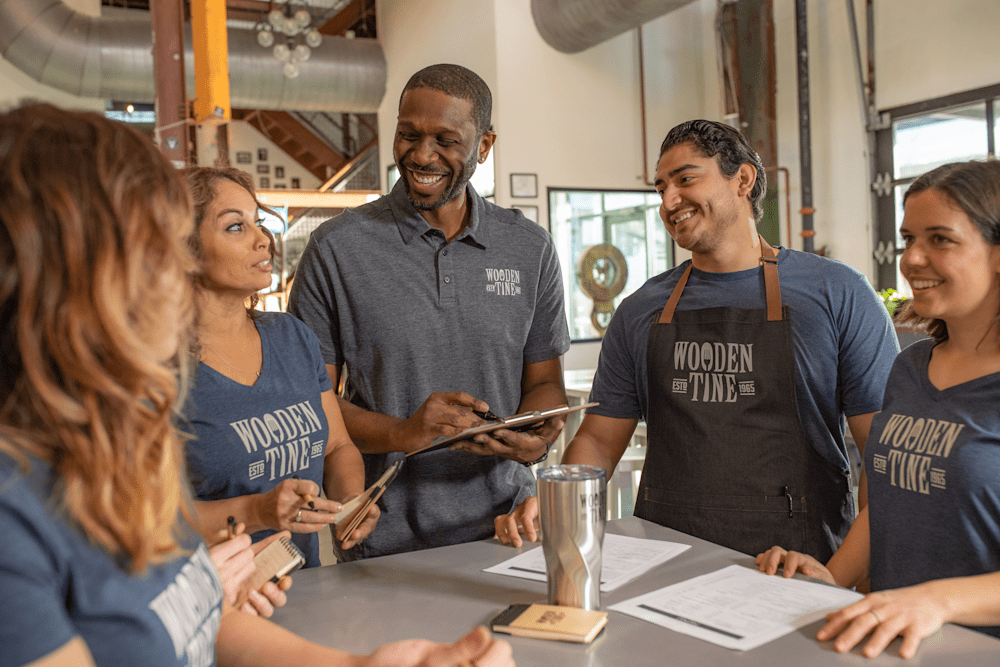
Co-create written agreements on team purpose, values, decision rights, communication norms, and how the team handles disagreement. MIT Human Resources identifies explicit norm-setting as the primary Forming-stage task. Teams that skip this step almost always hit a prolonged Storming phase later, because the unspoken assumptions they never aligned on surface under pressure. The charter itself matters less than the conversation that produces it. Run this with every new team and after any significant team composition change.
Psychological Safety Survey and Debrief (Edmondson 7-Item Scale)
Time: 45 min | Stage: Storming | Materials: Free: anonymous survey tool (Google Forms, Typeform)
Administer Amy Edmondson’s seven-item psychological safety scale anonymously, share the aggregate results as a team, then agree on one behavior to start and one to stop. Edmondson’s 1999 research across 51 manufacturing teams established that psychological safety predicts learning behavior, which predicts performance. Google’s Project Aristotle later confirmed it as the single strongest predictor of team effectiveness across 180 teams. Managers often feel they need to fix the scores before sharing them. That instinct is backwards. The conversation after the reveal builds more safety than any score ever could.
After-Action Review (AAR)
Time: 60 min | Stage: Performing and Adjourning | Materials: None
Use the U.S. Army’s four questions: What was supposed to happen? What actually happened? Why was there a difference? What do we do differently next time? Edmondson’s research on hospital teams found that high-performing teams actually report more errors than low-performing ones, because they’ve built the safety to surface them. AARs are how you operationalize that norm. Run one after every major project delivery. The half-hour investment compounds over time as institutional knowledge that stays with the team rather than walking out the door with individuals.
How Branded Gear Amplifies Any Team Building Activity

The activity creates the moment. The gear extends how long the team carries it. According to our Company Swag Survey, 92% of employees say wearing matching branded apparel increases their sense of team connection and community, and 88% feel more positive about their employer after receiving a favorite piece of swag. PPAI research confirms that 65% of people keep branded merchandise for six months or more, meaning a shirt from your annual offsite becomes a belonging signal that resurfaces every time it comes out of the closet.
| Activity Type | Gear Moment | Why It Lands |
|---|---|---|
| Onboarding / Welcome Day (Forming) | Day-1 welcome kit with branded tee, hat, and tumbler | Per our 2026 Onboarding Experience Audit, Day-1 kit recipients are 2x more likely to say they “completely belonged from the start” |
| Team Charter / Identity Workshop | Team name or motto printed on an embroidered hoodie | Turns an abstract exercise into a physical artifact; 53% of buyers want premium decoration (embroidery, patches) |
| Annual Outdoor Event / Field Day | Matching performance tees for the event | 74% of employees have been asked to wear branded clothing to a company event (Company Swag Survey) |
| Charity Bike Build / Volunteer Day | Branded t-shirts for the day, donated to volunteers as recognition | The shirt signals team membership during the activity and memorializes the cause afterward |
| Company Retreat | Premium embroidered pullover or retail-brand jacket | 91% of buyers say teams feel more valued receiving a recognized retail brand (2026 Swag Trends Survey) |
| Project Close / AAR / Adjourning | Commemorative keepsake: challenge coin, patch, or limited-run tee | Physical closure ritual; aligns with Tuckman’s Adjourning research on the psychological need for recognition |
Our Design Lab makes it easy to design gear for any of these moments, and our design experts can help you build a consistent visual identity that holds up from Day 1 onboarding all the way through year-end recognition. We offer free standard shipping on all orders.
Customer Story

“Our company had over 500 people attending a local AAA baseball game and the employees who work together to boost employee engagement (Engagement Champions) wanted to stand out at the event. What better way than with custom raglan style baseball shirts!”
Featured Products from This Story
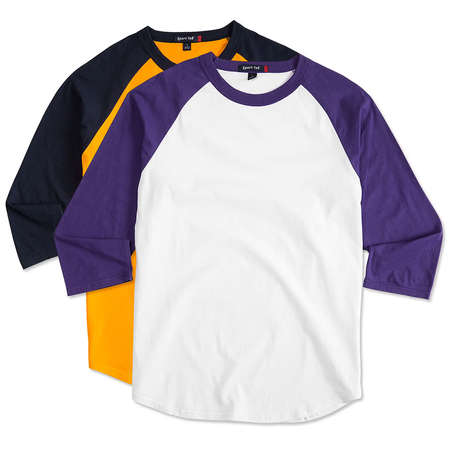
Sport-Tek Raglan T-Shirt: Classic Event Style
- 3.8-oz, 100% polyester interlock with PosiCharge technology for lasting color and crisp logo print through repeated washing
- Colorblocked raglan sleeves create instant visual team identity, great for field days, charity runs, and annual company outings where you want teams to stand out
- Available XS–4XL; tagless label eliminates distraction during active events

New Era Diamond Era Full Button Baseball Jersey: Event Day Standouts
- Moisture-wicking polyester construction with athletic cut built for movement at active team events, charity games, and company sports leagues
- Durable screen-printing holds sharp team names and numbers; ideal for annual events where the jersey becomes a recurring keepsake
- Full range of sizes in the category to outfit every member of a large group consistently
Ordering team gear for your company? With Custom Ink for Business you get bulk discounts, free samples and help from our design experts.
Explore Custom Ink for Business
Frequently Asked Questions on Team Building
Q: How often should we run team building activities at work?
Two to four structured events per year is the practitioner consensus for most teams, supplemented by monthly micro-rituals (a check-in, a recognition moment, a brief icebreaker). Research consistently shows that team building works best as an ongoing program rather than a one-time event. A single offsite is rarely enough to move engagement metrics; the same investment spread across quarterly touchpoints tends to produce lasting behavioral change.
Q: What are the best free team building activities for small groups of 5–10?
For small groups, the most effective free activities are ones that require everyone to participate equally: Two Truths and a Lie, the Marshmallow Challenge (one team of five works perfectly), Reverse Brainstorm, Show and Tell, and the One-Word Check-In as a standing meeting opener. The Team Charter Workshop and Psychological Safety Survey are especially powerful for small teams because every voice gets equal weight in the debrief.
Q: Which team building exercises work best for new managers?
New managers should start with three exercises in order: the Team Charter Workshop (establishes explicit norms before assumptions calcify), the Structured 1:1 Series (builds individual trust before team trust), and the Psychological Safety Survey (gives the manager real data rather than assumptions about how the team is functioning). These three alone cover Forming and early Storming, which is where most new managers lose teams that otherwise had strong potential.
Q: Are virtual team building activities as effective as in-person ones?
It depends on what you’re trying to build. Research shows in-person events build up to 50% more trust than virtual-only formats, which matters most for Forming and Storming stages. Virtual activities cost 75% less on average and reach distributed teams equally, which matters most for recurring programming. The most effective approach pairs virtual micro-rituals (weekly check-ins, random coffee pairings) with periodic in-person events. For remote teams, supplementing virtual activities with physical touchpoints like mailing custom team gear before an event, delivers the shared identity signal that in-office teams get naturally.
Q: How much should we budget per employee for team building?
The industry benchmark is $100–$500 per employee per year, with averages landing around $147 (SMEs) to $212 (larger enterprises), per Teambonders’ 2025 analysis. A practical way to allocate: one paid event per year ($35–$75/person), one day-long experience or retreat every 18–24 months, and free or low-cost activities for the remainder. Organizations spending more than $25 per person per month on team-building see 25% fewer morale issues. The ROI math usually makes the case: retaining one mid-level employee typically saves $87,500–$105,000 in replacement costs alone.
Q: Can I order custom shirts for a team event in time?
Orders arrive within two weeks with our free standard shipping. Rush options are available if you’re working on a tighter timeline. Our Design Lab shows real-time pricing as you build your design, so there are no surprises at checkout. Most group orders for a 20–50 person team land well under $30 per person for quality performance styles. Our design experts are available to help you pull a design together quickly if you’re starting from scratch.
More on Employee Appreciation & Retention
- The Complete Guide to Team Building: ROI, Stages, and Strategy
- Virtual Team Building That Works: How to Engage Remote and Hybrid Teams
- How to Plan a Company Offsite That Boosts Morale: The 12-Week Playbook
- 9 Employee Recognition Program Ideas That Actually Work
- New Year, New Goals: How to Set Meaningful Team Objectives for 2026
- Browse all Employee Appreciation & Retention posts

Sofia loves compiling data on custom swag our customers love and working with our internal experts to bring you the very best buying guides, advice, and industry stats.