The Complete Guide to Team Building: ROI, Stages, and Strategy
 Posted By Custom Ink Staff —
The Custom Ink Staff is a team of design enthusiasts and promo product experts dedicated to bringing your ideas to life. From screen printing secrets to the latest trends in custom gear, we draw on decades of collective experience to help you create something unforgettable.
SHARE:



In one year alone, disengaged employees cost the global economy $438 billion in lost productivity, according to Gallup’s 2025 State of the Global Workplace. That’s more than the annual GDP of Norway.
This expense happens because teams aren’t working well together. If you’ve ever run a team-building program that didn’t move any metrics, you know the frustration: The activity went fine, people said they had fun, and then nothing changed.
That outcome often traces back to the same root cause: the intervention didn’t match what the team actually needed at that stage of development. This guide closes that gap. It covers the theory behind team building, the business case math your CFO will respond to, Tuckman’s five stages of team development with the nuances most summaries leave out, and the custom team gear and rituals that accelerate each one, so you can build and foster high-performing teams.
In This Article
- What Is Team Building?
- The Business Case: ROI and Retention
- Tuckman’s 5 Stages of Team Development
- Why Branded Gear Is a Team Building Intervention
- Strategy by Stage: What to Do (and What to Give)
- How to Measure Team Building ROI
- Frequently Asked Questions
Key Takeaways
- Disengagement has a price tag: $438 billion: That’s what Gallup says the world lost to disengaged employees in 2024 alone. Top-quartile engagement teams outperform bottom-quartile peers by 23% in profitability and 43% in turnover retention, making team building one of the highest-ROI investments on an HR budget.
- Tuckman’s 5 stages tell you why your team is stuck: Only 50% of teams show a distinct storming phase, and remote teams often skip it entirely, creating “artificial harmony” that breaks down later. Knowing which stage your team is in changes which intervention you run.
- Branded gear changes identity, not only morale: According to PPAI research, 53% of employees feel more included in their team and 62% feel appreciated by their employer when they receive branded merchandise. Social identity theory and enclothed cognition research explain why: shared physical markers accelerate in-group cohesion in measurable ways.
What Is Team Building?
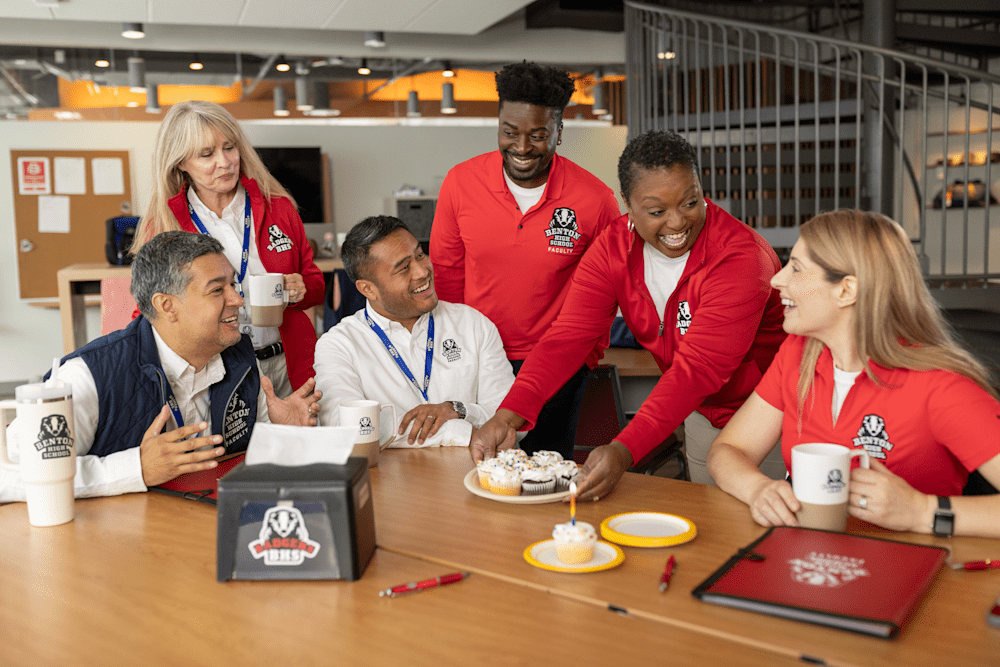
Team building is the deliberate process of improving how a group of people works together. It spans activities, rituals, and investments designed to build trust, improve communication, define shared goals, and develop the relationships that make collaboration effective. The keyword is deliberate. Teams that get better do so because someone planned for it.
The term gets used loosely, though, and that creates real problems in budget conversations. A ropes course, a welcome kit, a quarterly offsite, a recognition program, and a structured team charter are all “team building,” but they target different things and produce different outcomes.
Organizational psychologist Scott Klein’s 2009 meta-analysis of 60 team-building effect sizes identified four distinct intervention types: goal setting, interpersonal skills, role clarification, and problem solving.
Each one addresses a different team need and produces different results. Running the wrong type for your team’s actual problem is the single most common reason team-building programs fail to move metrics.
The table below clarifies the three terms HR practitioners use interchangeably, though the distinctions matter.
| Term | What it actually means | Primary outcome | Klein et al. category | Example |
|---|---|---|---|---|
| Team Building | Structured interventions designed to improve a team’s functioning on a specific dimension (trust, roles, goals, process) | Improved cohesion, coordination, or performance | All four types, matched to team need | Team charter workshop; conflict-resolution facilitation; goal-alignment offsite |
| Team Training | Skill instruction delivered to a team as a unit, focused on task competency | Improved task performance and coordination behaviors | Problem solving; role clarification | Cross-functional process training; communication skills workshop; new software rollout |
| Team Bonding | Social activities that build rapport and goodwill, without explicit performance goals | Improved morale; stronger interpersonal relationships | Interpersonal | Happy hour; team lunch; escape room; volunteer day |
For HR directors, the practical implication is this: team bonding is worth doing, but it won’t fix a team that doesn’t know its roles or can’t resolve conflict. Team training builds skill, but it won’t build trust. Targeted team building, the type that matches the intervention to the team’s specific gap, is what the research shows actually moves engagement and performance metrics.
The Business Case for Team Building: ROI and Retention

Most HR directors have been in this meeting: you’ve watched what team building does for cohesion and retention firsthand, yet the decision-maker across the table wants to see the return on a spreadsheet. Your instinct to lead with engagement scores is understandable. It’s also the wrong currency for that conversation. The data below is built for it.
Engagement and Profitability: How It Impacts Your Bottom Line
Gallup’s Q12 meta-analysis, the largest study of its kind, covering 183,806 business units across 276 organizations, 54 industries, and 96 countries, found that top-quartile engagement teams outperform bottom-quartile teams across every major business outcome. The profitability gap is 23%. The turnover gap runs 18% to 43% depending on the industry. Absenteeism is 41% lower. These aren’t correlations from a survey of 500 people. They’re effect sizes drawn from over 100,000 teams.
A Sense of Belonging Has a Huge Dollar Value

BetterUp’s landmark 2019 study of 1,789 U.S. workers, published in Harvard Business Review, put specific numbers on what happens when employees feel like they belong. High belonging correlated with a 56% increase in job performance, a 50% drop in turnover risk, and 75% fewer sick days compared to low-belonging peers. For a 10,000-person company, BetterUp calculated that translates to roughly $52 million in annual productivity gains.
A single incident of exclusion (being left off an email, talked over in a meeting, left out of a team activity) produces a measurable 25% decline in individual performance on a team project. Belonging is a productivity metric.
If you’ve been making this argument without the numbers to back it up, these are the numbers that will earn buy-in.
The Turnover Math: Losing Employees Is Expensive
The most persuasive number in any team-building budget conversation is the cost of the employee you didn’t retain. SHRM puts replacement costs at 50% to 200% of annual salary, depending on seniority. The table below shows what that means in real dollars, and what it implies about your team-building breakeven.
| Role Level | SHRM Replacement Cost Range | Example Salary | Replacement Cost Range | Team-Building Breakeven |
|---|---|---|---|---|
| Entry-level | 30–50% of salary | $45,000 | $13,500–$22,500 | Retaining 1 person funds ~3–5 team events |
| Mid-level | 125–150% of salary | $70,000 | $87,500–$105,000 | Retaining 1 person funds a full-year team building program |
| Senior / Specialized | 150–200% of salary | $110,000 | $165,000–$220,000 | Retaining 1 person funds multiple years of programming |
| Executive | 200%+ of salary | $180,000 | $360,000+ | Retaining 1 person justifies significant multi-year investment |
Source: SHRM turnover cost analysis; Forma employee replacement cost aggregation.
Shared gear connects directly to this math. According to our 2026 Custom Ink Swag Trends Survey, 74% of HR and people leaders say team unity and belonging is the top outcome they want from custom swag, ahead of professionalism, appreciation, and marketing. Our Company Swag Survey found that more than three-quarters of employees say receiving meaningful company gear makes them more likely to stay. When the goal is keeping great people, swag is infrastructure, not a perk.
Tuckman’s 5 Stages of Team Development

In 1965, Bruce Tuckman synthesized 50 studies of small group behavior and published a model that has held up across 60 years of organizational research. His four original stages (Forming, Storming, Norming, Performing) were joined by a fifth, Adjourning, when Tuckman and Mary Ann Jensen revisited the model in 1977 after reviewing 22 additional studies. The model is widely cited, but frequently oversimplified.
Two nuances from the original research matter for practitioners. First, only about 50% of Tuckman’s original 50 studies showed a distinct storming phase. Some teams moved directly from forming to norming. Second, the model describes behavioral patterns, not a rigid sequence. Teams can regress. Most do, at least once. If your team has been together for a year or more and still feels like it’s stuck, this framework is usually how you find out why.
Stage 1: Forming

New teams are polite, cautious, and orientation-focused. Members are figuring out norms, roles, and whether they can trust the people around them. The leader carries almost all the direction. Conflict is avoided rather than navigated. First impressions lock in during forming, for better or worse. Klein et al.’s meta-analysis found that role clarification interventions produce the strongest performance gains during this stage: People need to know what they’re responsible for before they can start cooperating effectively.
Role clarification doesn’t have to be complicated. A few high-impact practices stand out:
- RACI Matrix: Mapping who is Responsible, Accountable, Consulted, and Informed for each key task is especially effective at kickoff and in early team meetings, before confusion has a chance to calcify into conflict.
- Roles & Responsibilities Flip Chart: Developed by the University of Minnesota, this exercise takes a more human approach. Each team member writes what they believe their peers’ responsibilities are, then owners review and correct the record, surfacing gaps and misalignments through conversation rather than assumption.
- Role Expectation Matrix: For teams that want something more structured, this method creates a simple grid with everyone’s roles along both axes, designed to find points of dissonance and create alignment. This is particularly useful where responsibilities naturally overlap.
- “Who We Are” Deck: Asking each new team member to create a slide outlining their role, responsibilities, and areas of ownership gives the whole team a living reference — and cuts down on duplicated effort from day one. The format, great for distributed or fast-moving teams, matters less than the conversation it creates.
What these methods share is a simple premise: get expectations out of people’s heads and into the open, early.
Stage 2: Storming

As the team begins real work, friction emerges. People push back on authority, compete for influence, and disagree about how things should get done. This is the stage most teams struggle to survive. Leaders who shy away from conflict here tend to see teams stagnate, or more dangerously enter a state of “artificial harmony” where disagreement goes underground and surfaces later as passive resistance. The storming stage isn’t a sign that something is wrong. It’s a sign the team is working.
Remote teams at risk: Research on virtual team dynamics consistently finds that distributed teams compress or skip storming entirely. Without the daily friction of shared physical space, conflict avoidance feels easier, and many teams take it. Harvard professor Amy Edmondson notes that “distributed or remote work inhibits candor and inhibits psychological safety.” Teams that skip storming don’t resolve their tensions. They defer them and pay for it during the norming or performing stages, when pressure rises. If you’ve managed a remote team that seemed cohesive and then fell apart under a deadline, that’s usually what happened.
Body language and tone carry the cues that make productive conflict possible. For remote teams, institute video-on norms for hard conversations. Text- and email-based disagreement almost always reads worse than intended.
Stage 3: Norming

Conflicts resolve and the team settles into a functional rhythm. Roles clarify, trust develops, and members begin to rely on each other rather than merely tolerating each other. The leader steps back from director to supporter. The risk here is overcorrection. Teams that become too harmonious during norming tend to suppress dissenting opinions, producing mediocre output. Google’s Project Aristotle, which analyzed 180 teams over three years, found that psychological safety was the single strongest predictor of team performance, outranking composition, seniority, and individual skill. Norming is when that safety either gets built or gets traded away for comfort.
Consider these team-building initiatives that protect psychological safety and prevent norming from curdling into groupthink:
- 1-2-4-All Brainstorming: Individuals reflect alone, then pair up, then form groups of four, before sharing with the full team. The progression ensures every voice shapes the output, not just the loudest ones in the room.
- Index Card Feedback: Team members write brief thoughts anonymously on cards and post them for the group to discuss. It creates a low-stakes channel for dissent, which is exactly what norming-stage teams tend to suppress.
- Psychological Safety Audits: Use anonymous surveys or a facilitated quadrant exercise to measure where the team actually sits versus where they want to be. Naming the gap is often what gives a team permission to close it.
Stage 4: Performing

The team is self-directed, highly collaborative, and focused on shared goals rather than internal politics. The leader has largely delegated day-to-day decisions. McKinsey research finds that companies with top-quartile team health are 1.9x more likely to deliver above-median financial performance. Not every team reaches this stage. The ones that do got there through deliberate work in the earlier stages, not through luck or tenure.
Stage 5: Adjourning

When a project ends or a team disbands, there’s a psychological transition most organizations handle poorly, or skip entirely. How a team ends directly shapes how its members feel about the organization and what they carry into the next team they join. Recognition and formal closure aren’t optional extras. They’re the mechanism by which institutional knowledge, relationships, and psychological investment transfer forward.
Why Branded Gear Is a Team-Building Intervention

Most team-building discussions treat branded apparel as a perk or a line item in the events budget. Research suggests it belongs in a different category entirely: it’s a mechanism for accelerating the social identity formation that Tuckman’s stages require.
The Science Behind the Right Uniform
Social Identity Theory, developed by Henri Tajfel and John Turner in 1979, established that individuals derive a meaningful part of their self-concept from the groups they belong to. Visible in-group markers accelerate self-categorization and cooperative behavior within the group. Simply put: people who look like a team start acting like one faster than people who don’t.
Adam and Galinsky’s 2012 study, “Enclothed Cognition,” published in the Journal of Experimental Social Psychology, took this further. Subjects wearing a white lab coat labeled “doctor’s coat” performed significantly better on selective-attention tasks than subjects wearing the same coat labeled “painter’s coat,” and also better than subjects who merely saw the coat without wearing it. The performance effect required both the symbolic meaning of the clothing and the physical act of wearing it. Neither alone was sufficient.
That finding maps directly onto what branded team apparel does. When an employee receives a well-designed welcome kit on day one, they’re receiving more than a shirt. They’re receiving a physical signal of group membership that their nervous system processes as meaningful in ways a Slack message or a policy PDF cannot replicate.
What the Data Shows on Swag and Company Culture
PPAI research finds that 53% of employees feel more included in their team when they receive thoughtful promotional products from their employer, and 62% feel appreciated. A 2024 study of 5,000 U.S. workers found that employees who receive company-branded merchandise stay 1.5 years longer on average than those who don’t. Brandon Hall Group research finds that organizations with strong onboarding (which includes physical welcome kits) see 82% better new-hire retention than those without. These numbers don’t come from promotional product vendors. They come from independent HR and workforce research cited across SHRM, HBR, and the Brandon Hall Group.
For remote and hybrid teams, the case is even stronger. When team members are physically distributed, the shared signals that in-office teams get automatically (seeing colleagues in company gear, receiving a welcome swag bag on the first day, wearing matching shirts at the team offsite) have to be intentionally shipped. Custom team gear mailed to a remote hire’s home before their first day delivers the same social-categorization function as a physical office and a company lanyard. The mechanism is the same even when the method is different.
Strategy by Stage: What to Do (and What to Give)

Most team building programs treat all teams the same. The programs that move metrics don’t. The table below maps each Tuckman stage to the leadership intervention, the failure mode to watch for, the KPI that tells you whether it’s working, and the specific gear or ritual that reinforces team identity at that moment.
| Stage | Team Mindset | Leadership Move | Failure Mode | KPI to Watch | Gear / Ritual | Remote / Hybrid Mod |
|---|---|---|---|---|---|---|
| Forming | Cautious, observing | Set explicit roles, goals, and norms. Run a team charter session. Create an early win together. | Rushing to task work before social trust exists. Skipping the charter. | Time-to-productivity for new hires; onboarding satisfaction score | Welcome kit with branded gear shipped Day 1. Identity before history. | Ship kit to home address before start date. Schedule synchronous “meet the team” event in first week. |
| Storming | Frustrated, competing | Name tensions directly. Establish a conflict protocol. Assign a rotating “candor advocate” in meetings. | Artificial harmony, and conflict goes underground and resurfaces later as passive resistance. | Psychological safety pulse score; eNPS trend | Structured offsite with facilitated discussion. Gear is secondary here. | Over-structure remote meetings. Use anonymous pre-meeting input tools. Watch for silence as a danger sign. |
| Norming | Cooperative, settling in | Encourage shared ownership. Formalize decision protocols (RACI). Run retrospectives. Celebrate early wins. | Groupthink. Team becomes too agreeable, stops challenging ideas. | Quality of decisions; frequency of cross-team collaboration | Milestone recognition gear: matching shirts for project launches, team events, or quarters hit. | Ship matching gear for virtual all-hands or online team events. Makes the “we’re a team” signal visible even on camera. |
| Performing | Energized, self-directed | Delegate decisions. Remove obstacles. Protect focus time. Recognize achievement visibly. | Complacency; losing top performers to other opportunities before their impact is acknowledged. | Productivity metrics; voluntary retention rate; output quality | Premium earned gear: milestone jackets, achievement awards, recognition packages tied to specific outcomes. | Prioritize in-person time for high-stakes decisions. Use gear shipments to mark milestones that otherwise go unnoticed remotely. |
| Adjourning | Reflective, transitioning | Run a formal closure event. Document learnings. Recognize individual contributions explicitly. | Abrupt disbandment with no ritual. Institutional knowledge walks out the door with the people. | Alumni retention rate; net knowledge captured in documentation | Commemorative item marking the project. A keepsake that carries meaning, not a generic giveaway. | Send keepsake to home address. Host a virtual celebration. Document contributions in a shared retrospective. |
Customer Story

“We are the CBRE Morale Committee who puts on an event every summer for the department. This is a picture of us this year at our outdoor event last week in Minneapolis MN. This is our second order of shirts from Custom Ink and we have nothing but good things to say! The quality is great and the ordering process is easy.”
Featured Products from This Story
The CBRE Morale Committee wore Sport-Tek performance shirts built for active outdoor events. Both styles run in the norming-stage sweet spot: team event gear that’s functional enough to earn regular use and branded enough to signal group membership every time it’s worn.
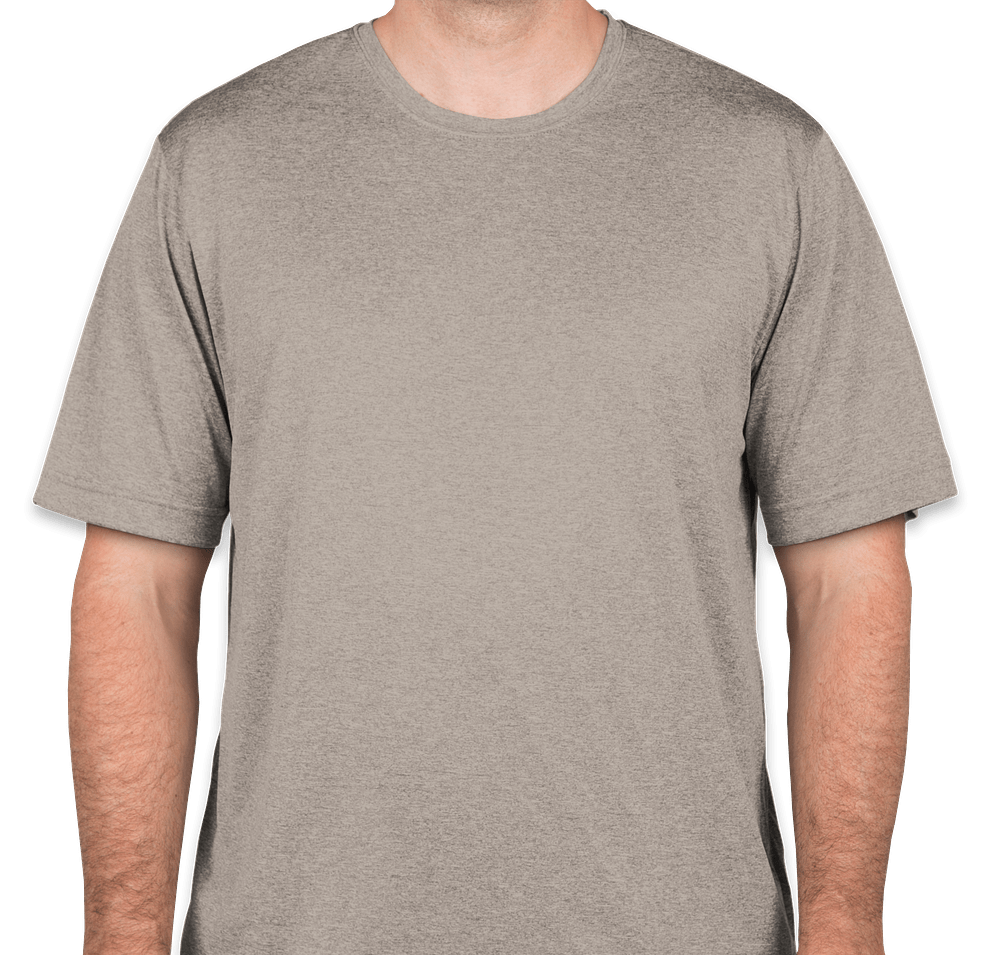
Sport-Tek Heather Contender Performance Shirt
- 3.8-oz, 100% polyester interlock with PosiCharge technology locks in color and prevents logos from fading wash after wash
- Moisture-wicking performance fabric; roomy athletic cut keeps teams comfortable during outdoor events, field days, and active offsites
- Available XS–4XL; removable tag for comfort and easy relabeling
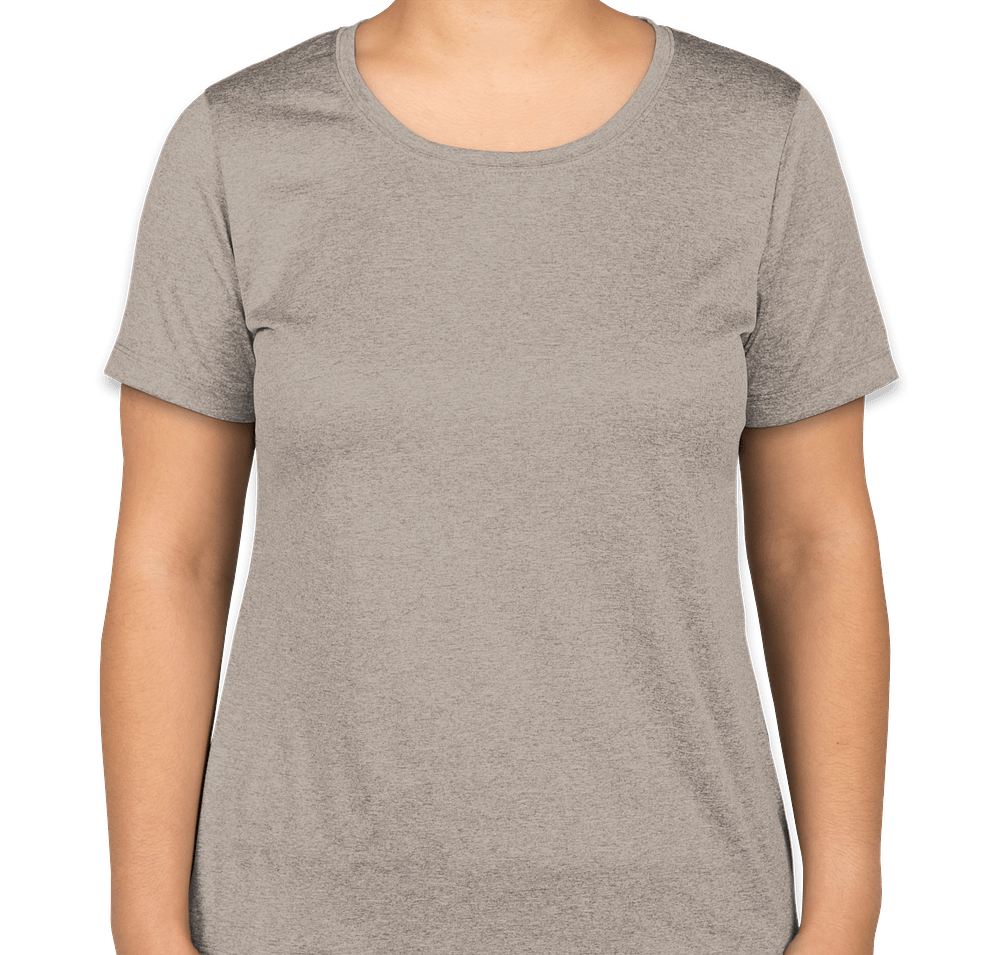
Sport-Tek Women’s Heather Contender Performance Shirt
- 3.8-oz, 100% polyester interlock with PosiCharge technology; same performance specs as the men’s style for a consistent team look across all sizes
- Moisture-wicking, lightweight construction built for all-day wear at retreats, offsites, and company field days
- Available XS–4XL; set-in sleeves and contoured fit designed specifically for women
How to Measure Team-Building ROI

The reason team building loses budget conversations usually has nothing to do with whether it worked. It gets cut because the measurement wasn’t set up before the program started, which makes it impossible to prove anything after the fact. That’s an unfair position to be in, and it’s a fixable one. Capture a baseline before you spend a dollar, run the intervention, measure at 90 days, and dollarize the delta. The framework below is built to survive a CFO conversation.
The Dollarization Formula
Start with disengagement cost, not program cost. Gallup research finds that a disengaged employee costs approximately 34% of their annual salary in lost productivity. The formula:
| Step | Calculation | Example (50-person team) |
|---|---|---|
| 1. Baseline disengagement cost | Number of disengaged employees × avg. salary × 34% | 15 disengaged × $65,000 × 34% = $331,500/year lost |
| 2. Program cost | Activities + gear + facilitation + employee time | $15,000 total investment |
| 3. Target improvement | Gallup benchmark: top-quartile teams have 43% lower turnover, 23% higher output | Even a 5-point engagement lift = ~$55,000 in recovered productivity |
| 4. Turnover avoidance | Employees retained × replacement cost (SHRM: 50–150% of salary) | Retaining 1 mid-level employee at $70,000 = $87,500–$105,000 saved |
| 5. Net ROI | (Benefit − Cost) / Cost × 100 | ($87,500 − $15,000) / $15,000 = 483% first-year ROI |
KPIs Worth Tracking
- Voluntary turnover rate: Track quarterly. Compare teams with active programming against those without. A 5-point improvement has a clear dollar value when you apply the SHRM replacement-cost formula.
- eNPS (Employee Net Promoter Score): Run before the program starts and again at 90 days. This is the single fastest signal of whether the culture investment is registering.
- Absenteeism rate: Gallup’s Q12 meta-analysis found 41% lower absenteeism in top-quartile engagement teams. It’s a lagging indicator, but it moves in the same direction as engagement and is easy to pull from HRIS data.
- Time-to-productivity for new hires: Teams that actively welcome and integrate new members bring them to full output faster. Measure ramp time before and after implementing structured onboarding rituals.
- Cross-functional collaboration frequency: Count project touchpoints, meeting initiations, or communication volume across teams. Better-connected teams show measurably more of this, and it correlates with the innovation outcomes that performing-stage teams produce.
The 4-Step Measurement Framework
- Capture a baseline before you spend anything. Run a Gallup Q12 pulse survey or a custom five-question engagement survey across your target team. Record turnover rate, absenteeism, and eNPS. You cannot prove ROI without a before.
- Pick one primary outcome metric. Turnover rate, eNPS, or productivity output. Choose one to move. Multiple primary metrics muddy attribution and make the CFO conversation harder.
- Run a 90-day check. Short-term gains from a single event fade without follow-through. Ninety days shows whether you’ve created a cultural shift or a temporary morale bump. The difference matters for next year’s budget conversation.
- Dollarize the delta. Take any improvement in your primary metric and run it through the formula above. Translate engagement points into productivity dollars. Translate turnover reduction into replacement-cost savings. This is the number you present to leadership.
What to Say to Your CFO
Four objections come up in almost every team-building budget conversation. Here are the counters, sourced to data:
| CFO Objection | Data-Backed Counter |
|---|---|
| “Prove the ROI.” | Propose a measurable pilot: baseline pulse survey today, same survey at 90 days, turnover tracked for 12 months. Use the Gallup Q12 meta-analysis benchmarks to set realistic targets. |
| “We’ve managed without this.” | Quantify what “managing without it” actually costs: 34% of every disengaged employee’s salary, per Gallup. On a 50-person team with 30% disengagement, that’s roughly $330,000/year in lost productivity. |
| “It’s a nice-to-have.” | BetterUp’s HBR-published research found high belonging reduces turnover risk by 50% and increases job performance by 56%. Those are not morale metrics. They are P&L metrics. |
| “Budgets are tight.” | SHRM puts mid-level replacement cost at 125–150% of salary. Retaining one $70,000 employee saves $87,500–$105,000. That’s the entire annual team-building budget in a single avoided departure. |
Our Design Lab makes it easy to create gear that fits every stage of the team building calendar, from day one welcome kits to milestone recognition packages to end-of-year event shirts. Our design experts can help you build a consistent visual identity that works from forming all the way through performing.
Frequently Asked Questions

Q: What is the difference between team building, team training, and team bonding?
Team building targets a specific gap in how a team functions, trust, role clarity, conflict resolution, or goal alignment, addressed through structured interventions matched to that need. Team training delivers task-specific skills to the team as a unit. Team bonding builds interpersonal rapport through social activities without an explicit performance goal. All three have value. The mistake is using bonding activities to solve a role-clarity problem, or running training when what the team actually needs is a conflict-resolution intervention. The right type depends on the stage your team is in and the gap you’re trying to close.
Q: Do all teams go through the storming stage?
No, and this is the nuance most summaries of Tuckman’s model leave out. Only about 50% of the original studies Tuckman synthesized showed a distinct storming phase. Some teams move from forming directly to norming. Remote and hybrid teams in particular often appear to skip storming because conflict avoidance is easier at a distance. The problem is that suppressed conflict doesn’t resolve. It resurfaces later as passive resistance, low psychological safety, or disengagement. If your team seems unusually harmonious early, that’s worth investigating rather than celebrating.
Q: Can you actually measure the ROI of team building?
Yes, with the right setup. The key is capturing a baseline before the program starts: voluntary turnover rate, eNPS, absenteeism, and a standardized engagement pulse score. Run the same measures at 90 days. Translate any delta into dollars using the Gallup disengagement cost formula (34% of salary per disengaged employee) and the SHRM replacement cost range (50–200% of salary depending on level). Most teams that run this calculation find the investment breaks even on retaining a single mid-level employee.
Q: What team building works best for remote or hybrid teams?
Remote teams need more structure, not more fun. The biggest risk for distributed teams is artificial harmony: conflict avoidance that produces short-term smoothness and long-term dysfunction. Interventions that work: structured virtual offsites with explicit discussion protocols, rotating “candor advocate” roles in standing meetings, documented team charters, and anonymous pre-meeting input tools that surface dissent safely. Physical touchpoints still matter. Mailing custom team gear to remote employees before a virtual event creates the shared identity signal that in-office teams get automatically. Research in social identity theory is clear that visible in-group markers (even on a video call) accelerate the group cohesion that remote teams struggle to build.
Q: How do I get leadership buy-in for a team building budget?
Lead with turnover math, not engagement scores. Calculate your current cost-per-replacement using the SHRM formula and multiply by your annual voluntary turnover count. Then present the Gallup finding that high-engagement teams have 43% lower turnover. Even a conservative 5-point improvement in turnover rate across a mid-size team typically justifies the annual program cost in a single budget year. Pair that with an eNPS baseline and a 90-day measurement commitment, and the conversation shifts from “can we afford this?” to “what’s our return target?”
Q: How much does it cost to order custom team shirts?
Pricing depends on style, quantity, and number of print colors. We offer free standard shipping on all orders, and bulk pricing drops significantly as quantity increases. Our Design Lab shows real-time pricing as you build your design. Most team shirt orders for a 20–50 person team run well under $30 per person for quality performance styles. Contact our design experts for a quote on larger orders or multi-stage programs.

The Custom Ink Staff is a team of design enthusiasts and promo product experts dedicated to bringing your ideas to life. From screen printing secrets to the latest trends in custom gear, we draw on decades of collective experience to help you create something unforgettable.